
Catalogue Search | MBRL


Are you sure you want to remove the book from the shelf?

{{itemTitle}}
6
result(s) for
"Economic development projects-Asia-Case studies"
Sort by:
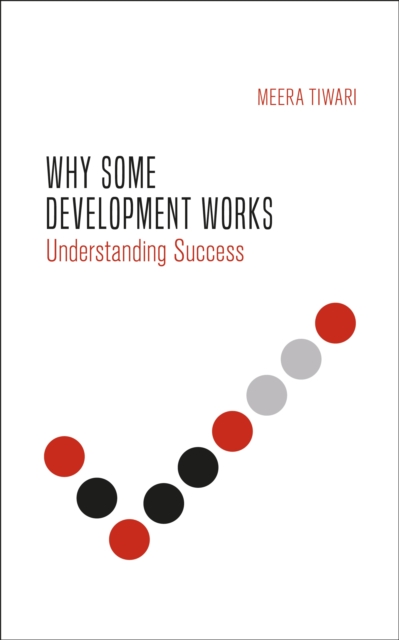
Why Some Development Works
Why do some development projects succeed where others fail? This book looks at some macro and some less known micro success stories and considers what enabled them to bring change in some of the world's most deprived communities. Using case studies from ten countries across Latin America, Africa, and Asia, Tiwari's innovative approach offers a multi-layered understanding of poverty which provides insights into causal, enabling and impeding factors. While a macro level analysis of development is a common feature of the current literature, there has been little attempt to develop a micro level understanding of development at the grassroots.Tiwari's work fills this important gap while drawing attention to the importance of engaging local actors at an individual, collective, and state level, demonstrating how achieving a \"convergence\" of goals among all actors is a crucial component to a development project's success.Looking beyond the case studies to consider how this unique \"convergence framework\" might be usefully applied to other contexts, the book has profound implications for how we view fragile states and conflict zones, and the ability of the international agencies to take effective action. A unique study based on extensive empirical research, Why Some Development Works will make essential reading for students and researchers studying international development across the social sciences, as well as humanitarian and development practitioners and policy makers.
eBook

Why some development works
An essential framework for assessing success in international development, challenging how we view fragile states, conflict zones, and the ability of international agencies to take effective action.
Book
The State and the Advocate
This book seeks to demonstrate the role of public policy in support of equitable and inclusive development. The achievement of this overarching goal rests on an assumption that development does not happen by chance or by accident, but rather, through the deliberate application of analytical tools which public policy is able to provide. Set within an Asian context, the book emphasizes the role of public policy in reducing poverty, eliminating deprivation, promoting equity, and ensuring social justice.
The book likewise aims to provide an argument for the developmental role of the state — one which has been the subject of a long-standing debate among development scholars. In addition, the book accounts for the role of civil society organizations, particularly their involvement in multi-stakeholder participation. Through different case studies, this book explains the outcome of public policy decisions as combinations of efforts among government and civil society actors, to ensure the creation of the most optimal public good. Finally, the book takes a comparative perspective, i.e., there are cases that directly or indirectly implicate the regional character of public policies that result in the creation and distribution of regional public goods.
Foreword 1. Opening Laos: The Nam Theun 2 Hydropower Project 2. The Congress for People’s Agrarian Reform in the Philippines 3. New Kid on the Block: Chinese Development Assistance in Asia 4. Lessons in Regional Economic Cooperation: The Case of the Greater Mekong Subregion (GMS) 5. Whither the Trees and the Forests? The Task Force Total Commercial Log Ban in the Philippines 6. Protecting the Domestic Worker: The Case of Sri Lanka 7. Myanmar’s Development: An Opportunity for Genuine Transformation 8. Concluding Chapter
‘ This book provides a wealth of information and insights about planning and development projects in Southeast Asia. It carefully documents how South Eastern governments seek to align with international development guidelines as well as with local contingencies. Such efforts are always institutionally intricate and politically laden. The chapter on the Nam Theun hydroproject in Laos analyzes in detail the foreseen negative impacts and the mitigation measures, including the fate of numerous consultation processes. Another chapter traces the agrarian reform actions in The Philippines and focuses on the intriguing coalition of the Congress for a People’s Agrarian Reform. While it failed in the short term due to internal and external impediments, its legacy provides indicators for the long term. ’ — Harro van Lente, Socrates Professor Philosophy of Sustainable Development, ICIS, Faculty of Humanities & Sciences of Maastricht University
Teresita Cruz-del Rosario has a background in Sociology, Social Anthropology and Public Policy from Boston College, Harvard University, and New York University. Her research interests are on comparative social movements in Southeast Asia, migration, sustainable development, and land grabs.
eBook
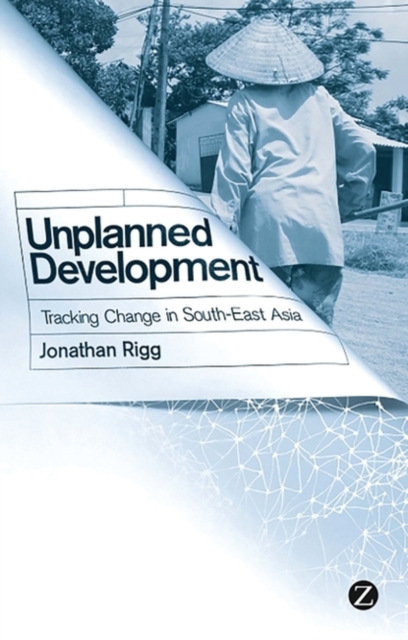
Unplanned development
Unplanned Development offers a fascinating and fresh view into the realities of development planning.While to the outsider most development projects present themselves as thoroughly planned endeavours informed by structure, direction and intent, Jonathan Rigg exposes the truth of development experience that chance, serendipity, turbulence and.
eBook

Unity and diversity in development ideas : perspectives from the UN regional commissions
This second volume from the United Nations Intellectual History Project surveys the history of the UN's regional commissions and the ideas they have developed over the last 40 years. Each essay is devoted to one of the five regional commissions -- Europe, Asia and the Far East, Latin America, Africa, and Western Asia -- and how it has approached its mission of assessing the condition of regional economies and making prognoses about future conditions. The essays describe how each commission has added local perspectives to global debates over economic development and brought an authentic regional voice to the UN. Contributors are Adebayo Adedeji, Yves Berthelot, Leelananda de Silva, Blandine Destremau, Paul Rayment, and Gert Rosenthal.
eBook

Rents to riches? : the political economy of natural resource-led development
This volume emphasizes instead the notion of 'good fit,' taking the position that welfare-promoting policies, institutions, and governance must be tailored, at least in part, to a country's specific context. In this vein, the volume presents an analytical framework for assessing a country's political economy and institutional environment as it relates to natural resource management and, on that basis, it offers a substantial set of targeted prescriptions across the natural resource value chain that are technically sound and compatible with the identified underlying incentives. In other words, the objective of this book is to help development practitioners unravel the political economy dynamics surrounding natural resource management in order to complement their technically grounded engagement. To this end, the analytical approach has been two-pronged. First, case studies were conducted on the political economy of the hydrocarbon and mineral value chains in 13 countries in the Africa, East Asia and Pacific, and Latin America and the Caribbean regions. Second, in light of this empirical material, the book highlights the current frontier of applied political economy analysis on resource dependence. This volume synthesizes the empirical and the theoretical with an emphasis on illuminating the implications for operational engagement in resource-dependent settings.
eBook