
Catalogue Search | MBRL


Are you sure you want to remove the book from the shelf?

{{itemTitle}}
170
result(s) for
"Economic policy Religious aspects Islam"
Sort by:
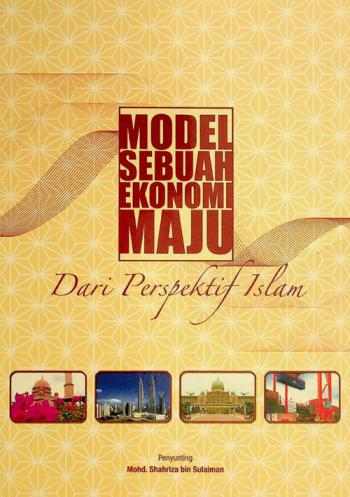
Model sebuah ekonomi maju dari perspektif Islam
Economic growth and development in Malaysia from Islamic perspective ; papers of seminars.
Book

The neoliberal landscape and the rise of Islamist capital in Turkey
Islamist capital accumulation has split the Turkish bourgeoisie and polarized Turkish society into secular and religious social groupings, giving rise to conflicts between the state and political Islam. By providing a long-term historical perspective on Turkey's economy and its relationship to Islamism, this volume explores how Islamism as a political ideology has been utilized by the conservative bourgeoisie in Turkey, and elsewhere, to establish hegemony over labor. The contributors analyze the relationship between neoliberalism and the political fortunes of the Islamist Justice and Development Party (AKP), and examine the similarities and differences amongst new factions in the secular and Islamic middle class that have benefited economically, socially, and culturally during the AKP's reign. The articles also investigate the impact of the Gülen Movement and the role of the media in shaping the contours of intra-class struggle within contemporary Turkish political and social life.
eBook

The halal project in Indonesia : shariatization, minority rights and commodification
The government of Indonesia in the second term of the Jokowi presidency has fully endorsed the concept of halal to become not only a sharia-driven state law but also an incentive for the advancement of the national economy and market. In addition, Jokowi wants Indonesia to become the centre of the global halal industry._x000B__x000B_In the history of Indonesian Islam, although the issue of halalness, being an unseparated part of Islamic doctrine, is not new, it had never been the role of the state to formalize it into state law prior to the legislation of State Law No. 33/2014 on Halal Legal Assurance._x000B__x000B_From the 1990s to 2014, halal matters including halal certification had been unofficially handled by the Council of Indonesian Ulama (MUI). Then, the Ministry of Religious Affairs (MORA) proposed that halal certification be officially handled by the government of Indonesia, not by Muslim organizations. The legislation of State Law No. 33/2014 reflects contestation between MUI and MORA regarding which institution should serve as the authority in certifying halal products._x000B__x000B_Promoting and advancing the halal project of Indonesia are related not only to commodification but also to theology. The choice of the Islamic method for determining halal can become a barrier to improving inclusive economic and market performance. The halal system in Indonesia follows the Shafi’i school of thought in Islamic law, which is very strict in defining the halalness of relevant products. However, a more flexible method of ijtihad (Islamic legal reasoning), which can accommodate the development of the halal market, is needed._x000B__x000B_Despite claims that the formalization of halalness through State Law No. 33/2014 accommodates universal and inclusive values, some religious minority groups worry that the law will shore up the shariatization agenda of the Muslim majority and marginalize religious minorities in terms of their lifestyle preferences._x000B__x000B_The legislation of State Law No. 33/2014 has allowed shariatization to be not merely an issue associated with political Islam, but one that through commodification is grounded in the everyday lives of Muslims and non-Muslims alike.
eBook

Building a House in Heaven
Charity is an economic act. This premise underlies a societal transformation-the merging of religious and capitalist impulses that Mona Atia calls \"pious neoliberalism.\" Though the phenomenon spans religious lines, Atia makes the connection between Islam and capitalism to examine the surprising relations between charity and the economy, the state, and religion in the transition from Mubarak-era Egypt. Mapping the landscape of charity and development in Egypt, Building a House in Heaven reveals the factors that changed the nature of Egyptian charitable practices-the state's intervention in social care and religion, an Islamic revival, intensified economic pressures on the poor, and the subsequent emergence of the private sector as a critical actor in development. She shows how, when individuals from Egypt's private sector felt it necessary to address poverty, they sought to make Islamic charities work as engines of development, a practice that changed the function of charity from distributing goods to empowering the poor. Drawing on interviews with key players, Atia explores the geography of Islamic charities through multiple neighborhoods, ideologies, sources of funding, projects, and wide social networks. Her work shifts between absorbing ethnographic stories of specific organizations and reflections on the patterns that appear across the sector. An enlightening look at the simultaneous neoliberalization of Islamic charity work and Islamization of neoliberal development, the book also offers an insightful analysis of the political and socioeconomic movements leading up to the uprisings that ended Mubarak's rule and that amplified the importance of not only the Muslim Brotherhood but also the broader forces of Islamic piety and charity.
eBook


Islamic Finance
This book provides an overview of the practice of Islamic finance and the historical roots that define its modes of operation. The focus of the book is analytical and forward-looking. It shows that Islamic finance exists mainly as a form of rent-seeking legal-arbitrage. In every aspect of finance - from personal loans to investment banking, and from market structure to corporate governance - Islamic finance aims to replicate in Islamic forms the substantive functions of contemporary financial instruments, markets, and institutions. By attempting to replicate the substance of contemporary financial practice using pre-modern contract forms, Islamic finance has arguably failed to serve the objectives of Islamic law. This book proposes refocusing Islamic finance on substance rather than form. This approach would entail abandoning the paradigm of 'Islamization' of every financial practice. It would also entail reorienting the brand-name of Islamic finance to emphasize issues of community banking, micro-finance, and socially responsible investment.
eBook

The long divergence : how Islamic law held back the Middle East
Offering a comparison between economic development in the Middle East & the West, Timur Kuran argues that low levels of trust, rampant corruption & weak civil societies are legacies of eight centuries from c.1000 when Islamic legal institutions effectively blocked the emergence of modern economic systems.
Book

Egypt after Mubarak
Which way will Egypt go now that Husni Mubarak's authoritarian regime has been swept from power? Will it become an Islamic theocracy similar to Iran? Will it embrace Western-style liberalism and democracy?Egypt after Mubarakreveals that Egypt's secularists and Islamists may yet navigate a middle path that results in a uniquely Islamic form of liberalism and, perhaps, democracy. Bruce Rutherford draws on in-depth interviews with Egyptian judges, lawyers, Islamic activists, politicians, and businesspeople. He utilizes major court rulings, political documents of the Muslim Brotherhood, and the writings of Egypt's leading contemporary Islamic thinkers. Rutherford demonstrates that, in post-Mubarak Egypt, progress toward liberalism and democracy is likely to be slow.
Essential reading on a subject of global importance, this edition includes a new introduction by Rutherford that takes stock of the Arab Spring and the Muslim Brotherhood's victories in the 2011-2012 elections.
eBook