
Catalogue Search | MBRL


Are you sure you want to remove the book from the shelf?

{{itemTitle}}
44
result(s) for
"Economic sanctions -- History -- 21st century"
Sort by:

The Economic Weapon
The first international history of the emergence of
economic sanctions during the interwar period and the legacy of
this development Economic sanctions dominate the landscape
of world politics today. First developed in the early twentieth
century as a way of exploiting the flows of globalization to defend
liberal internationalism, their appeal is that they function as an
alternative to war. This view, however, ignores the dark paradox at
their core: designed to prevent war, economic sanctions are modeled
on devastating techniques of warfare. Tracing the use of economic
sanctions from the blockades of World War I to the policing of
colonial empires and the interwar confrontation with fascism,
Nicholas Mulder uses extensive archival research in a political,
economic, legal, and military history that reveals how a coercive
wartime tool was adopted as an instrument of peacekeeping by the
League of Nations. This timely study casts an overdue light on why
sanctions are widely considered a form of war, and why their
unintended consequences are so tremendous.
eBook
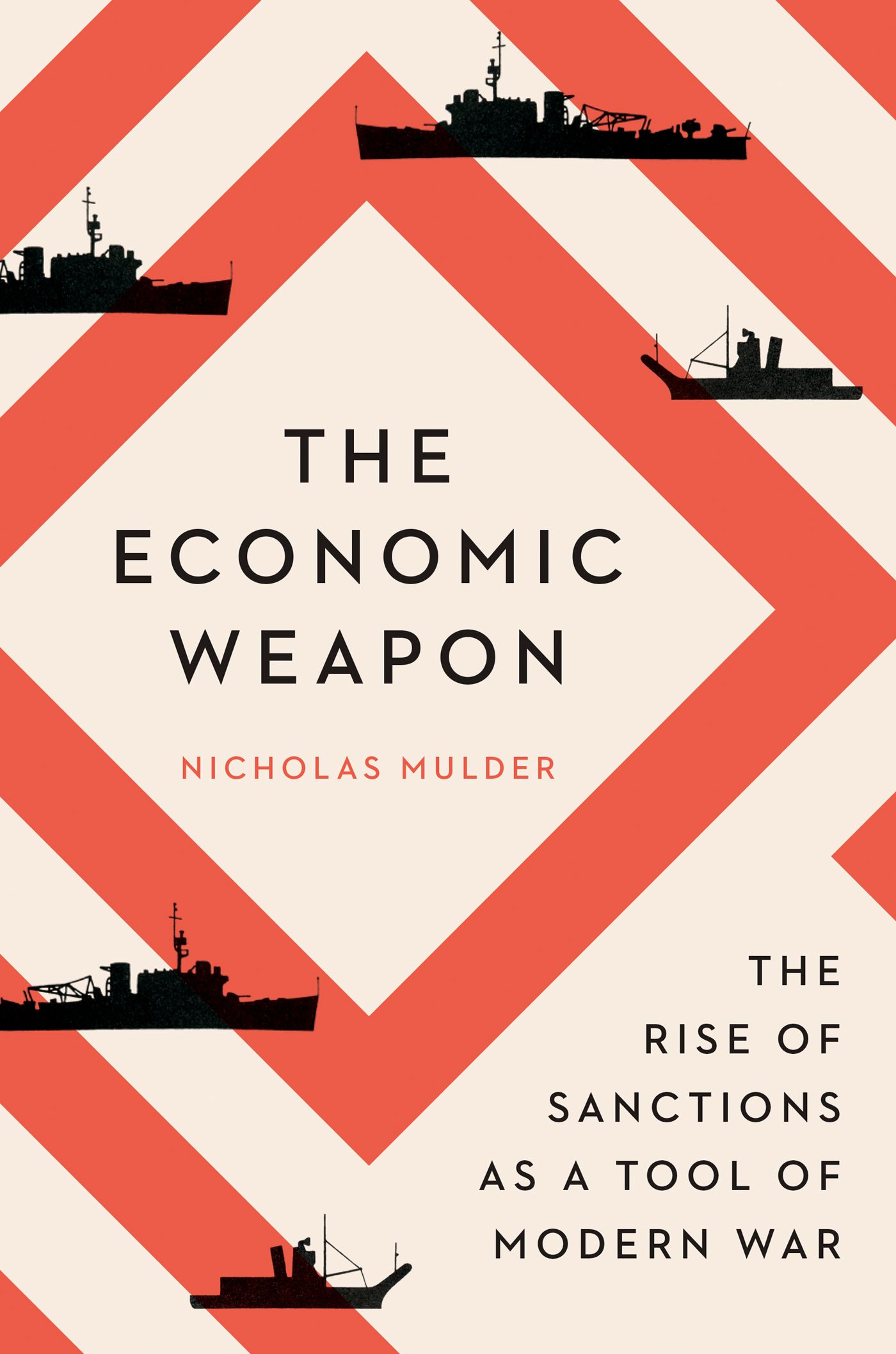
The Economic Weapon
\"Tracing the history of economic sanctions from the blockades of World War I to the policing of colonial empires and the interwar confrontation with fascism, Nicholas Mulder combines political, economic, legal, and military history to reveal how a coercive wartime tool was adopted as an instrument of peacekeeping by the League of Nations.This timely study casts an overdue light on why sanctions are widely considered a form of war, and why their unintended consequences are so tremendous.\"
eBook
Economic sanctions reconsidered
Economic sanctions continue to play an important role in the response to terrorism, nuclear proliferation, military conflicts, and other foreign policy crises. But poor design and implementation of sanctions policies often mean that they fall short of their desired effects. This landmark study, first published in 1985, delves into the rich experience of sanctions in the 20th century to harvest lessons on how to use sanctions more effectively. This volume is the updated third edition of this widely cited study. It chronicles and examines 170 cases of economic sanctions imposed since World War I. Fifty of these cases were launched in the 1990s and are new to this edition. Special attention is paid to new developments arising from the end of the Cold War and increasing globalization of the world economy. Analyzing a range of economic and political factors that can influence the success of a sanctions episode, the authors distill a set of commandments to guide policymakers in the effective use of sanctions.
eBook

Addressing the impact of economic sanctions on Iranian drug shortages in the joint comprehensive plan of action: promoting access to medicines and health diplomacy
Background
The U.S Congress initiated sanctions against Iran after the 1979 U.S. Embassy hostage crisis in Tehran, and since then the scope of multilateral sanctions imposed by the United States, the European Union, and the United Nations Security Council have progressively expanded throughout the intervening years. Though primarily targeted at Iran’s nuclear proliferation activities, sanctions have nevertheless resulted in negative public health outcomes for ordinary Iranian citizens. This includes creating vital domestic shortages to life-saving medicines, leaving an estimated 6 million Iranian patients with limited treatment access for a host of diseases. Sanctions have also crippled Iran’s domestic pharmaceutical industry, leading to the disruption of generic medicines production and forcing the country to import medicines and raw materials that are of lower or questionable quality.
Discussion
Countries such as the United States have responded to this medical crisis by implementing export control exemptions with the aim of easing the trade of humanitarian goods (including certain pharmaceuticals and medical devices). However, despite these efforts, pharmaceutical firms and international banking institutions remain cautious about doing business with Iran, leaving the country faced with continuing shortages. We conducted a review of key characteristics of the Iranian drug shortage that identified 73 shortage drugs that closely tracked with the disease burden in the country. Additionally, 44 % of these drugs were also classified as essential medicines by the World Health Organization. A vast majority of these drugs were also covered under export control exemptions that theoretically should make them easier to procure, but nevertheless will still in shortage.
Summary
Based on our review of the sanctions regulatory framework and key characteristics of the Iranian drug shortage, we propose policy intervention leveraging the recently negotiated P5 + 1 agreement that begins the process of providing Iran relief from the international economic sanctions regime. This specifically includes advocating for the application of “health diplomacy” in ongoing multilateral negotiations following commencement of “implementation day,” by advocating for an additional set of reform measures incorporated into this historic negotiation that will finally address the humanitarian and medical crisis of drug shortages in Iran.
Journal Article

International and cross-cultural management studies : a postcolonial reading
Drawing on postcolonial theory this text offers a critique of international management. It argues that such disciplines are Western discourses and exhibit historical and current resonances with the vicissitudes of the so called 'colonial project'. The book explores alternative approaches to the question of the 'other' in late global capitalism.
eBook

A Single Roll of the Dice
Have the diplomatic efforts of the Obama administration toward Iran failed? Was the Bush administration's emphasis on military intervention, refusal to negotiate, and pursuit of regime change a better approach? How can the United States best address the ongoing turmoil in Tehran? This book provides a definitive and comprehensive analysis of the Obama administration's early diplomatic outreach to Iran and discusses the best way to move toward more positive relations between the two discordant states.
Trita Parsi, a Middle East foreign policy expert with extensive Capitol Hill and United Nations experience, interviewed 70 high-ranking officials from the U.S., Iran, Europe, Israel, Saudi Arabia, Turkey, and Brazil-including the top American and Iranian negotiators-for this book. Parsi uncovers the previously unknown story of American and Iranian negotiations during Obama's early years as president, the calculations behind the two nations' dealings, and the real reasons for their current stalemate. Contrary to prevailing opinion, Parsi contends that diplomacy has not been fully tried. For various reasons, Obama's diplomacy ended up being a single roll of the dice. It had to work either immediately-or not at all. Persistence and perseverance are keys to any negotiation. Neither Iran nor the U.S. had them in 2009.
eBook
The Impact of Innovation on Globalization
In view of the theme of \"globalization,\" the volume will pay attention to how such issues as the Covid-19 pandemic impacts and challenges globalization, especially how it affects China, the United States, and their mutual relations.
eBook

Policy regimes and the political economy of poverty reduction in Malaysia
Malaysia's 40-year strategy of 'poverty eradication' has met with a great deal of success, yet has caused controversy for its links to ethnically-oriented social restructuring. This book is a critical evaluation of changing policy regimes affecting Malaysia's development, record of industrialization, and efficacy in adapting social policies.
eBook

The Color of Welfare Sanctioning: Exploring the Individual and Contextual Roles of Race on TANF Case Closures and Benefit Reductions
This article investigates the individual and contextual roles of race on welfare sanctions: benefit cuts for failing to comply with work or other behavioral requirements under the Temporary Assistance for Needy Families program. Using six years of federal administrative data, I advance previous welfare research by providing a nationally representative analysis of participant-, county-, and state-level predictors of welfare sanctioning. Using theories of racial classification, racialized social systems, and racial threat as guiding frameworks, I find that black and Latina women are at a greater risk of being sanctioned than white women. Further, although odds of a sanction are slightly reduced for black women living in counties with greater percentages of blacks, the opposite holds for Latinas, who are at an increased risk of being sanctioned in counties with greater percentages of Latinos.
Journal Article

China's Global Engagement
Assessing China's rapidly changing role on the international stage
China is again undergoing a period of significant transition. Internally, China's leaders are addressing challenges to the economy and other domestic issues after three decades of dramatic growth and reforms. President Xi Jinping and other leaders also are refashioning foreign policy to better fit what they see as China's place in the world. This has included a more proactive approach to trade and related international economic affairs, a more vigorous approach to security matters, and a more focused engagement on international cultural and educational affairs.
In this volume, China specialists from around the world explore key issues raised by a changing China's interaction with a changing world. They chronicle China's emergence as a more capable actor whose engagement is reshaping international affairs in many dimensions. These include: global currency and trading systems; patterns of cooperation and competition in technological innovation; economic and political trends in the developing world; the American-led security order in the Asia-Pacific region; the practice of international military and humanitarian intervention; the use of naval power; the role of international law in persistent territorial and maritime disputes in the East and South China Seas; the international human rights regime; the circulation of Chinese talent trained abroad; a more globalized film industry; and programs to reshape global cultural awareness about China through educational initiatives.
Across these diverse areas, China's capacity-and desire-to influence events and outcomes have risen markedly. The results so far are mixed, and the future trajectory remains uncertain. But across the wide range of issues addressed in this book, China has become a major and likely an enduring participant.
eBook