
Catalogue Search | MBRL


Are you sure you want to remove the book from the shelf?

{{itemTitle}}
1,770
result(s) for
"Economic stabilization -- Developing countries"
Sort by:

Soutenir le progrès humain avec le PNUD
Un guide pratique et accessible pour comprendre les missions et le rôle du Programme des Nations unies pour le Développement 2015 est une année carrefour pour le PNUD: il est en effet temps de dresser le bilan des résultats des Objectifs du millénaire pour le développement établis en 2000. Après des décennies de coopération et des milliards de dollars injectés, comment donc interpréter les avancées du progrès humain à l'échelle mondiale? Quels sont encore les pays en développement qui nécessitent l'expertise du dynamique organisme mondial? Quels partenariats Nord-Sud ou Sud-Sud privilégier pour parvenir à sortir les populations de l'extrême pauvreté? Ce livre vous aidera à:
Comprendre les enjeux des Objectifs du millénaire pour le développementPercevoir plus précisément les apports de l'organismeApprofondir vos connaissances sur les pays en développementEt bien plus encore! Le mot de l'éditeur:
« Avec l'auteur, Ariane de Saeger, nous avons cherché à dresser le bilan des avancées du progrès humain à l'échelle mondiale via la présentation de l'organisation du PNUD, une initiative des Nations unies qui opère depuis 1965. »
Juliette Nève À PROPOS DE LA SÉRIE 50MINUTES | Culture économique
La série « Culture économique » de la collection 50MINUTES propose des documents qui invitent tous les curieux à réfléchir sur les enjeux et les réalités qui façonnent le monde économique actuel. Nous avons conçu la collection Business & Economics en pensant aux nombreux professionnels obligés de se former en permanence en économie, en management, en stratégie ou en marketing. Nos auteurs combinent des éléments de théorie, des pistes de réflexion, et dans certains cas des études de cas et de nombreux exemples pratiques pour permettre aux lecteurs de développer leurs compétences et leur expertise.
eBook

Economic growth in the 1990s : learning from a decade of reform
This book is part of a larger effort undertaken by the World Bank to understand the development experience of the 1990s, an extraordinary eventful decade. Each of the projects three volumes serves a different purpose. Development Challenges in the 1990s: Leading Policymakers Speak from Experience offers insights on the practical concerns faced by policymakers, while At the Frontlines of Development: Reflections from the World Bank considers the operational implications of the decade for the World Bank as an institution. This volume, Economic Growth in the 1990s: Learning from a Decade of Reform, provides comprehensive analysis of the decades development experience and examines the impact of key policy and institutional reforms of growth.Economic Growth in the 1990s confirms and builds on the conclusions of an earlier World Bank book, The East Asian Miracle (1993), which reviewed experiences of highly successful East Asian economies. It confirms the importance of growth of fundamental principles: macro stability, market forces governing the allocation of resources, openness, and the sharing of the benefits of growth. At the same time, it echoes the finding that these principles translate into diverse policy and institutional paths, implying the economic policies and policy advice must be country-specific and institutional-sensitive if they are to be effective. The authors examine the impact of growth of key policy and institutional reforms: macroeconomic stabilization, trade liberalization, deregulation of finance, privatization, deregulation of utilities, modernization of the public sector with a view to increasing its effectiveness and accountability, and the spread of democracy and decentralization. They draw lessons both from a policy and institutional perspective and from the perspective of country experiences about how reforms in each
policy and institutional area have affected growth.
eBook

World Bank Group's Response to the Global Economic Crisis
The World Bank Group has responded to the global economic crisis with a strong countercyclical expansion of financing. Its disbursements of 80 billion in the past two fiscal years were the largest among the Multilateral Development Banks. There was notable variation across the WBG, with vastly increased IBRD lending, moderately higher IDA financing, and overall responses from IFC and MIGA that were not counter-cyclical. The differences reflected the interplay of financial capacities, business models, and available instruments. While the level of financial flows is one aspect of crisis response, the crucial aspect is the results achieved with such financing and the related knowledge work of the WBG.The question going forward concerns the effectiveness and sustainability of the crisis response. Effective and efficient use of funds to sustain growth and ensure macroeconomic stability is more important than ever in view of emerging fiscal deficits and financial stress in client countries. It is vital that the WBG support help clients keep focused on structural reforms for inclusive and environmentally sustainable growth. The WBG needs mechanisms to ensure early warning and preparedness in the face of an increasingly uncertain global environment. Skills and institutional capabilities in key thematic areas, such as the financial sector, need to be maintained. Attention is also needed to ensure that knowledge activities are not crowded out in the face of tight budgets and resource demands resulting from increased lending.
eBook
Economic adjustment and exchange rates in developing countries
In spite of the attention paid exchange rates in recent economic debates on developing countries, relatively few studies have systematically analyzed in detail the various ramifications of exchange rate policy in these countries. In this new volume from the National Bureau of Economic Research, leading economists use rigorous models to tackle various exchange rate issues, while also illuminating policy implications that emerge from their analyses. The volume, divided into four main sections, addresses: the role of exchange rates in stabilization programs and the adjustment process; the importance of exchange rate policy during liberalization reform in developing countries; exchange rate problems relevant and unique to developing countries, illustrated by case studies; and the problems defining, measuring, and identifying determinants of real exchange rates. Authors of individual papers examine the relation between commercial policies and exchange rates, the role of exchange rate policy in stabilization programs, the effectiveness of devaluations as a policy tool, and the interaction between exchange rate terms of trade an capital flow. This research will not only prove crucial to our understanding of the role of exchange rates in developing countries, but will clearly set the standard for future work in the field.
eBook
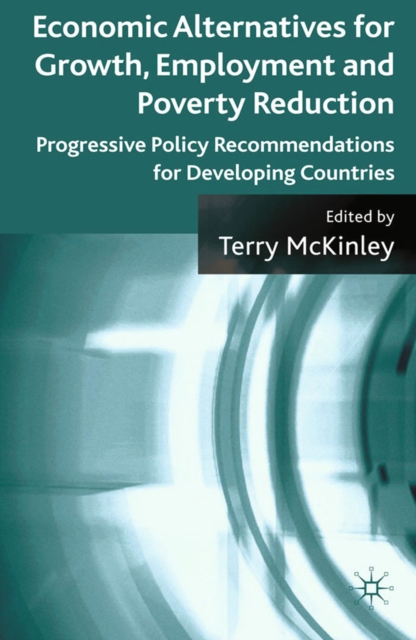
Economic alternatives for growth, employment and poverty reduction : progressive policy recommendations for developing countries
This book is a collection of working papers, policy briefs and training modules, published by the International Poverty Centre in Brazil, which provides a comprehensives set of recommendations for alternative economic policies that can generate growth, employment and poverty reduction in developing countries.
eBook



New Tigers and Old Elephants
Which factors identify 'winners' (tigers) in the development game and which characterize 'losers' (elephants) are described in this approach to understanding economic development in a post-cold war environment.
eBook

Beyond Macroeconomic Stability
This thought-provoking volume goes beyond the narrow conceptualization of macroeconomic stability in the conventional framework and explores the link between structural transformation and inclusive development. It examines three thematic pillars: the limits of conventional macroeconomics; the long-run agenda of structural transformation and the development of capabilities; and inequality and its macroeconomic consequences. It offers a valuable new resource to economists, policy-makers and all those interested in inclusive economic development.
eBook

Safeguarding the health sector in times of macroeconomic instability : policy lessons for low- and middle-income countries
Safeguarding the Health Sector in Times of Macroeconomic Instability presents the results of an international initiative to document the effects of how health systems in the developing world have responded to macroeconomic austerity and adjustment measures. Are these systems flexible and resilient to changes or are they rigid? In which circumstances and under which conditions do health systems respond favourably or unfavourably? What are the success stories? Country studies from Burkina Faso, Zimbabwe, India, Thailand, Mexico, and Colombia discuss lessons learned and identify policy measures for safeguarding the health sector. This book provides a fresh look at the relationships between. macroeconomic policy and interventions, health sector reform, and the health system in general, presenting new and detailed observations to inform policy choices within the health-care sector worldwide. It is unique in its focus on health systems and services (including financing, quality, accessibility, and utilization), rather than on health status. It will be of interest to academics, researchers, and students studying or active in health sciences and international development studies; professionals and practitioners in donor organizations, development organizations, and NGOs worldwide; and policy advisors and decision-makers in the health-care sector.
eBook