
Catalogue Search | MBRL


Are you sure you want to remove the book from the shelf?

{{itemTitle}}
1,834
result(s) for
"Economically Disadvantaged"
Sort by:

Cheap Street
Cheap Street tells the history of London’s street markets and of the people who bought and sold in them. From the 1850s anything that could be bought in a shop in London could also be bought in the street markets, which were the butcher, baker, greengrocer, provision merchant, haberdasher, tailor and furnisher of the working-class city. They sat uncomfortably on the edge of the law, barely tolerated by authorities that did not quite know whether to admire them for their efficient circulation of goods, or to despise them for their unregulated and ‘low’ character. They were the first recourse of immigrants looking to earn a living, and of privileged observers seeking a voyeuristic glimpse of street life. London’s street markets have frequently been overlooked, viewed as anomalous among the sophisticated consumer institutions of the modern city, the department stores and West End shops. Cheap Street shows how the street markets, as an emanation of the informal economy that flourishes in the interstices of urban life, adapted nimbly to urban growth and contributed to consumer modernity, and how in doing so, they propagated myths about what it meant to live in London and be a Londoner. The book analyses the street markets through their legal and economic informality, material culture, sensory affects and performative character, using varied documentary and visual evidence. It reshapes the interpretation of London’s urban geographies and consumer cultures, offering new insights into London’s history.
eBook

Leveraging MOOCs for learners in economically disadvantaged regions
While Massive Online Open Courses (MOOCs) have seen a surge in enrollments in higher education around the world especially during the Covid-19 pandemic, it is unclear if learners from the economically disadvantaged regions (EDR) are also able to capitalize on them. Specifically, challenges related to using MOOCs in these regions have been reported in the literature. Thus, the objective of this paper is to address the pedagogical challenge by investigating approaches to leverage MOOCs for learners in EDR. Drawing from the ARCS (i.e. Attention, Relevance, Confidence and Satisfaction) model, we proposed an embedded MOOCs approach where bite-sized MOOCs segments are integrated into in-class lectures under the guidance of the instructors. The effectiveness of the embedded MOOCs approach was evaluated and compared with other instructional methods. Results from randomized experiments showed that the embedded MOOCs approach had higher evaluations in terms of attention, relevance and satisfaction than face-to-face learning approach. In addition, the embedded MOOCs approach outperformed asynchronously blended MOOCs in enhancing students’ relevance perception. Regression analysis further revealed that attention, confidence, and satisfaction perceptions were positively associated with students’ intention to adopt the embedded MOOCs approach in their future studies. The findings shed light on how to utilize MOOCs and re-use content in MOOCs for global benefits and enable new pedagogical developments. The findings also underscore the importance of local social support and offline interactions to support the online learning materials.
Journal Article

Bodies of Art, Bodies of Labour
Kate Beaton, award-winning author of the graphic novel Ducks: Two Years in the Oil Sands, explores connections between class, literature, and art.
eBook
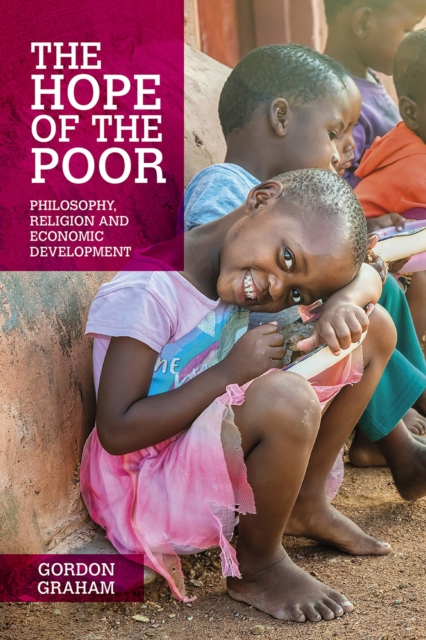
The Hope of the Poor
Is economic development the best hope for the world's poor? A great many individuals, governments and organizations think the obvious answer is 'Yes', the only issue being about how development can best be achieved. In recent decades some powerful voices from economics and anthropology have taken issue with this widespread consensus, and this book aims to add a philosophical dimension to the debate. Just who are 'the poor', and what should they hope for? Is the best hope of having a worthwhile life any different for the poor than it is for the rich?Drawing on Aristotle, Bacon, Hume, Reid, Marx and Nietzsche, as well as contemporary authors such as Amartya Sen, Martha Nussbaum and Tim Ingold, Gordon Graham argues in favour of replacing quantitative assessments of wealth and poverty with a qualitative account of the ways in which human lives can be enriched or impoverished. The final chapter explores the connection between economic and political development and religious ways of th.
eBook

An investigation of curriculum adaptation efforts of teachers working in disadvantaged secondary schools
There is a consensus that the national curriculum cannot be implemented in its original form in local context. Adaptations are made in curriculum due to factors such as school and classroom context, student characteristics and needs, teacher’s professional competence and characteristics. This study aims to investigate the curriculum adaptation efforts of teachers working in socio-economically disadvantaged secondary schools. This study utilized a phenomenological inquiry. The participants, who were selected using criterion sampling method, included the voluntary eight female teachers who worked in socio-economically disadvantaged secondary schools. Data were collected through standardized open-ended interviews and were analyzed using the inductive content analysis method. This study indicated four main findings: a) Students’ family structure is the main factor determining disadvantageousness in socio-economically disadvantaged secondary schools. b) Student and family characteristics, curriculum and curriculum materials are the factors that frequently prevent fidelity to curriculum. c) Teachers made adaptations such as reorganizing, supplementing, omitting/delaying, completing and reducing/simplification. d) In the adaptation process, teachers were found to experience difficulties associated with planning the instruction process and organizing and presenting the content. They were found to cope with these difficulties by benefitting from their postgraduate education experiences, collaboration with colleagues, and internet sources. The findings are discussed in terms of education and curriculum implementation.
Journal Article

Improving Access to Oral Health Care for Vulnerable and Underserved Populations
Access to oral health care is essential to promoting and maintaining overall health and well-being, yet only half of the population visits a dentist each year. Poor and minority children are less likely to have access to oral health care than are their nonpoor and nonminority peers. Older adults, people who live in rural areas, and disabled individuals, uniformly confront access barriers, regardless of their financial resources. The consequences of these disparities in access to oral health care can lead to a number of conditions including malnutrition, childhood speech problems, infections, diabetes, heart disease, and premature births.
Improving Access to Oral Health Care for Vulnerable and Underserved Populations examines the scope and consequences of inadequate access to oral health services in the United States and recommends ways to combat the economic, structural, geographic, and cultural factors that prevent access to regular, quality care. The report suggests changing funding and reimbursement for dental care; expanding the oral health work force by training doctors, nurses, and other nondental professionals to recognize risk for oral diseases; and revamping regulatory, educational, and administrative practices. It also recommends changes to incorporate oral health care into overall health care. These recommendations support the creation of a diverse workforce that is competent, compensated, and authorized to serve vulnerable and underserved populations across the life cycle.
The recommendations provided in Improving Access to Oral Health Care for Vulnerable and Underserved Populations will help direct the efforts of federal, state, and local government agencies; policy makers; health professionals in all fields; private and public health organizations; licensing and accreditation bodies; educational institutions; health care researchers; and philanthropic and advocacy organizations.
eBook
Overcoming Educational Racism in the Community College
Overall, nearly half of all incoming community college students \"drop-out\" within twelve months of enrolling, with students of color and the economically disadvantaged faring far worse. Given the high proportion of underserved students these colleges enroll, the detrimental impact on their communities, and for the national economy as a whole at a time of diversifying demographics, is enormous.This book addresses this urgent issue by bringing together nationally recognized researchers whose work throws light on the structural and systemic causes of student attrition, as well as college presidents and leaders who have successfully implemented strategies to improve student outcomes.The book is divided into five sections, each devoted to a demographic group: African Americans, Native Americans/American Indians, Latino Americans, Asian Americans and Pacific Islanders, and Caucasian students in poverty. Each section in turn comprises three chapters, the first providing an up-to-date summary of research findings about barriers and attainments pertaining to the corresponding population, the second the views of a community college president, and the final chapter offering a range of models and best practices for achieving student success.The analyses--descriptions of cutting edge programs--and recommendations for action will commend this volume to everyone concerned about equity and completion rates in the community college sector, from presidents and senior administrators through faculty and student affairs leaders. For educational researchers, it fills blanks on data about attrition and persistence patterns of minority students attending community colleges.ContributorsKenneth AtwaterGlennda M. BivensEdward BushCara CrowleyMaria Harper-MarinickJoan B. HolmesG. Edward HughesLee LambertCynthia Lindquist, Ta'Sunka Wicahpi Win (Star Horse Woman)Angela LongRussell Lowery-HartJamillah MooreChristopher M. MullinBrian MurphyEduardo J. PadrónDeborah A. SantiagoWei SongRobert Tera
eBook

The Effects of State Higher Education Policies and Institutions on Access by Economically Disadvantaged Students
Do state government policies and institutions promote access to postsecondary education by economically disadvantaged students? I analyze the number of state residents receiving federal Pell grants relative to the college-age population raised in low-income households. Using data for 1993-2008, I estimate separate models for total Pell recipients and for those enrolled in public, private nonprofit, and proprietary institutions. I find consistent evidence that state spending on both need- and merit-based financial aid enhances access by economically disadvantaged students, with the effects of need-based aid being larger and more robust than those of aid based at least in part on merit. I also find that students in states with consolidated governing boards have slightly greater access to public and nonprofit institutions than those with statewide coordinating boards. Enrollment by economically disadvantaged students in the public and proprietary sectors also responds to the opportunity costs of attending college, as measured by the state unemployment rate. I do not find evidence of direct effects from state policies limiting affirmative action, or political elites' ideology.
Journal Article

In Their Own Write
Until now it has been impossible to know how the poor themselves negotiated the New Poor Law and its measures, and how their interactions with the state shifted and changed across the nineteenth century. Based on first-hand testimony - pauper letters and witness statements interwoven with letters to newspapers and correspondence from poor law officials and advocates - In Their Own Write exposes this hidden history.
eBook

Not by Bread Alone
What Muscovites get in a soup kitchen run by the Christian Church of Moscow is something far more subtle and complex-if no less necessary and nourishing-than the food that feeds their hunger. InNot by Bread Alone,the first full-length ethnographic study of poverty and social welfare in the postsocialist world, Melissa L. Caldwell focuses on the everyday operations and civil transactions at CCM soup kitchens to reveal the new realities, the enduring features, and the intriguing subtext of social support in Russia today. In an international food aid community, Caldwell explores how Muscovites employ a number of improvisational tactics to satisfy their material needs. She shows how the relationships that develop among members of this community-elderly Muscovite recipients, Russian aid workers, African student volunteers, and North American and European donors and volunteers-provide forms of social support that are highly valued and ultimately far more important than material resources. InNot by Bread Alonewe see how the soup kitchens become sites of social stability and refuge for all who interact there-not just those with limited financial means-and how Muscovites articulate definitions of hunger and poverty that depend far more on the extent of one's social contacts than on material factors. By rethinking the ways in which relationships between social and economic practices are theorized-by identifying social relations and social status as Russia's true economic currency-this book challenges prevailing ideas about the role of the state, the nature of poverty and welfare, the feasibility of Western-style reforms, and the primacy of social connections in the daily lives of ordinary people in post-Soviet Russia.
eBook