
Catalogue Search | MBRL


Are you sure you want to remove the book from the shelf?

{{itemTitle}}
520
result(s) for
"Economics, Medical Africa South of the Sahara."
Sort by:

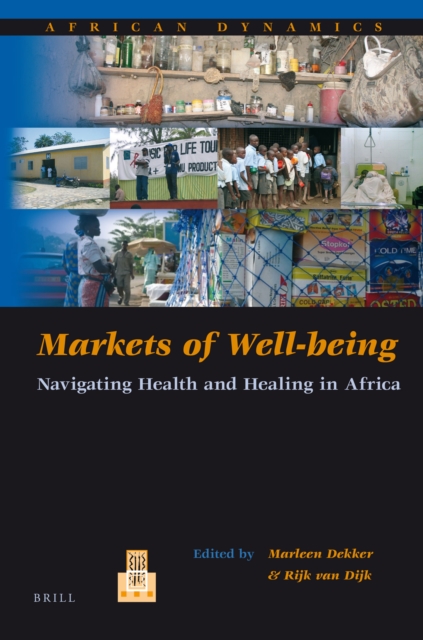
Markets of Well-being
Drawing on extensive fieldwork in nine African countries, this volume offers different perspectives on the emerging markets for well-being. The chapters discuss how medical staff, patients and citizins navigate markets for health and healing.
eBook
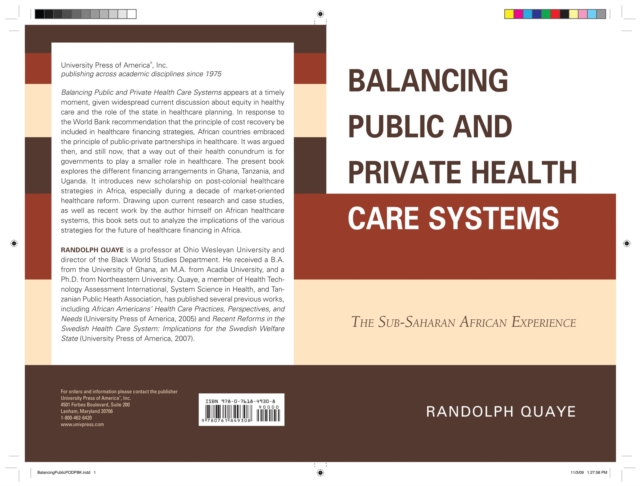
Balancing public and private health care systems
Balancing Public and Private Health Care Systems appears at a timely moment, given widespread current discussion about equity in healthy care and the role of the state in healthcare planning. In response to the World Bank recommendation that the principle of cost recovery be included in healthcare financing strategies, African countries embraced the principle of public-private partnerships in healthcare. It was argued then, and still now, that a way out of their health conundrum is for governments to play a smaller role in healthcare. The present book explores the different financing arrangements in Ghana, Tanzania, and Uganda. It introduces new scholarship on post-colonial healthcare strategies in Africa, especially during a decade of market-oriented healthcare reform. Drawing upon current research and case studies, as well as recent work by the author himself on African healthcare systems, this book sets out to analyze the implications of the various strategies for the future of healthcare financing in Africa.
eBook

Incidence of eclampsia and related complications across 10 low- and middle-resource geographical regions: Secondary analysis of a cluster randomised controlled trial
In 2015, approximately 42,000 women died as a result of hypertensive disorders of pregnancy worldwide; over 99% of these deaths occurred in low- and middle-income countries. The aim of this paper is to describe the incidence and characteristics of eclampsia and related complications from hypertensive disorders of pregnancy across 10 low- and middle-income geographical regions in 8 countries, in relation to magnesium sulfate availability.
This is a secondary analysis of a stepped-wedge cluster randomised controlled trial undertaken in sub-Saharan Africa, India, and Haiti. This trial implemented a novel vital sign device and training package in routine maternity care with the aim of reducing a composite outcome of maternal mortality and morbidity. Institutional-level consent was obtained, and all women presenting for maternity care were eligible for inclusion. Data on eclampsia, stroke, admission to intensive care with a hypertensive disorder of pregnancy, and maternal death from a hypertensive disorder of pregnancy were prospectively collected from routine data sources and active case finding, together with data on perinatal outcomes in women with these outcomes. In 536,233 deliveries between 1 April 2016 and 30 November 2017, there were 2,692 women with eclampsia (0.5%). In total 6.9% (n = 186; 3.47/10,000 deliveries) of women with eclampsia died, and a further 51 died from other complications of hypertensive disorders of pregnancy (0.95/10,000). After planned adjustments, the implementation of the CRADLE intervention was not associated with any significant change in the rates of eclampsia, stroke, or maternal death or intensive care admission with a hypertensive disorder of pregnancy. Nearly 1 in 5 (17.9%) women with eclampsia, stroke, or a hypertensive disorder of pregnancy causing intensive care admission or maternal death experienced a stillbirth or neonatal death. A third of eclampsia cases (33.2%; n = 894) occurred in women under 20 years of age, 60.0% in women aged 20-34 years (n = 1,616), and 6.8% (n = 182) in women aged 35 years or over. Rates of eclampsia varied approximately 7-fold between sites (range 19.6/10,000 in Zambia Centre 1 to 142.0/10,000 in Sierra Leone). Over half (55.1%) of first eclamptic fits occurred in a health-care facility, with the remainder in the community. Place of first fit varied substantially between sites (from 5.9% in the central referral facility in Sierra Leone to 85% in Uganda Centre 2). On average, magnesium sulfate was available in 74.7% of facilities (range 25% in Haiti to 100% in Sierra Leone and Zimbabwe). There was no detectable association between magnesium sulfate availability and the rate of eclampsia across sites (p = 0.12). This analysis may have been influenced by the selection of predominantly urban and peri-urban settings, and by collection of only monthly data on availability of magnesium sulfate, and is limited by the lack of demographic data in the population of women delivering in the trial areas.
The large variation in eclampsia and maternal and neonatal fatality from hypertensive disorders of pregnancy between countries emphasises that inequality and inequity persist in healthcare for women with hypertensive disorders of pregnancy. Alongside the growing interest in improving community detection and health education for these disorders, efforts to improve quality of care within healthcare facilities are key. Strategies to prevent eclampsia should be informed by local data.
ISRCTN: 41244132.
Journal Article

Addressing cancer care inequities in sub-Saharan Africa: current challenges and proposed solutions
Introduction
Cancer is a significant public health challenge globally, with nearly 2000 lives lost daily in Africa alone. Without adequate measures, mortality rates are likely to increase. The major challenge for cancer care in Africa is equity and prioritization, as cancer is not receiving adequate attention from policy-makers and strategic stakeholders in the healthcare space. This neglect is affecting the three primary tiers of cancer care: prevention, diagnosis, and treatment/management. To promote cancer care equity, addressing issues of equity and prioritization is crucial to ensure that everyone has an equal chance at cancer prevention, early detection, and appropriate care and follow-up treatment.
Methodology
Using available literature, we provide an overview of the current state of cancer care in Africa and recommendations to close the gap.
Results
We highlight several factors that contribute to cancer care inequity in Africa, including inadequate funding for cancer research, poor cancer education or awareness, inadequate screening or diagnostic facilities, lack of a well-organized and effective cancer registry system and access to care, shortage of specialized medical staff, high costs for screening, vaccination, and treatment, lack of technical capacity, poor vaccination response, and/or late presentation of patients for cancer screening. We also provide recommendations to address some of these obstacles to achieving cancer care equity. Our recommendations are divided into national-level initiatives and capacity-based initiatives, including cancer health promotion and awareness by healthcare professionals during every hospital visit, encouraging screening and vaccine uptake, ensuring operational regional and national cancer registries, improving healthcare budgeting for staff, equipment, and facilities, building expertise through specialty training, funding for cancer research, providing insurance coverage for cancer care, and implementing mobile health technology for telemedicine diagnosis.
Conclusion
Addressing challenges to cancer equity holistically would improve the likelihood of longer survival for cancer patients, lower the risk factors for groups that are already at risk, and ensure equitable access to cancer care on the continent. This study identifies the existing stance that African nations have on equity in cancer care, outlines the current constraints, and provides suggestions that could make the biggest difference in attaining equity in cancer care.
Journal Article
Investing in communities achieves results
The overview summarizes the evaluation of community responses (15 studies, including 11 evaluations carried out in 8 countries). It presents the evaluation questions, the methodology, the key results achieved by community responses along the continuum of prevention, treatment, care and support, and the resulting policy and programmatic implications. Before the scale-up of the international response to the AIDS pandemic, community responses in developing countries played a crucial role in providing services and care for those affected. This study is the first comprehensive, mixed-method evaluation of the impact of that response. The evaluation finds that community response can be effective at increasing knowledge of HIV, promoting social empowerment, increasing access to and use of HIV services, and even decreasing HIV incidence, all through the effective mobilization of limited resources. By effectively engaging with this powerful community structure, future HIV and AIDS programs can ensure that communities continue to contribute to the global response to HIV and AIDS.
eBook

Distinct Salmonella Enteritidis lineages associated with enterocolitis in high-income settings and invasive disease in low-income settings
Nicholas Feasey and colleagues report whole-genome sequence analysis of 675 isolates of
Salmonella enterica
serovar Enteritidis from 45 countries. They find evidence for a global epidemic clade associated with enterocolitis and two novel clades restricted to distinct regions of Africa and associated with invasive disease.
An epidemiological paradox surrounds
Salmonella enterica
serovar Enteritidis. In high-income settings, it has been responsible for an epidemic of poultry-associated, self-limiting enterocolitis, whereas in sub-Saharan Africa it is a major cause of invasive nontyphoidal
Salmonella
disease, associated with high case fatality. By whole-genome sequence analysis of 675 isolates of
S.
Enteritidis from 45 countries, we show the existence of a global epidemic clade and two new clades of
S.
Enteritidis that are geographically restricted to distinct regions of Africa. The African isolates display genomic degradation, a novel prophage repertoire, and an expanded multidrug resistance plasmid.
S.
Enteritidis is a further example of a
Salmonella
serotype that displays niche plasticity, with distinct clades that enable it to become a prominent cause of gastroenteritis in association with the industrial production of eggs and of multidrug-resistant, bloodstream-invasive infection in Africa.
Journal Article

Barriers and facilitators of HPV vaccination in sub-saharan Africa: a systematic review
Background
Human Papilloma Virus (HPV) is the most common sexually transmitted infection worldwide. Globally, both men and women have a 50% risk of being infected at least once in their life. HPV prevalence is among the highest in sub-Saharan Africa (SSA), at an average of 24%. HPV causes different types of cancers, including cervical cancer (CC), which is the leading cause of cancer deaths among women in SSA. HPV-vaccination has been proven to be effective in reducing HPV induced cancers. SSA countries are delayed in reaching the WHO’s target of fully vaccinating 90% of girls within the age of 15 by 2030. Our systematic review aims to identify barriers and facilitators of HPV-vaccination in SSA to inform national implementation strategies in the region.
Methods
This is a mixed method systematic review based on the PRISMA statement and The Joanna Briggs Institute Reviewers’ Manual. Search strategies were adapted to each selected database: PubMed/MEDLINE, Livivo, Google Scholar, Science Direct, and African Journals Online for papers published in English, Italian, German, French and Spanish between 1 December 2011 and 31 December 2021. Zotero and Rayyan were the software used for data management. The appraisal was conducted by three independent reviewers.
Results
A total of 20 articles were selected for appraisal from an initial 536 articles. Barriers included: limited health system capacities, socio-economic status, stigma, fear and costs of vaccines, negative experience with vaccinations, COVID-19 pandemic, lack of correct information, health education (HE) and consent. Additionally, we found that boys are scarcely considered for HPV-vaccination by parents and stakeholders. Facilitators included: information and knowledge, policy implementation, positive experience with vaccinations, HE, stakeholders’ engagement, women’s empowerment, community engagement, seasonality, and target-oriented vaccination campaigns.
Conclusions
This review synthesizes barriers and facilitators of HPV-vaccinations in SSA. Addressing these can contribute to the implementation of more effective HPV immunization programs targeted at eliminating CC in line with the WHO 90/70/90 strategy.
Registration and funding
Protocol ID: CRD42022338609 registered in the International Prospective Register of Systematic Reviews (PROSPERO). Partial funds: German Centre for Infection research (DZIF) project NAMASTE: 8,008,803,819.
Contributions to the literature
Our review synthesizes factors influencing the successful implementation of HPV vaccination programs in SSA in order to improve roll-out and coverage.
Our review provides an overview and contextualizes the barriers and facilitators of HPV vaccination implementation in 12 countries in SSA. These span the health care system ranging from personal experiences to economic, social, and political factors.
Lessons learnt from past experiences of HPV vaccination in SSA as identified by our review, can contribute to more effective national HPV vaccination programs targeted at eliminating CC and implementing the WHO 90/70/90 triple intervention strategy.
Journal Article
Systematic review of burnout among healthcare providers in sub-Saharan Africa
Background
Burnout is characterized by physical and emotional exhaustion from long-term exposure to emotionally demanding work. Burnout affects interpersonal skills, job performance, career satisfaction, and psychological health. However, little is known about the burden of burnout among healthcare providers in sub-Saharan Africa.
Methods
Relevant articles were identified through a systematic review of PubMed, Web of Science (Thomson Reuters), and PsycINFO (EBSCO). Studies were selected for inclusion if they examined a quantitative measure of burnout among healthcare providers in sub-Saharan Africa.
Results
A total of 65 articles met our inclusion criteria for this systematic review. Previous studies have examined burnout in sub-Saharan Africa among physicians (
N
= 12 articles), nurses (
N
= 26), combined populations of healthcare providers (
N
= 18), midwives (
N
= 2), and medical or nursing students (
N
= 7). The majority of studies assessed burnout using the Maslach Burnout Inventory. The highest levels of burnout were reported among nurses, although all healthcare providers showed high burnout. Burnout among healthcare providers is associated with their work environments, interpersonal and professional conflicts, emotional distress, and low social support.
Conclusions
Available studies on this topic are limited by several methodological challenges. More rigorously designed epidemiologic studies of burnout among healthcare providers are warranted. Health infrastructure improvements will eventually be essential, though difficult to achieve, in under-resourced settings. Programs aimed at raising awareness and coping with burnout symptoms through stress management and resilience enhancement trainings are also needed.
Journal Article

Systematic review and meta-analysis of community and facility-based HIV testing to address linkage to care gaps in sub-Saharan Africa
HIV testing and counselling is the first crucial step for linkage to HIV treatment and prevention. However, despite high HIV burden in sub-Saharan Africa, testing coverage is low, particularly among young adults and men. Community-based HIV testing and counselling (testing outside of health facilities) has the potential to reduce coverage gaps, but the relative impact of different modalities is not well assessed. We conducted a systematic review of HIV testing modalities, characterizing community (home, mobile, index, key populations, campaign, workplace and self-testing) and facility approaches by population reached, HIV positivity, CD4 count at diagnosis and linkage. Of 2,520 abstracts screened, 126 met eligibility criteria. Community HIV testing and counselling had high coverage and uptake and identified HIV-positive people at higher CD4 counts than facility testing. Mobile HIV testing reached the highest proportion of men of all modalities examined (50%, 95% confidence interval (CI) = 47–54%) and home with self-testing reached the highest proportion of young adults (66%, 95% CI = 65–67%). Few studies evaluated HIV testing for key populations (commercial sex workers and men who have sex with men), but these interventions yielded high HIV positivity (38%, 95% CI = 19–62%) combined with the highest proportion of first-time testers (78%, 95% CI = 63–88%), indicating service gaps. Community testing with facilitated linkage (for example, counsellor follow-up to support linkage) achieved high linkage to care (95%, 95% CI = 87–98%) and antiretroviral initiation (75%, 95% CI = 68–82%). Expanding home and mobile testing, self-testing and outreach to key populations with facilitated linkage can increase the proportion of men, young adults and high-risk individuals linked to HIV treatment and prevention, and decrease HIV burden.
This article has not been written or reviewed by
Nature
editors.
Nature
accepts no responsibility for the accuracy of the information provided.
Journal Article