
Catalogue Search | MBRL


Are you sure you want to remove the book from the shelf?

{{itemTitle}}
83,653
result(s) for
"Economics Philosophy."
Sort by:

Blunt instrument : why economic theory can't get any better...why we need it anyway
\"A defense of economic theory, in spite of its failure as a predictive science, as a tool of social engineering\"-- Provided by publisher.
BOOK
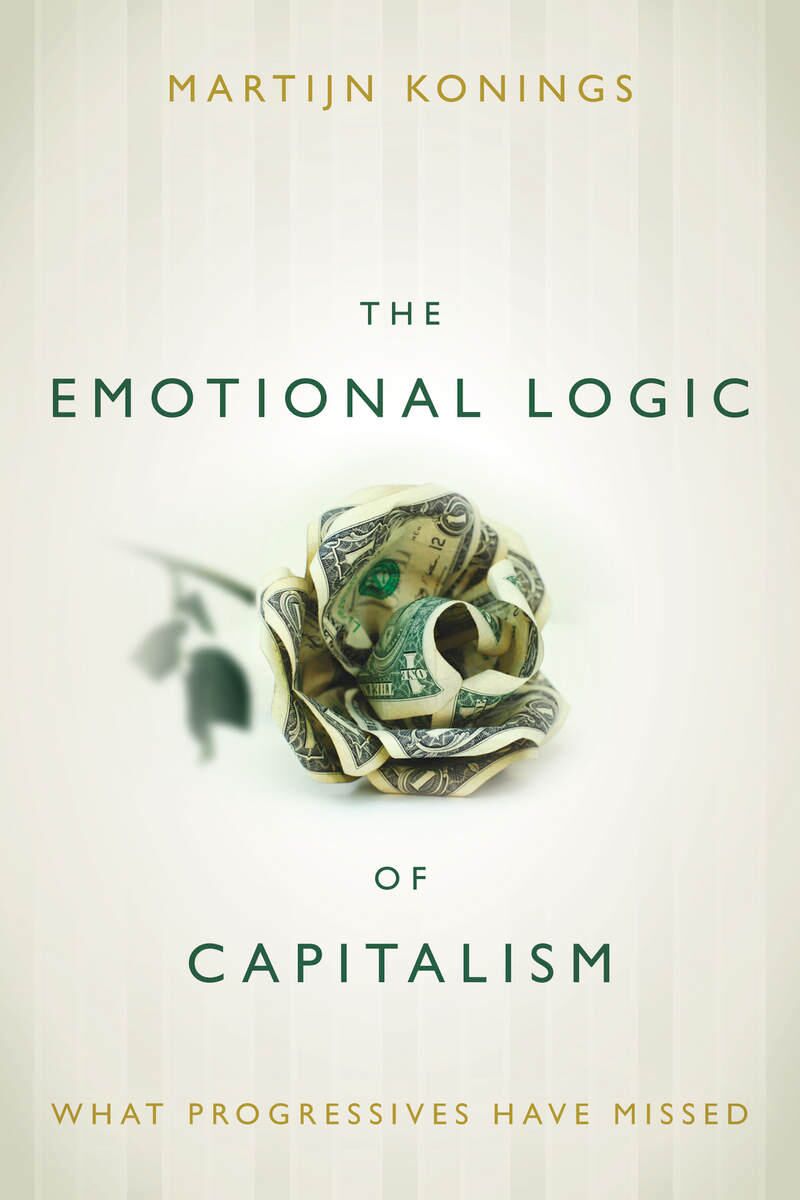
The emotional logic of capitalism : what progressives have missed
The capitalist market, progressives bemoan, is a cold monster: it disrupts social bonds, erodes emotional attachments, and imposes an abstract utilitarian rationality. But what if such hallowed critiques are completely misleading? This book argues that the production of new sources of faith and enchantment is crucial to the dynamics of the capitalist economy. Distinctively secular patterns of attraction and attachment give modern institutions a binding force that was not available to more traditional forms of rule. Elaborating his alternative approach through an engagement with the semiotics of money and the genealogy of economy, Martijn Konings uncovers capitalism's emotional and theological content in order to understand the paradoxical sources of cohesion and legitimacy that it commands. In developing this perspective, he draws on pragmatist thought to rework and revitalize the Marxist critique of capitalism.
eBook


The Intellectual Origins of the Global Financial Crisis
Commentary on the financial crisis has offered technical analysis, political finger pointing, and myriad economic and political solutions. But rarely do these investigations reach beyond the economic and political causes of the crisis to explore their underlying intellectual grounds. The essays in this volume delve deeper into the cultural and intellectual foundations, philosophical ideas, political traditions, and economic movements that underlie the greatest financial crisis in nearly a century. Moving beyond traditional economic and political science approaches, these essays engage thinkers from Hannah Arendt to Max Weber and Adam Smith to Michel Foucault. With Arendt as a catalyst, the authors probe the philosophical as well as the cultural origins of the great recession. Orienting the volume is Arendt's argument that past financial crises and also totalitarianism are rooted, at least in part, in the tendency for capital to expand its reach globally without regard to political and moral borders or limits. That politics is made subservient to economics names a cultural transformation that, in the spirit of Arendt, guides these essays in making sense of our present world. Including articles, interviews, and commentary from leading scholars and business executives, this volume offers views that are as diverse as they are timely. By reaching beyond \"how\" the crisis happened to \"why\" the crisis happened, the authors re-imagine the recent financial crisis and thus provide fresh thinking about how to respond.
eBook


On Adam Smith's Wealth of Nations
Adam Smith was a philosopher before he ever wrote about economics, yet until now there has never been a philosophical commentary on the Wealth of Nations. Samuel Fleischacker suggests that Smith's vastly influential treatise on economics can be better understood if placed in the light of his epistemology, philosophy of science, and moral theory. He lays out the relevance of these aspects of Smith's thought to specific themes in the Wealth of Nations, arguing, among other things, that Smith regards social science as an extension of common sense rather than as a discipline to be approached mathematically, that he has moral as well as pragmatic reasons for approving of capitalism, and that he has an unusually strong belief in human equality that leads him to anticipate, if not quite endorse, the modern doctrine of distributive justice.
eBook

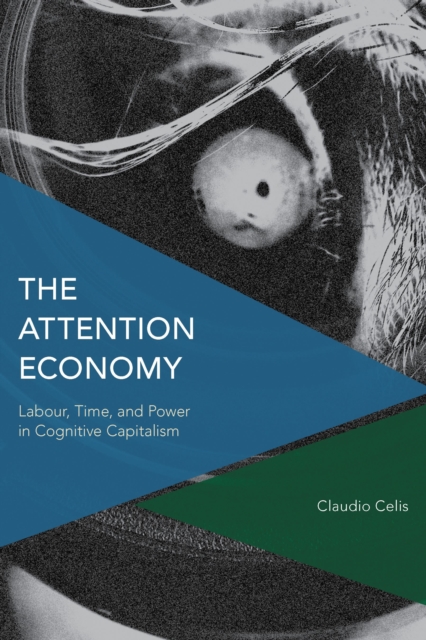
Attention economy
The attention economy is a notion that explains the growing value of human attention in societies characterised by post-industrial modes of production. In a world in which information and knowledge become central to the valorisation process of capital, human attention becomes a scarce and hence increasingly valuable commodity. To what degree is the attention economy a specific form of capitalist production? How does the attention economy differ from the industrial mode of production in which Marx developed his critique of capitalism? How can Marx’s theory be used today despite the historical differences that separate industrial from post-industrial capitalism? The Attention Economy argues that human attention is a new form of labour that can only be understood through a systematic reinterpretation of Marx. It argues that the attention economy belongs to a general shift in capitalism in which subjectivity itself becomes the territory of production and exploitation of value as well as the territory of the reproduction of capitalist power relations.
eBook

How to think like an economist : the great economists who shaped the world and what we can learn from them today
Capturing the essence of history's most influential economists in enjoyable and illuminating biographical sketches, this book shows how the great economic thinkers are still relevant today. We live in the economy - and we are part of it. Living through a pandemic, governments had to work out how to put economies into a deep freeze without destroying them. In explaining how economic thinking is indispensable to tackling these huge problems, this book is a sure-footed guide, spanning Aristotle's ideas about restraining consumption, Adam Smith's thinking about the importance of moral character for sustained economic development, and Esther Duflo's ongoing work to help the world's poorest communities lift themselves out of poverty. It shows how great economic thinkers have enabled us to see the world differently, and how we can make it better.
Book

The micro-politics of capital : Marx and the prehistory of the present
What is the relation between the economy, or the mode of production, and culture, beliefs, and desires? How is it possible to think of these relations without reducing one to the other, or effacing one for the sake of the other? To answer these questions, The Micro-Politics of Capital re-reads Marx in light of the contemporary critical interrogations of subjectivity in the works of Althusser, Deleuze, Guattari, Foucault, and Negri. Jason Read suggests that what characterizes contemporary capitalism is the intimate intersection of the production of commodities with the production of desire, beliefs, and knowledge.
eBook