
Catalogue Search | MBRL


Are you sure you want to remove the book from the shelf?

{{itemTitle}}
60
result(s) for
"Economics Pictorial works"
Sort by:

Simply economics
Understanding economics has never been easier. Combining bold graphics with easy-to-understand text, Simply Economics is the perfect introduction to the subject for those who are short of time but hungry for knowledge. Covering more than 120 key economic terms and ideas from scarcity to stocks and shares, each pared-back, single-page entry explains the concept more clearly than ever before. Organized by major themes -- Foundations of economics, Economies in action, Choices and Consequences, Markets, International Trade, and Finance -- entries demystify the groundbreaking ideas of famous economists from Adam Smith to John Maynard Keynes, Joseph Schumpeter to Milton Friedman, explaining the essentials of each key economics school and theory. Whether you are studying economics at school or college, or simply want a jargon-free overview of the subject, this essential guide is packed with everything you need to understand the basics quickly and easily.

The Color of Loss
The devastation of New Orleans after Hurricane Katrina has been imprinted in our collective visual memory by thousands of images in the media and books of dramatic photographs by Robert Polidori, Larry Towell, Chris Jordan, Debbie Fleming Caffrey, and others. New Orleanians want the world to see and respond to the destruction of their city and the suffering of its people—and yet so many images of so much destruction threaten a visual and emotional overload that would tempt us to avert our eyes and become numb. In The Color of Loss, Dan Burkholder presents a powerful new way of seeing the ravaged homes, churches, schools, and businesses of New Orleans. Using an innovative digital photographic technology called high dynamic range (HDR) imaging, in which multiple exposures are artistically blended to bring out details in the shadows and highlights that would be hidden in conventional photographs, he creates images that are almost like paintings in their richness of color and profusion of detail. Far more intense and poetic than purely documentary photographs, Burkholder's images lure viewers to linger over the artifacts of people's lives—a child's red wagon abandoned in a mud-caked room, a molding picture of Jesus—to fully understand the havoc thrust upon the people of New Orleans. In the deserted, sinisterly beautiful rooms of The Color of Loss, we see how much of the splendor and texture of New Orleans washed away in the flood. This is the hidden truth of Katrina that Dan Burkholder has revealed.
eBook
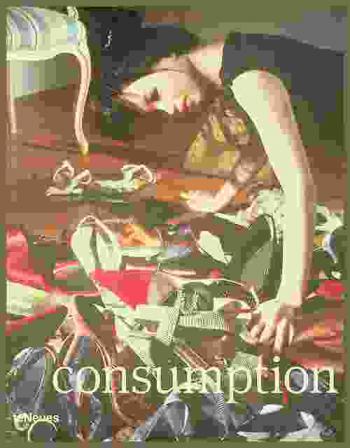
Consumption
\"The theme of the fifth cycle of the Prix Pictet is Consumption. Consumption lies at the heart of the Prix Pictet's mission to bring global attention to what we believe is the greatest challenge facing humankind today: the issue of environmental sustainability.\" -- Provided by publisher.
Book

The Street
Vacant lots. Historic buildings overgrown with weeds. Walls and alleyways covered with graffiti. These are sights associated with countless inner-city neighborhoods in America, and yet many viewers have trouble getting beyond the surface of such images, whether they are denigrating them as signs of a dangerous ghetto or romanticizing them as traits of a beautiful ruined landscape. The Street: A Field Guide to Inequality provides readers with the critical tools they need to go beyond such superficial interpretations of urban decay.
Using MacArthur fellow Camilo José Vergara's intimate street photographs of Camden, New Jersey as reference points, the essays in this collection analyze these images within the context of troubled histories and misguided policies that have exacerbated racial and economic inequalities. Rather than blaming Camden's residents for the blighted urban landscape, the multidisciplinary array of scholars contributing to this guide reveal the oppressive structures and institutional failures that have led the city to this condition. Tackling topics such as race and law enforcement, gentrification, food deserts, urban aesthetics, credit markets, health care, childcare, and schooling, the contributors challenge conventional thinking about what we should observe when looking at neighborhoods.
eBook


Fault Lines
In the summer of 2014, at the height of Saskatchewan's oil boom, geographer Emily Eaton and photographer Valerie Zink travelled to oil towns across the province, from the sea-can motel built from shipping containers on the outskirts of Estevan to seismic testing sites on Thunderchild First Nation's Sundance grounds.
eBook

Seattle's coal legacy
In the 1880s, Seattle became a major coal port in the United States.By 1908, Puget Sound was the third-largest coal port, after New York and Baltimore.For Seattle, the major coal mines were in Issaquah, New Castle, Renton, and Black Diamond, with many other smaller mines throughout King County.
eBook

Images from the Arsenal of Democracy
While researching his previous study, Arsenal of Democracy: The American Automobile Industry in World War II (Wayne State University Press, 2013), award-winning automotive historian Charles K. Hyde discovered the many remarkable photos that were part of the era's historical documentation. In Images from the Arsenal of Democracy, Hyde presents a selection of nearly three hundred of these documentary photos in striking black and white, with brief captions. Taken together, the images create a captivating portrait of this crucial moment in American business, military, and cultural history. Images from the Arsenal of Democracy spans from 1940 until the end of the war, presenting up-close, rarely seen views of newly built plants and repurposed production lines, a staggering variety of war products and components, and the many workers behind Detroit's wartime production miracles. The human faces that Hyde presents are especially compelling, as photos show the critical role played by previously underused workers—namely women and African Americans. Images from the Arsenal is divided into chapters by theme, including \"Preparing for War before Pearl Harbor\"; \"Planning Defense Production after Pearl Harbor\"; \"Aircraft Engines and Propellers\"; \"Aircraft Components and Complete Aircraft\"; \"Tanks and Other Armored Vehicles\"; \"Jeeps, Trucks, and Amphibious Vehicles\"; \"Guns, Shells, Bullets, and Other War Goods\"; \"The New Workers\"; and \"Celebrating the Production Achievements.\" The first comprehensive and detailed history drawn solely from the surviving photographic record of wartime Detroit, Images from the Arsenal will be appreciated by automotive historians, World War II scholars, and American history buffs.
eBook

Public health benefits from pictorial health warnings on US cigarette packs: a SimSmoke simulation
IntroductionWhile many countries have adopted prominent pictorial warning labels (PWLs) for cigarette packs, the USA still requires only small, text-only labels located on one side of the cigarette pack that have little effect on smoking-related outcomes. Tobacco industry litigation blocked implementation of a 2011 Food and Drug Administration's (FDA) rule requiring large PWLs. To inform FDA action on PWLs, this study provides research-based estimates of their public health impacts.MethodsLiterature was reviewed to identify the impact of cigarette PWLs on smoking prevalence, cessation and initiation. Based on this analysis, the SimSmoke model was used to estimate the effect of requiring PWLs in the USA on smoking prevalence and, using standard attribution methods, on smoking-attributable deaths (SADs) and key maternal and child health outcomes.ResultsAvailable research consistently shows a direct association between PWLs and increased cessation and reduced smoking initiation and prevalence. The SimSmoke model projects that PWLs would reduce smoking prevalence by 5% (2.5%–9%) relative to the status quo over the short term and by 10% (4%–19%) over the long term. Over the next 50 years, PWLs are projected to avert 652 800 (327 000–1 190 500) SADs, 46 600 (17 500–92 300) low-birth-weight cases, 73 600 (27 800–145 100) preterm births and 1000 (400–2000) cases of sudden infant death syndrome.ConclusionsRequiring PWLs on all US cigarette packs would be appropriate for the protection of the public health, because it would substantially reduce smoking prevalence and thereby reduce SADs and the morbidity and medical costs associated with adverse smoking-attributable birth outcomes.
Journal Article

Eyes on labor : news photography and America's working class
Eyes on Labor narrates an essential chapter in American cultural history, offering a fascinating broad-stroke history of the relationship of photography to the complex and troubled history of 20th-century labor and unionization movements.
eBook