
Catalogue Search | MBRL


Are you sure you want to remove the book from the shelf?

{{itemTitle}}
7,611
result(s) for
"Economics Ukraine."
Sort by:


Staging Democracy
Focusing on the experiences of people in Russia and Ukraine,
Staging Democracy shows how some national leaders' seeming
popularity rests on local economic compacts. Jessica Pisano draws
on long-term research in rural communities and company towns,
analyzing how local political and business leaders, seeking favor
from incumbent politicians, used salaries, benefits, and public
infrastructure to pressure citizens to participate in command
performances.
Pisano looks at elections whose outcome was known in advance,
protests for hire, and smaller mises en scène to explain why people
participate, what differs from spectacle in totalitarian societies,
how political theater exists in both authoritarian and democratic
systems, and how such performances reshape understandings of the
role of politics.
Staging Democracy moves beyond Russia and Ukraine to
offer a novel economic argument for why some people support Putin
and similar politicians. Pisano suggests we can analyze politics in
both democracies and authoritarian regimes using the same
analytical lens of political theater.
eBook

Cascades : how to create a movement that drives transformational change
\"What cascades look like and how change movements succeed\"-- Provided by publisher.
Book
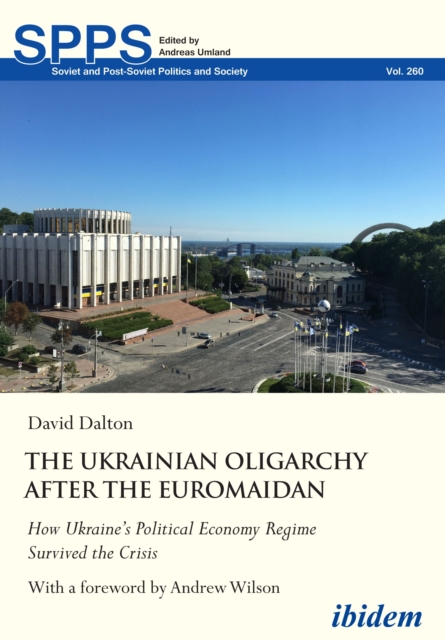
The Ukrainian Oligarchy after the Euromaidan
How did the Ukrainian oligarchy survive the institutional disruption of the Euromaidan revolt of 2013/2014?How did it manage to continue its extractive political and economic practices, amid deep changes in Ukraines society and polity?.
eBook

The Kremlin strikes back : Russia and the West after Crimea's annexation
\"America and Europe responded to Russia's annexation of Crimea on March 18, 2014 by discarding their policy of East-West partnership and reverting intermittently to a policy of Cold War. The West believes that this on-again/off-again second Cold War will end with Russia's capitulation because it is not a sufficiently great power, while the Kremlin's view is just the opposite; Vladimir Putin believes that if Moscow has strategic patience, Russia can recover some of the geostrategic losses that it incurred when the Soviet Union collapsed. The Kremlin Strikes Back scrutinizes the economic prospects of both sides, including factors like military industrial prowess, warfighting capabilities, and national resolve, addressing particularly hot-button issues such as increasing military spending, decreasing domestic spending, and other policies. Stephen Rosefielde aims to objectively gauge future prospects and the wisdom of employing various strategies to address Russian developments\"-- Provided by publisher.
BOOK
A Social and Solidarity Economy
This volume considers one of the alternative economic models that countries can consider implementing. It systematizes the experience of the social and solidarity economy in both developing and developed countries in America, Europe and Australia. However, the focus is given to the prerequisites and main forms of the social and solidarity economy development that exists in Ukraine. The collection will be of interest to academic scholars, as well as political and public decision-makers.
eBook

The EU-Ukraine Association Agreement and Deep and Comprehensive Free Trade Area
In The EU-Ukraine Association Agreement and Deep and Comprehensive Free Trade Area, Guillaume Van der Loo provides the first comprehensive legal analysis of this complex and controversial international agreement.
eBook
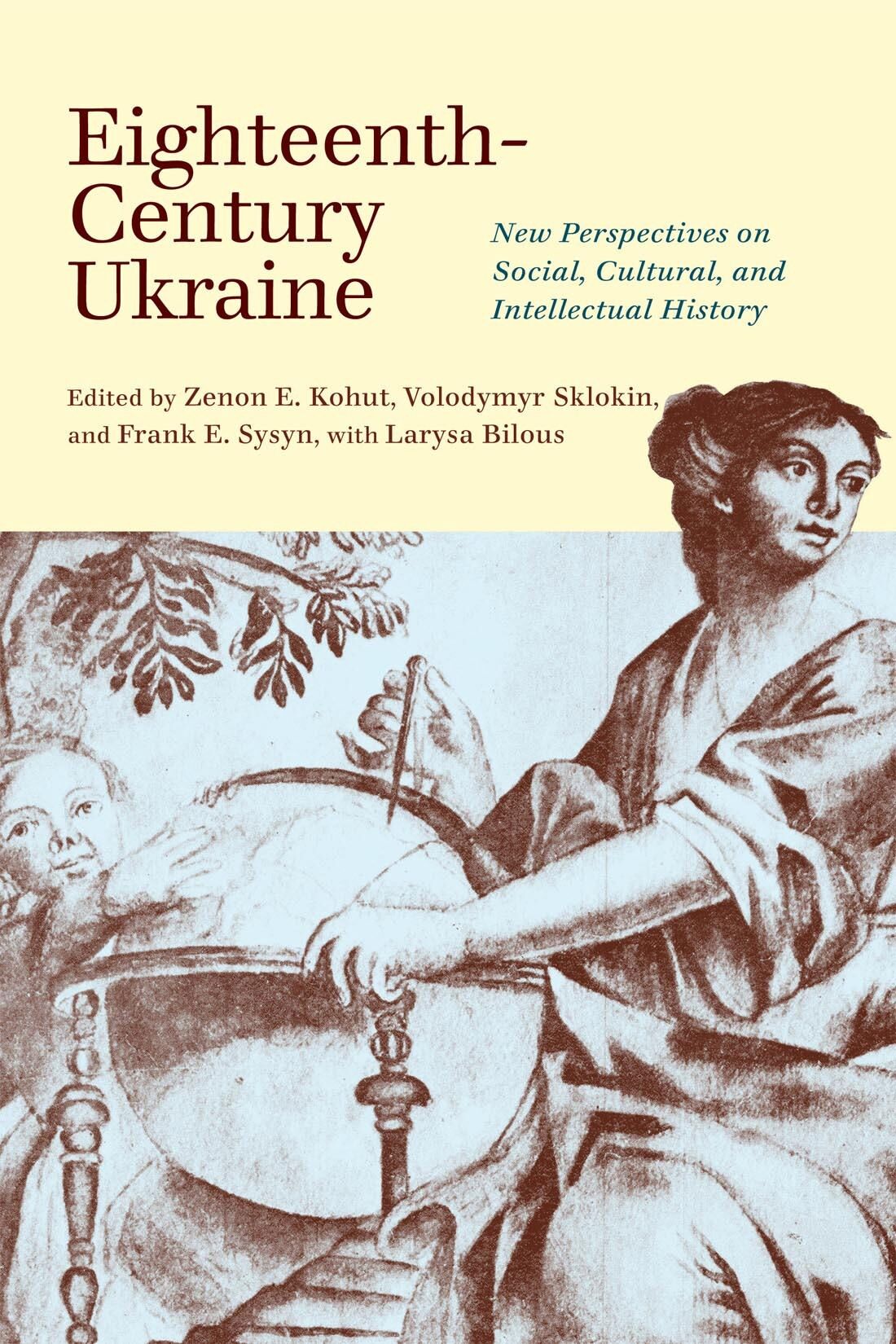
Eighteenth-Century Ukraine
In 1648, the Cossack revolution of Eastern Europe established a new social and political order that endured until the early nineteenth century. Eighteenth-Century Ukraine provides an innovative reassessment of this crucial period and reflects new developments in the study of eighteenth-century Ukrainian social and cultural history.
eBook

Deepening EU-Ukrainian Relations
The signing of the Association Agreement and DCFTA between Ukraine and the European Union in 2014 was an act of strategic, geopolitical significance in the history of Ukraine and Europe itself. Emblematic of a struggle to replace a corrupt, oligarch-controlled regime at home and to resist attempts by Russia to deny Ukraine its 'European choice', the Association Agreement is a defiant statement of the country's determination to become a democratic, independent state. The purpose of the Handbook is to make the content of this complex treaty clearly comprehensible. The first edition of this book has become an acknowledged 'bible' for all practitioners and scholars engaged in east European affairs.This second edition carries the story forward, with a systematic assessment of the achievements and problems that implementation of the treaty has been witnessing over the subsequent years.
eBook
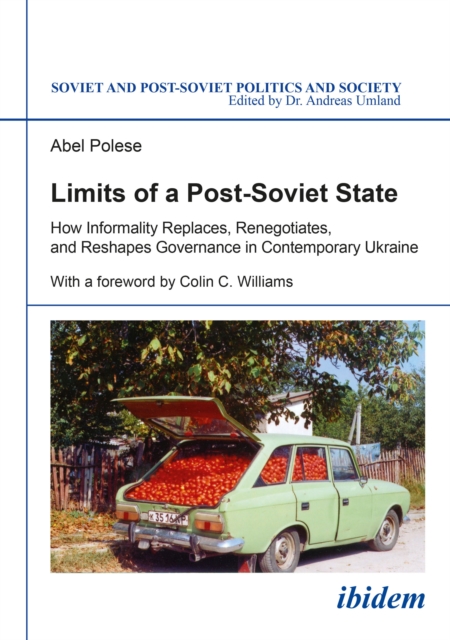
Limits of a post-Soviet state : how informality replaces, renegotiates, and reshapes governance in contemporary Ukraine
Though informed by case studies conducted in Ukraine, this book transcends its country-specific scope. It explains why informality in governance is not necessarily transitory or temporary but a constant in most political systems. The book discusses self-protective mechanisms, responses to incomplete or unfocused policy making, and strategies employed by individuals, classes, and communities to respond to unusual demands. The book argues that when state or company expectations exceed normative behavior, informal behavior continues to thrive. New tactics help cope with the reality of governance. Informality also challenges the values imposed by power through attitudes and behaviors that take place \"beyond\" or \"in spite of\" the state.
eBook