
Catalogue Search | MBRL


Are you sure you want to remove the book from the shelf?

{{itemTitle}}
19
result(s) for
"Economics-Islamic countries-History"
Sort by:


The Political Economy of Muslim Countries
The book looks in detail at the economic conditions of Muslim countries specifically, offering a thorough political analysis at the same time. It focuses on a broad range of economic factors and takes into consideration reports such as the World Development Index. It explores striking differences and similarities among carefully chosen Muslim countries. Mainly because of its broad use of different disciplines, it will be of interest to students of political science, economics and history.
eBook

The Illusion of Progress in the Arab World
With the razor pen and keen intellect that have won him numerous loyal readers for his previous books, Egyptian economist Galal Amin here takes on the terms of the debate between the Arab world and the west. Amin deconstructs in his own inimitable style the language and underlying assumptions with which the west habitually assails Arab countries and politics. He applies his sharp wit and powers of observation to notions of freedom, democracy, human rights, terrorism (of course), and more, all of which fare the worse for falling under his gaze. In Amin's view, the western concepts of progress and backwardness as they apply to the Arab world are wrong-headed, and continuing to deploy them as theoretical tools leads into all sorts of blind alleys. True to form, Amin's analysis is laced with scholarly research, much humanity, and sly, subtle humor. His critique of the much-discussed UNDP Arab Human Development Report represents a welcome and reasoned Arab reply to this document that has been too frequently used as a cudgel to bash the Arab world. Accompanied by the gently humorous illustrations of Samir Abd al-Ghani, The Illusion of Progress in the Arab World is a deftly argued critique of the way Arab societies are judged by the west.
eBook

Islamic finance in the global economy
Islamic finance is growing at an astonishing rate and is now a 1200 billion industry, with operations in over 100 countries. This book explains the paradox of a system rooted in the medieval era thriving in the global economy. Coverage is exhaustively comprehensive, defining Islamic finance in its broadest sense to include banks, mutual funds, securities firms and insurance (or takaful) companies. The author places Islamic finance in the context of the global political and economic system and covers a wide variety of issues such as the underlying principles of Islamic finance, the range of Islamic financial products, and country differences. He also discusses a number of economic, political, regulatory and religious concerns and challenges. This second edition has been completely revised and updated to take into account the great changes and developments in the field in recent times. It includes the impact of the 9/11 and 7/7 terrorist attacks on the industry, the new forms of interaction with Western financial institutions, the emergence of innovative products such as sukuk, attempts by a broad range of financial centres - including Kuala Lumpur, London, Singapore, Bahrain and Dubai - to become global hubs of Islamic finance, and the repercussions of the 2008 global financial meltdown on Islamic institutions.
eBook

Diaspora, Development, and Democracy
What happens to a country when its skilled workers emigrate? The first book to examine the complex economic, social, and political effects of emigration on India, Diaspora, Development, and Democracy provides a conceptual framework for understanding the repercussions of international migration on migrants' home countries.
eBook
Islamic banking & finance in South-East Asia
To truly understand the current interest in the development of Islamic banking and finance in South-East Asia and how it is different from the conventional banking system, one must first understand the religious relationship originating from the Qur'an, and then trace the historical geographic and political developments of Islam over recent centuries. Only on this basis can the reader, without prejudice or cynicism, begin to appreciate Shari'ah law and Islamic jurisprudence. With this platform established in the first part of the book, readers are invited to learn about the financial products and services offered, understand the challenges in their development, and ultimately recognize the significant opportunities that Islamic banking and finance can provide both Muslims and non-Muslims.
eBook

The stability of islamic finance
The Stability of Islamic Finance/i main focus is on the question of the sources of financial instability which seems inherent in the conventional system. As a core component of this focus, the book will consider episodes of turbulence and instability in a historical context recalling the occurrence of such events from mid-19th century to the present. It will present various theoretical explanations along with solutions and alternative financial systems that avoid instability provided by various scholars dating back to mid-19th century to present. The book then will present and discuss the architecture of an Islamic financial system and show that at its core, this system shares many characteristics of an stable financial system proposed by Western scholars throughout history to avoid the inherent instability of the present dominant system. Particular emphasis will be placed on the present financial crisis and its causes as well the financial crisis of the 1997 in Southeast Asia, Russia, and Latin America relating these episodes to the fundamental features of the dominant system. The debt crisis of the low income countries will also be part of this discussion. It will then argue that these crises could be mitigated under an Islamic system or any other system with similar architecture.
eBook
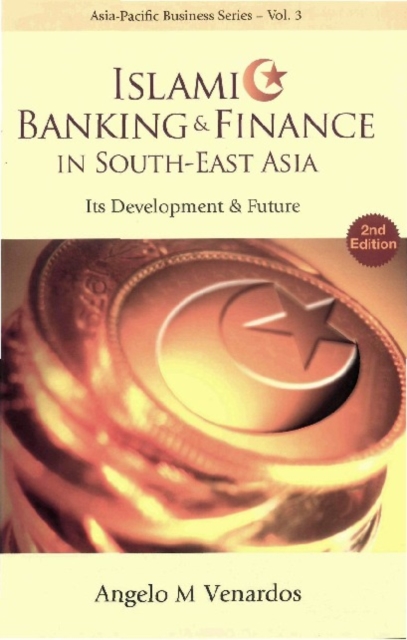
Islamic banking & finance in South-East Asia
To truly understand the current interest in the development of Islamic banking and finance in South-East Asia and how it is different from the conventional banking system, one must first understand the religious relationship originating from the Qur'an, and then trace the historical geographic and political developments of Islam over recent centuries. Only on this basis can the reader, without prejudice or cynicism, begin to appreciate Shari'ah law and Islamic jurisprudence. With this platform established in the first part of the book, readers are invited to learn about the financial products and services offered, understand the challenges in their development, and ultimately recognize the significant opportunities that Islamic banking and finance can provide both Muslims and non-Muslims.
eBook
Uneven odds, unequal outcomes
Perceptions of eroding living standards and low life satisfaction are widespread in the Middle East and North Africa region today, along with pessimism about prospects for economic mobility. Conventional measures of economic well-being offer little in the way of explanation – in most countries in the region, extreme poverty is low and declining and economic inequality is lower than in other parts of the world. This book investigates possible reasons for this disconnect, focusing on the role played by inadequate and unequal access to opportunities to realize one's aspirations for economic mobility. The inability of most countries in the region to meet the aspirations of citizens is closely linked to persistent weaknesses in the labor markets where the pace of job creation has been chronically below levels required to absorb the growing and increasingly better educated population. A high degree of segmentation in the labor markets also puts the youth and women in the region at a particular disadvantage. While labor markets are critical for mobility, opportunities and life paths can diverge even earlier in life if access to basic services in health, education and infrastructure are unequally distributed among children in their formative years. This book documents sharp disparities in the quality of services available to children of varying birth circumstances in the region. Although the most intense debates in development coalesce around inequality of income or wealth, the notion of inequality of opportunity has an intuitive appeal that can bridge ideological differences. By drawing attention to the notion of equality of opportunity to create a level playing field for all sections of society, the book highlights the need to critically examine the social contract and governance structures that guide the delivery of services and are instrumental for implementing necessary reforms to make labor markets more dynamic and equitable.
eBook

The Moral Economy of the Madrasa
The revival of madrasas in the 1980s coincided with the rise of political Islam and soon became associated with the \"clash of civilizations\" between Islam and the West. This volume examines the rapid expansion of madrasas across Asia and the Middle East and analyses their role in society within their local, national and global context.
Based on anthropological investigations in Afghanistan, Bangladesh, China, Iran, and Pakistan, the chapters take a new approach to the issue, examining the recent phenomenon of women in madrasas; Hui Muslims in China; relations between the Iran's Shia seminary after the 1979-Islamic revolution and Shia in Pakistan and Afghanistan; and South Asian madrasas. Emphasis is placed on the increased presence of women in these institutions, and the reciprocal interactions between secular and religious schools in those countries. Taking into account social, political and demographic changes within the region, the authors show how madrasas have been successful in responding to the educational demand of the people and how they have been modernized their style to cope with a changing environment.
A timely contribution to a subject with great international appeal, this book will be of great interest to students and scholars of international politics, political Islam, Middle East and Asian studies and anthropology.
eBook