
Catalogue Search | MBRL


Are you sure you want to remove the book from the shelf?

{{itemTitle}}
15
result(s) for
"Economisch gedrag."
Sort by:


Theory of Games and Economic Behavior (60th Anniversary Commemorative Edition)
This is the classic work upon which modern-day game theory is based. What began more than sixty years ago as a modest proposal that a mathematician and an economist write a short paper together blossomed, in 1944, when Princeton University Press publishedTheory of Games and Economic Behavior. In it, John von Neumann and Oskar Morgenstern conceived a groundbreaking mathematical theory of economic and social organization, based on a theory of games of strategy. Not only would this revolutionize economics, but the entirely new field of scientific inquiry it yielded--game theory--has since been widely used to analyze a host of real-world phenomena from arms races to optimal policy choices of presidential candidates, from vaccination policy to major league baseball salary negotiations. And it is today established throughout both the social sciences and a wide range of other sciences.
This sixtieth anniversary edition includes not only the original text but also an introduction by Harold Kuhn, an afterword by Ariel Rubinstein, and reviews and articles on the book that appeared at the time of its original publication in theNew York Times, ttheAmerican Economic Review, and a variety of other publications. Together, these writings provide readers a matchless opportunity to more fully appreciate a work whose influence will yet resound for generations to come.
eBook

The new sociology of economic behaviour
The New Sociology of Economic Behaviour seeks to revitalize the classical approach and introduces students to the essential ideas in the field. It also shows researchers and graduate students how to make use of concepts like demoralization, cheap labour, dignity at work and a fair day′s pay, to develop critiques of current economic arrangements.
eBook


An Economic Theory of Greed, Love, Groups, and Networks
Why are people loyal? How do groups form and how do they create incentives for their members to abide by group norms? Until now, economics has only been able to partially answer these questions. In this groundbreaking work, Paul Frijters presents a new unified theory of human behaviour. To do so, he incorporates comprehensive yet tractable definitions of love and power, and the dynamics of groups and networks, into the traditional mainstream economic view. The result is an enhanced view of human societies that nevertheless retains the pursuit of self-interest at its core. This book provides a digestible but comprehensive theory of our socioeconomic system, which condenses its immense complexity into simplified representations. The result both illuminates humanity's history and suggests ways forward for policies today, in areas as diverse as poverty reduction and tax compliance.
eBook

Social Economics
Intro -- Contents -- Acknowledgments -- I. The Effect of Social Capital on Market Behavior -- 1. The Importance of Social Interactions -- 2. Social Forces, Preferences, and Complementarity -- 3. Are Choices \"Rational\" When Social Capital Is Important? -- II. The Formation of Social Capital -- 4. Sorting by Marriage -- 5. Segregation and Integration in Neighborhoods -- 6. The Social Market for the Great Masters and Other Collectibles -- 7. Social Markets and the Escalation of Quality: The World of Veblen Revisited -- 8. Status and Inequality -- III. Fads, Fashions, and Norms -- 9. Fads and Fashion -- 10. The Formation of Norms and Values -- References -- Author Index -- Subject Index.
Book
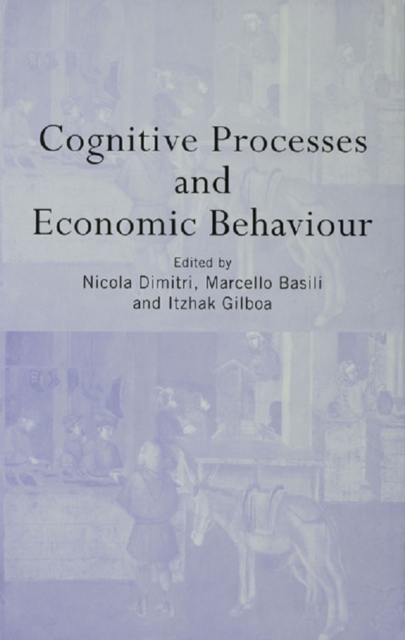
Cognitive Processes and Economic Behaviour
In recent years the understanding of the cognitive foundations of economic behavior has become increasingly important. This volume contains contributions from such leading scholars as Adam Brandenburger, Michael Bacharach and Patrick Suppes. It will be of great interest to academics and researchers involved in the field of economics and psychology as well as those interested in political economy more generally.
eBook
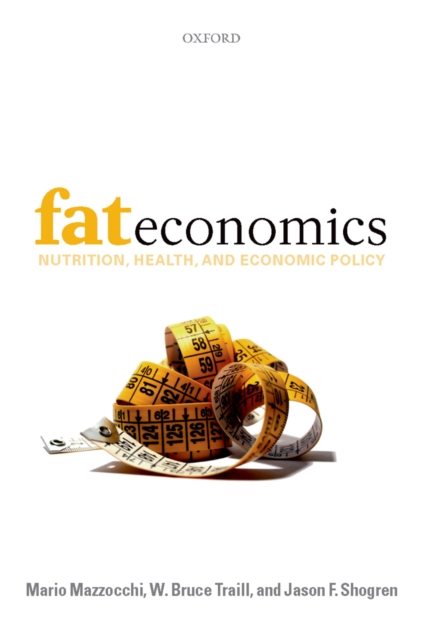
Fat Economics
The obesity epidemic and the growing debate about what, if any, public health policy should be adopted is the subject of endless debates within the media and in governments around the world. Whilst much has been written on the subject, this book takes a unique approach by looking at the obesity epidemic from an economic perspective. Written in a language accessible to non-specialists, the authors provide a timely discussion of evolving nutrition policies in both the developing and developed world, discuss the factors influencing supply and demand of food supply, and review the evidence for various factors which may explain recent trends in diets, weight, and health. The traditional economic model assumes people choose to be overweight as part of a utility maximisation process that involves choices about what to eat and drink, how much time to spend on leisure, food preparation, and exercise, and choices about appearance and health. Market and behavioural failures, however, such as time available to a person, education, costs imposed on the health system and economic productivity provide the economic rationale for government intervention. The authors explore various policy measures designed to deal with the epidemic and examine their effectiveness within a cost-benefit analysis framework. While providing a sound economic basis for analysing policy decisions, the book also aims to show the underlying limits of the economic framework in quantifying changes in public well-being.
eBook