
Catalogue Search | MBRL


Are you sure you want to remove the book from the shelf?

{{itemTitle}}
1,004
result(s) for
"Economy of the Soviet Union"
Sort by:

Post-Soviet social
The Soviet Union created a unique form of urban modernity, developing institutions of social provisioning for hundreds of millions of people in small and medium-sized industrial cities spread across a vast territory. After the collapse of socialism these institutions were profoundly shaken--casualties, in the eyes of many observers, of market-oriented reforms associated with neoliberalism and the Washington Consensus. InPost-Soviet Social, Stephen Collier examines reform in Russiabeyondthe Washington Consensus. He turns attention from the noisy battles over stabilization and privatization during the 1990s to subsequent reforms that grapple with the mundane details of pipes, wires, bureaucratic routines, and budgetary formulas that made up the Soviet social state.
Drawing on Michel Foucault's lectures from the late 1970s,Post-Soviet Socialuses the Russian case to examine neoliberalism as a central form of political rationality in contemporary societies. The book's basic finding--that neoliberal reforms provide a justification for redistribution and social welfare, and may work to preserve the norms and forms of social modernity--lays the groundwork for a critical revision of conventional understandings of these topics.
eBook
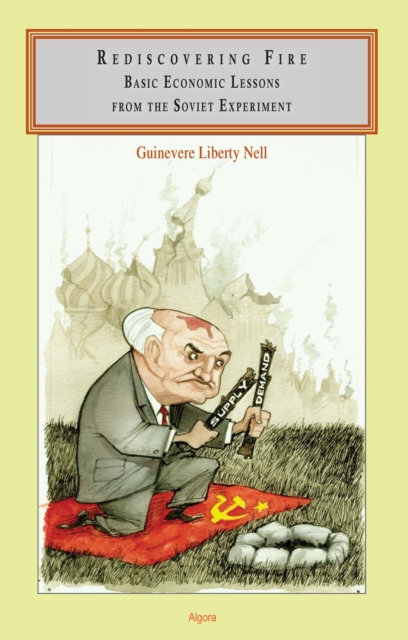
Rediscovering Fire
Marx promoted the idea that economic laws were universal, but the Soviet Union tested his ideas on the premise that by eliminating private property they could eliminate markets and prices?and they tested that proposition on a grand scale. However, in managing an economy based on public ownership, they discovered that they could not repeal economic laws. By managing the consequences of their policies, the Soviets unintentionally relearned the basics of economics from scratch?essentially, rediscovering fire.
eBook
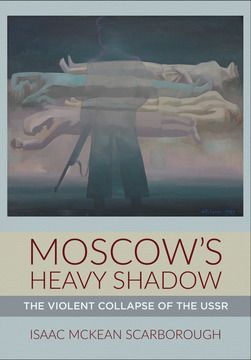
Moscow's Heavy Shadow
Moscow's Heavy Shadow tells
the story of the collapse of the USSR from the perspective of the
many millions of Soviet citizens who experienced it as a period of
abjection and violence. Mikhail Gorbachev and the leaders
of the USSR saw the years of reform preceding the collapse as
opportunities for rebuilding ( perestroika ), rejuvenation,
and openness ( glasnost ). For those in provincial cities
across the Soviet Union, however, these reforms led to rapid
change, economic collapse, and violence.
Focusing on Dushanbe, Tajikistan, Isaac McKean Scarborough
describes how this city experienced skyrocketing unemployment, a
depleted budget, and streets filled with angry young men unable to
support their families. Tajikistan was left without financial or
military resources, unable and unprepared to stand against the wave
of populist politicians of all stripes who took advantage of the
economic collapse and social discontent to try to gain power. By
May 1992, political conflict became violent and bloody and engulfed
the whole of Tajikistan in war. Moscow's Heavy Shadow
tells the story of how this war came to be, and how it was grounded
in the reform and collapse of the Soviet economy that came
before.
eBook

The Economic War Potential of the U.S.S.R
In the present international situation, it may be that a good deal of popular appeal attaches to the title of this paper. It may be well, therefore, to disabuse prospective readers. I propose to deal mainly with problems of methodology and concept and only incidentally with quantitative results. To the extent that the economic war potential of the Soviet Union is quantified here, it will be merely by indicating ranges within which answers may lie.
Journal Article
Soviet Agricultural Collectivism in Peace and War
Generally speaking, agricultural collectivism, Soviet style, is like a double-faced Janus, looking with one face towards the Communist Party state and with the other towards the peasant. This dichotomy is central to the whole Soviet agrarian problem and can be best envisaged in its historical, environmental, and ideological settings. I shall deal briefly first with the ideological and economic presuppositions of Soviet agrarian collectivism and second with this collectivism in practice, a theme which I can only hope to adumbrate within the short time at my disposal.
Journal Article

Women and the Birth of Russian Capitalism
Little has been known, acknowledged, or studied about the shuttle trade, one of the major manifestations of new Russian life of the 1990s. The term itself seems to suggest something of a rather small scale. Indeed, the amount of each transaction in this trade was miniscule. Individual peddlers traveled to near-abroad with their bulging bags and brought back home for resale only as many goods as they could personally carry in their enormous suitcases. The phenomenon hidden behind the term \"shuttle trade\" was by no means insignificant or small in scale. By the mid-1990s, it constituted the backbone of Russian consumer trade and was a substantial source of revenue.
The primary participants in the shuttle trade were women, and in this enlightening study Mukhina assesses the reasons why women were attracted to this business, the range of the personal experiences of female shuttle traders, and the social impact of women's involvement in this sort of economic activity. By analyzing the social and gendered dimensions of the shuttle trade, the reader can begin to understand more broadly how gender shaped the \"transition\" period associated with the end of communist regimes in Eastern Europe. Moreover, the difficulties that these women faced highlight the gap between the rhetoric of free market economy and the actual market practices. These women-traders had to create and shape the physical market (an open-air space) for their goods without the basic legislative and other provisions of market economies. The shuttle trade became an avenue of female suffering but also of survival and even empowerment during the time that most Russians now call \"the wild 1990s.\"
eBook

Priests of Prosperity
Priests of Prosperityexplores the unsung revolutionary campaign to transform postcommunist central banks from command-economy cash cows into Western-style monetary guardians. Juliet Johnson conducted more than 160 interviews in seventeen countries with central bankers, international assistance providers, policymakers, and private-sector finance professionals over the course of fifteen years. She argues that a powerful transnational central banking community concentrated in Western Europe and North America integrated postcommunist central bankers into its network, shaped their ideas about the role of central banks, and helped them develop modern tools of central banking.
Johnson's detailed comparative studies of central bank development in Hungary, the Czech Republic, Slovakia, Russia, and Kyrgyzstan take readers from the birth of the campaign in the late 1980s to the challenges faced by central bankers after the global financial crisis. As the comfortable certainties of the past collapse around them, today's central bankers in the postcommunist world and beyond find themselves torn between allegiance to their transnational community and its principles on the one hand and their increasingly complex and politicized national roles on the other.Priests of Prosperitywill appeal to a diverse audience of scholars in political science, finance, economics, geography, and sociology as well as to central bankers and other policymakers interested in the future of international finance, global governance, and economic development.
eBook

Russia and the Long Transition from Capitalism to Socialism
Out of early twentieth-century Russia came the world's first
significant effort to build a modern revolutionary society.
According to Marxist economist Samir Amin, the great upheaval that
once produced the Soviet Union has also produced a movement away
from capitalism - a long transition that continues even today. In
seven concise, provocative chapters, Amin deftly examines the
trajectory of Russian capitalism, the Bolshevik Revolution, the
collapse of the Soviet Union, the possible future of Russia - and,
by extension, the future of socialism itself.
Amin manages to combine an analysis of class struggle with
geopolitics - each crucial to understanding Russia's singular and
complex political history. He first looks at the development (or
lack thereof) of Russian capitalism. He sees Russia's geopolitical
isolation as the reason its capitalist empire developed so
differently from Western Europe, and the reason for Russia's
perceived \"backwardness.\" Yet Russia's unique capitalism proved to
be the rich soil in which the Bolsheviks were able to take power,
and Amin covers the rise and fall of the revolutionary Soviet
system. Finally, in a powerful chapter on Ukraine and the rise of
global fascism, Amin lays out the conditions necessary for Russia
to recreate itself, and perhaps again move down the long road to
socialism. Samir Amin's great achievement in this book is not only
to explain Russia's historical tragedies and triumphs, but also to
temper our hopes for a quick end to an increasingly insufferable
capitalism.
This book offers a cornucopia of food for thought, as well as an
enlightening means to transcend reductionist arguments about
\"revolution\" so common on the left. Samir Amin's book - and the
actions that could spring from it - are more necessary than ever,
if the world is to avoid the barbarism toward which capitalism is
hurling humanity.
eBook

Post-Soviet power hierarchies in the making: Postcolonialism in Tajikistan’s relations with Russia
This article explores post-Soviet power hierarchies which constitute a unique system of vertical stratification in world politics. It does so by analysing relations between two former Soviet states, Tajikistan and Russia, in the aftermath of the Soviet Union’s collapse in 1991. The article investigates the underlying reasons for power asymmetries between the two countries, the ways hierarchies are sustained and enforced, as well as perceived and navigated at political and social levels. It is argued that Tajikistan’s relations with Russia are explicitly postcolonial without clear-cut colonial precedents in Soviet times. Postcolonialism did not automatically result from the Soviet breakdown. Rather, it has gradually emerged because of the two countries’ very different paths of integration into the global capitalist economy, which subordinated Tajikistan to Russia. In this way, new economic asymmetries exacerbated Soviet-era legacies and reinvented them in a new, hierarchical manner. Overall, the article contributes to the debate on the nature of post-Soviet legacies and what it means to be post-Soviet.
Journal Article

From International Isomorphism to Traditionalist Iconography
Commonly, Stalin’s death in 1953 is considered to be the major turning point in Soviet history. However, from a monetary perspective, the year 1947 appears to be much more important. While the era between 1917 and 1947 was dominated by high inflation and impoverishment, between 1947 and 1991 Soviet citizens could experience a time of relative monetary stability. Moreover, 1947 also saw a radical shift in Soviet banknote iconography. The multiple and often changing series before 1947 exhibited to a great extent what can be called “international isomorphism”, that is to say, the iconographies reflected the motifs of globally circulating banknotes such as the British pound sterling and the US dollar. In stark contrast to previous policies, the two series issued in and after 1947 presented Russian imperial style enriched with Soviet symbols. This marked shift in Soviet monetary iconography was shot through with continuities on different levels. All designs were conceived under the purview of Ivan Dubasov, head of the artistic department at Goznak, the Soviet state mint, from the 1920s to the 1970s. Also, the iconography put in place in 1947 was a deliberate choice by the Soviet authorities, as they rejected drafts that included too much Bolshevik or too much Russian imperial symbolism. Regardless, this particular iconography became an example of political and economic stability. Until the very last days of the Union, neither party nor state institutions showed any intent to change this.
Journal Article