
Catalogue Search | MBRL


Are you sure you want to remove the book from the shelf?

{{itemTitle}}
1,861
result(s) for
"Ecophilosophy"
Sort by:
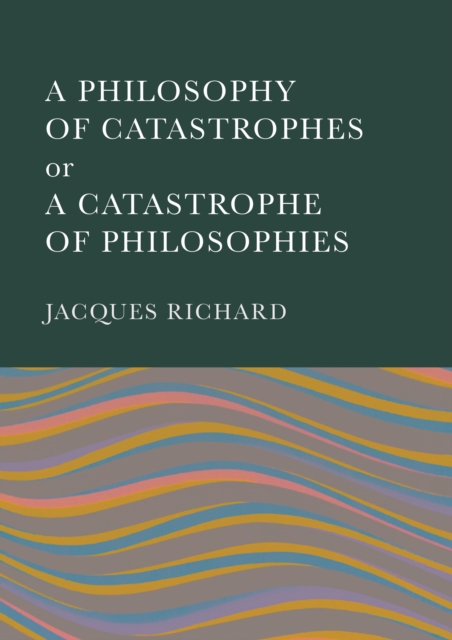
A Philosophy of Catastrophes or a Catastrophe of Philosophies
There are many currents in philosophical writings, that deal with today's serious ecological problems and the catastrophes they engender. The aim of this book is to show the diversity of these currents and to judge them on the basis of their ability to provide us with concrete tools for getting out of the ecological impasse in which we find ourselves today, notably the urgency to find new types of ecological and human management. Some of these currents are hopeless: they only offer the prospect of a mental adaptation to these catastrophes, or invite us to leave planet earth and take refuge on other planets. Others, of a cynical bent, openly support the forces that have led to the current situation of 'ecological bankruptcy', arguing that the same economic system that has led us to the current ecological impasse will be able to provide us with miraculous technical solutions for our salvation. Still others, the vast majority, are so cut off from the realities of today's economic world, and in particular from the problems of practical business management, that their very general views offer very few operational solutions for changing the situation. And yet there are some philosophies, admittedly very few in number, that seem appropriate to the radical transformation that is needed of the management of capitalist firms: the philosophy of catastrophes is not necessarily synonymous with a catastrophe of philosophies. The author draws on philosophy , economics, accounting, and history to address what many consider humanity's most serious challenge.
eBook

Where ecospirituality is grounded: Nature as place
Place is a fundamental dimension of human existence, yet its meaning remains complex and contested across disciplines. This article examines how the notion of nature as place can be understood as a core category within ecospirituality. Drawing on selected interdisciplinary themes from ecophilosophy and ecotheology, the article argues that the significance of nature as place in ecospirituality can be articulated through a conceptual trajectory that includes the physical-geographical concreteness of place, the interrelation between humans and nature, the cultivation of emotional awareness and ultimately the transformative potential of aesthetic experiences in nature. Intradisciplinary and/or interdisciplinary implications: Taken together, these perspectives offer valuable resources for a deeper understanding of nature as place in ecospirituality and demonstrate that nature as place functions as a precondition for fostering ethical awareness of our surrounding nature.
Journal Article

Philosophy of Ecology and Capitalism
There is a substantial body of work emerging currently, seeking to address the problems caused by the economic model that has dominated the world for the last several hundred years - not least the negative impacts on the environment and sustainable health of the biosphere. This book adds to that body of literature, and brings an interesting new set of ideas into play. The author offers an approach to the philosophies and politics of nature based on a reinterpretation of the history of capitalism, in particular its concept of capital. It leads to a new anti-capitalist conception of the philosophy of ecology which takes into account at the same time history, ethics, politics, law and economics. By linking philosophy, law, economics and management, this work seeks to go beyond the mono-disciplinary and purely theoretical approaches which often characterize works devoted to the philosophy of nature, or the philosophy of ecology. It proposes a concrete philosophical alternative to modern capitalism which leads to ecological co-management and care at all levels of society, including that of political bodies, and the reform of constitutions and parliaments. In short, it is a book for a theory and a practice of environmental action in the broad sense within the framework of an institutional revolution passing in particular through the heart of the capitalist system.
eBook

The ecological discourse analysis of news discourse based on deep learning from the perspective of ecological philosophy
Recently, ecological damage and environmental pollution have become increasingly serious. Experts in various fields have started to study related issues from diverse points of view. To prevent the accelerated deterioration of the ecological environment, ecolinguistics emerged. Eco-critical discourse analysis is one of the important parts of ecolinguistics research, that is, it is a critical discourse analysis of the use of language from the perspective of the language’s ecological environment. Firstly, an ecological tone and modality system are constructed from an ecological perspective. Under the guidance of the ecological philosophy of \"equality, harmony, and symbiosis\", this study conducts an ecological discourse analysis on the Sino-US trade friction reports, aiming to present the similarities and differences between the two newspapers’ trade friction discourses and to reveal the ecological significance of international ecological factors in the discourse. Secondly, this method establishes a vector expression of abstract words based on emotion dictionary resources and introduces emotion polarity and part-of-speech features of words. Then the word vector is formed into the text feature matrix, which is used as the input of the Convolutional Neural Network (CNN) model, and the Back Propagation algorithm is adopted to train the model. Finally, in the light of the trained CNN model, the unlabeled news is predicted, and the experimental results are analyzed. The results reveal that during the training process of Chinese and English datasets, the accuracy of the training set can reach nearly 100%, and the loss rate can be reduced to 0. On the test set, the classification accuracy of Chinese text can reach 83%, while that of English text can reach 90%, and the experimental results are ideal. This study provides an explanatory approach for ecological discourse analysis on the news reports of Sino-US trade frictions and has certain guiding significance for the comparative research on political news reports under different ideologies between China and the United States.
Journal Article

Contemporary Value of Communication History of Auspicious Cloud Patterns on Central Plains Ancient Ceramics
[...]there is the master's thesis Research on the Artistic Symbols of Scroll Cloud Pattern in the Qin and Han Dvnasties by Liao Qione from Hunan University of TechnologY, the master's thesis Exploration on the Decorative Art of Porcelain in the Song DvnastY by Hu Xizhen from Choneaine Normal University, and the doctors thesis Research on the Decorative Art of the Song, Liao, Xia and Jin DYnasties by Gu Li from Suzhou University. Combined with its historical evolution and modern practice, its contemporary value can be summarized into four aspects, namelY the carrier of cultural inheritance and national identity, the innovative resources of modern desien, the media of international cultural exchange and the enlightenment of ecological philosophy. 1 The communication history of auspicious cloud patterns on Central Plains ancient ceramics being the carrier of cultural inheritance and national identity First of all, the communication historY of auspicious cloud patterns on Central Plains ancient ceramics is an important carrier for the continuation of the historical symbols of the Chinese nation. In the art of tombs, the cloud and Qi patterns are juxtaposed with immortals and divine animals, implVine that the soul ascends to heaven by clouds, and reflecting the funeral concept of \" death is like life\" in the Han Dynasty. The cloud and Qi patterns of the Han Dynasty not only establish the tradition of \"using lines to express emotions\" in Chinese decorative art, but also influence the East Asian cultural circle throueh the Silk Road and Buddhist art. lts flowine lines and the composition of virtual and real images have become the source of the later clustered cloud patterns and RuYi patterns.
Journal Article

Examining the contribution of taboos (Amazilo) towards eco-beneficial practices: Evidence from Ndebele linguistic wisdom
ABSTRACT Although environmental conservation has emerged as a prominent concern among researchers globally, much interest has been confined to the natural sciences. In this study, we deploy the ecolinguistics framework to examine the contribution of taboos towards an eco-beneficial ecosophy among the Ndebele people of Zimbabwe. Drawing on purposefully selected taboos from two anthologies of Ndebele oral literature, complemented by authors’ intuitions, our findings reveal that the Ndebele language is imbued with ecocentric wisdom that is encoded in taboos. These environmental taboos warn against the unsustainable exploitation of fauna and flora species as well as the contamination or desecration of water sources. Additionally, needless destruction and degradation of land are discouraged by some taboos. These findings suggest that the Ndebele people’s harmonious relationship and co-existence with their natural environment derive from age-old wisdom that is embedded in their linguistic system as part of their environmental policy, laws and ethics. Contrary to enduring colonial ideologies that have sought to portray indigenous African languages as incapable of addressing modern problems associated with climate change and other anthropogenic activities, we show that languages such as Ndebele evince the positive environmental stewardship and disposition that have been part of African communities since time immemorial.
Journal Article

Ecophilosophy as a Way of Life
The contemporary figure of the ecophilosopher perhaps holds the seeds of something that transcends philosophy in its current strictly academic, professionalized, indeed corporatized mode. This is a \"something\" that could, on the one hand, tie philosophy back to its own ancient, life-giving, but now lost, root in the Graeco-Roman world, and on the other hand, open it up to people searching outside the academy for a shared and reflective way of life that is authentically Earth-aligned. By means of a detailed comparison of ecophilosophy with the ancient schools of Stoicism and Epicureanism, understood not merely as intellectual discourses but as \"ways of life\" (Pierre Hadot), I argue that the figure of the ecophilosopher potentially offers to thoughtful people everywhere a radical pathway through the illusions of our current period of decline-and-fall towards a more adaptive life grounded in \"direct, unmediated contact with the real.\"
Journal Article

Eco Trends, Counseling and Applied Ecology in Community Using Sophia
The study investigates the current trends that manifest themselves in two areas that have common origins in antiquity, found in the Hellenistic concept of Sophia: present in philosophy, where it expresses the love of wisdom, but also in theology where it represents divine love. Looking at this approach, the Sophia has manifested various orientations, either toward the field of ecology and the environment through the emergence of new concepts, such as ecophilosophy and ecotheology, but also toward the practice applied to the person, through the philosophical counseling or spiritual or pastoral counseling. This paper analyzes the characteristics of the applied trends, ecophilosophy and ecotheology, through their comparative analysis, along with a bibliometric study on papers published on these topics in indexed databases in the last 45 years. The paper presents the openness to innovation, through the emergence of the two concepts analyzed which created methods and tools specific to philosophical or spiritual counseling, and adaptations of these practices to the needs of contemporary society. Therefore, the innovation is sustained by creating a new specialization in community counseling practice, called eco-counseling for community (EC4com), with the new ecological trend, which can be included in the philosophical and spiritual practices applied in communities through individual counseling, for groups or community.
Journal Article

Nathaniel Hawthorne’s Ecophilosophy in “Rappaccini’s Daughter”
This paper examines Nathaniel Hawthorne’s ecophilosophy in “Rappaccini’s Daughter” by focusing on his various representations of the natural environment and the human relationship to it. It suggests that the story reflects his belief that nature is divinely arranged and that humanity should protect rather than manipulate its systems. From his perspective, the disruption of natural systems would not only cause the extinction of many animal species but also endanger human life and existence on earth. The paper further suggests that Hawthorne promotes a view of nature as a living organism whose entities possess souls and spirits. Their capacity to have feelings and emotions makes them entitled to moral respect and consideration. In its study of the author’s environmental values and ethics, the essay claims that Hawthorne advocates the idea that human beings do not occupy a privileged position in the universe and that they are not superior or more important than nonhumans. In contrast to the Biblical vision of humankind, he portrays humans as weak and flawed creatures that cannot attain divine perfection. For these reasons, the paper asserts that “Rappaccini’s Daughter” exhibits Hawthorne’s deep ecological awareness and underlines his stature as a pioneer of American literary environmentalism.
Journal Article