
Catalogue Search | MBRL


Are you sure you want to remove the book from the shelf?

{{itemTitle}}
599
result(s) for
"Ecuador Social policy."
Sort by:


Ordinary Families, Extraordinary Lives: Assets and Poverty Reduction in Guayaquil, 1978-2004
Fifty years after Oscar Lewis's famous depiction of five Mexican families caught in a \"culture of poverty,\" Caroline Moser tells a very different story of five neighborhood women and their families strategically accumulating assets to escape poverty in the Ecuadoran city of Guayaquil. InOrdinary Families, Extraordinary Lives, Moser shows how a more sophisticated understanding of the complexities of asset accumulation as well as poverty itself can help counter inaccurate stereotypes about global poverty. It provides invaluable insight into strategies that may help people in developing countries improve their wellbeing.
The similar socioeconomic characteristics and economic circumstances of the Guayaquil families in 1978, when Moser began her research, set the stage for a natural experiment. By 2004, these circumstances varied widely. Moser captures the causes and consequences of these developments through economic data, anthropological narrative, and personal photos. She then places this compelling story within the broader context of political, economic, and spatial changes in Guayaquil and Ecuador.
Moser describes how households in a Third World urban slum relentlessly and systematically fought to accumulate human, social, and financial capital assets. Her longitudinal account of their odyssey captures long-term trends and changes in perception that are missed in snapshot assessments. Chapters in this holistic story cover diverse issues such as housing and infrastructure, community mobilization and political negotiation, employment, family dynamics, violence, and emigration.
eBook

Gender, State, and Medicine in Highland Ecuador
In 1921 Matilde Hidalgo became the first woman physician to graduate from the Universidad Central in Quito, Ecuador. Hidalgo was also the first woman to vote in a national election and the first to hold public office.Author Kim Clark relates the stories of Matilde Hidalgo and other women who successfully challenged newly instituted Ecuadorian state programs in the wake of the Liberal Revolution of 1895. New laws, while they did not specifically outline women's rights, left loopholes wherein women could contest entry into education systems and certain professions and vote in elections. As Clark demonstrates, many of those who seized these opportunities were unattached women who were socially and economically disenfranchised.Political and social changes during the liberal period drew new groups into the workforce. Women found novel opportunities to pursue professions where they did not compete directly with men. Training women for work meant expanding secular education systems and normal schools. Healthcare initiatives were also introduced that employed and targeted women to reduce infant mortality, eradicate venereal diseases, and regulate prostitution.Many of these state programs attempted to control women's behavior under the guise of morality and honor. Yet highland Ecuadorian women used them to better their lives and to gain professional training, health care, employment, and political rights. As they engaged state programs and used them for their own purposes, these women became modernizers and agents of change, winning freedoms for themselves and future generations.
eBook

Revisiting Ecuador's economic and social agenda in an evolving landscape
The Ecuadorian society has overcome adversity with great determination over the past few years. Periodic economic crises, external shocks, and even natural disasters tested the country's ability to cope with difficulties. Despite these challenges, the country has maintained a forward looking perspective and has achieved some important goals. Economic stability in the last few years has given the space for a period of sustained economic growth. During this period several development indicators have improved, and several sectors of the economy have demonstrated the dynamism and entrepreneurship that is present in the Ecuadorian culture. This title aims to provoke a lively discussion between the World Bank, the new Correa administration, and the entire country in addressing the unresolved issues that require a thoughtful approach.
eBook

Millennial Ecuador : critical essays on cultural transformations and social dynamics
In the past decade, Ecuador has seen five indigenous uprisings, the emergence of the powerful Pachakutik political movement, and the strengthening of the Confederation of Indigenous Nationalities of Ecuador and the Association of Black Ecuadorians, all of which have contributed substantially to a new constitution proclaiming the country to be “multiethnic and multicultural.” Furthermore, January 2003 saw the inauguration of a new populist president, who immediately appointed two indigenous persons to his cabinet. In this volume, eleven critical essays plus a lengthy introduction and a timely epilogue explore the multicultural forces that have allowed Ecuador's indigenous peoples to have such dramatic effects on the nation's political structure.
eBook

Ecuador : an economic and social agenda in the new millennium
Ecuador has suffered from high external vulnerability, poor macroeconomic performance, and poor governance. A succession of external adversities—linked to the volatility of oil prices and violent variations in capital flows—and natural calamities, all in combination with poor economic management, resulted in macroeconomic imbalances, with negative impact on growth and social development. These deficient economic policies were partly caused by weak and too-often-changing public management, and the governance problems that traditionally characterize oil-producing countries.This book represents an agenda with a broad and integrated vision of economic and social development in Ecuador, and is meant to be informative.
eBook
Millennial Ecuador
In the past decade, Ecuador has seen five indigenous uprisings, the emergence of the powerful Pachakutik political movement, and the strengthening of the Confederation of Indigenous Nationalities of Ecuador and the Association of Black Ecuadorians, all of which have contributed substantially to a new constitution proclaiming the country to be \"multiethnic and multicultural.\" Furthermore, January 2003 saw the inauguration of a new populist president, who immediately appointed two indigenous persons to his cabinet. In this volume, eleven critical essays plus a lengthy introduction and a timely epilogue explore the multicultural forces that have allowed Ecuador's indigenous peoples to have such dramatic effects on the nation's political structure.
eBook
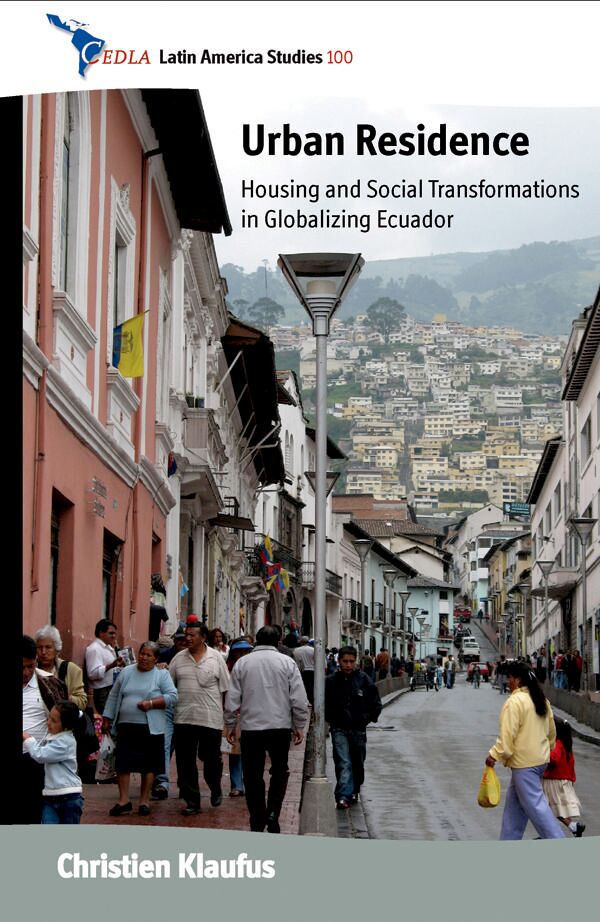
Urban Residence
Riobamba and Cuenca, two intermediate cities in Ecuador, have become part of global networks through transnational migration, incoming remittances, tourism, and global economic connections. Their landscape is changing in several significant ways, a reflection of the social and urban transformations occurring in contemporary Ecuadorian society. Exploring the discourses and actions of two contrasting population groups, rarely studied in tandem, within these cities—popular-settlement residents and professionals in the planning and construction sector—this study analyzes how each is involved in house designs and neighborhood consolidation. Ideas, ambitions, and power relations come into play at every stage of the production and use of urban space, and as a result individual decisions about both house designs and the urban layout influence the development of the urban fabric. Knowledge about intermediate cities is crucial in order to understand current trends in the predominantly urban societies of Latin America, and this study is an example of needed interdisciplinary scholarship that contributes to the fields of urban studies, urban anthropology, sociology, and architecture.
eBook

Strengthening primary health care resilience through community innovation: a qualitative case study from Quito’s response to COVID-19
Background
This study aimed to analyse and document how Quito, the capital city of Ecuador, transformed its Primary Health Care (PHC) model following the COVID-19 pandemic. The reform involved a shift from a reactive, hospital-centred response to a community-based model focused on prevention, social determinants of health, and local engagement.
Methods
This study used a qualitative case study design with a comparative and deductive approach, featuring 11 semi-structured interviews with health professionals, decision-makers, and administrative staff, alongside a review of secondary sources, including national and municipal legal framework (such as the Organic Code and the municipal Organic Statute), ordinances, the Municipal Code, and governance documents and accountability reports from three mayoral administrations. Thematic analysis identified key enabling factors and compared Quito’s experience with other cities in Ecuador and Latin America.
Results
The central innovation was the creation of multidisciplinary Community Health Teams (Equipos de Salud Comunitaria, ESC) assigned to each of Quito’s 65 parishes. These teams focused on health promotion, disease prevention, and intersectoral coordination. Their implementation was supported by continuous training, integration of digital tools, community-based communication strategies, and protocols for operating in high-risk environments. A major driver of the reform was the political negotiation to sustain the increased health budget beyond the pandemic, enabling the long-term operation of ESCs. Ensuring the physical safety of health personnel also became a core component of the model, supported by risk mapping, emergency communication systems, and coordination with local security actors. The model was institutionalized through legal frameworks and aligned with national initiatives such as the Healthy Municipalities Programme and Comprehensive Family, Community and Intercultural Health Care Model (MAIS-FCI). The model demonstrated improved territorial access, community trust, and responsiveness amid rising urban violence, but faces limitations in technological infrastructure, monitoring indicators, and long-term sustainability.
Conclusions
Quito’s experience highlights the potential of decentralised municipal governance to lead PHC reform through integrated, preventive, and community-based strategies. The findings provide valuable lessons for other cities in low- and middle-income countries seeking to enhance PHC resilience in fragile contexts. Strengthening digital capacity and ensuring institutional protection and funding for ESC will be key to sustaining progress.
Journal Article
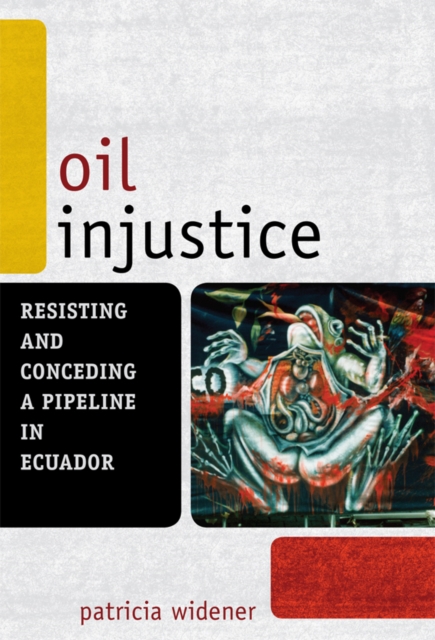
Oil injustice
Oil Injustice examines the mobilization efforts of four communities with different oil histories in response to the construction of an oil pipeline. Using multiple sites in Ecuador as case studies, Patricia Widener examines the efforts of grassroots groups, non-governmental organizations, activist mayors, and transnational advocates that mobilized to redefine the country's oil path and to represent the voice of many local communities and organizations that sought to offer an alternative to the nation's oil dependency and to the use of its oil wealth. These groups generated divergent and at times rival reactions to the pipeline, though at their core, the multiple campaigns developed from a shared history and awareness of a number of marginalized communities and degraded environments in areas most important to the oil process. Widener shows that global environmental justice demands are bound within a capitalist political system, where community activists, national NGOs and their international allies are forced to seek local change rather than attempt to defeat a disabling and unequal system.
eBook