
Catalogue Search | MBRL


Are you sure you want to remove the book from the shelf?

{{itemTitle}}
270
result(s) for
"Edo period"
Sort by:


Imagery of the Orchid Pavilion Gathering
This book examines the cultural networks that connected people during the Edo period (1603-1868) by surveying a wide range of visual representations of the Orchid Pavilion Gathering produced mostly in Japan. The Orchid Pavilion Gathering is one of the most important painting themes in the cultural history of East Asia, yet there has hitherto been no monograph focused on this subject in the English language. This project introduces the many important images representing and related to the Gathering, some of which have never before been published.
eBook
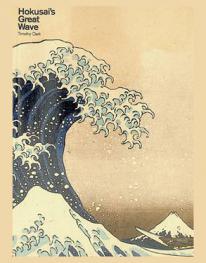

Hydraulic Evaluation of the Levee System Evolution on the Kurobe Alluvial Fan in the 18th and 19th Centuries
The development process and flood control effects of the open-levee system, which was constructed from the mid-18th to the mid-19th centuries, on the Kurobe Alluvial Fan—a large alluvial fan located on the Japan Sea Coast of Japan’s main island—was evaluated using numerical flow simulation. The topography for the numerical simulation was determined from an old pictorial map in the 18th century and various maps after the 19th century, and the return period of the flood hydrograph was determined to be 10 years judging from the level of civil engineering of those days. The numerical results suggested the followings: The levees at the first stage were made to block the dominant divergent streams to gather the river flows together efficiently; by the completed open-levee system, excess river flow over the main channel capacity was discharged through upstream levee openings to old stream courses which were used as temporary floodways, and after the flood peak, a part of the flooded water returned to the main channel through the downstream levee openings. It is considered that the ideas of civil engineers of those days to control the floods exceeding river channel capacity, embodied in their levee arrangement, will give us hints on how to control the extraordinary floods that we should face in the near future when the scale of storms will increase due to the global climate change.
Journal Article


Hokusai
Through his elegant brush paintings and masterful woodblocks, Katsushika Hokusai (1760-1849) became one of Japan's most internationally-renowned artists. A master of Ukiyo-e art, he single-handedly transformed the art form from a simple style focused on courtesans and famous actors into a grander style depicting the beauty of nature seen through landscapes and wildlife. His style of art and subject evolved as many times as he changed his name, but Hokusai's talent as an artist remained constant and his influential role in later art movements such as Art Nouveau and Impressionism remains eternal.
eBook
Recasting the past : an early modern Tales of Ise for children
In 'Recasting the Past: An Early Modern Tales of Ise for Children' Laura Moretti recreates in image and text the unresearched 1766 picture-book 'Ise furyu: Utagaruta no hajimari (The Fashionable Ise: The Origins of Utagaruta)'. The introduction analyses 'Utagaruta' through a discussion of the textual scholarship relating to chapbooks and kusazoshi. It also contextualizes this work to shed new light on the reception history of the canonical 'Tales of Ise' and to position 'Utagaruta' within the realm of children's literature. This is followed by the full transcription and translation of 'Utagaruta', with annotations to each image. Learned and visually rich, Moretti's study permits the reader to enjoy the inventiveness and beauty of early modern Japanese literature.
Book

Edo kabuki in transition
Satoko Shimazaki revisits three centuries of kabuki theater and its representations of medieval Japanese tales and tradition, reframing Edo kabuki as a key player in the formation of an early modern urban identity. Challenging the common understanding of kabuki as subversive, Shimazaki argues that kabuki instilled a sense of shared history.
eBook
Hokusai
\"This expansive, authoritative and deluxe monograph offers a wide-ranging examination of one of Japan's most celebrated artists. In \"Thirty-Six Views of Mt. Fuji,\" Hokusai created an iconic work that includes universally recognized and beloved images of the Japanese landscape. The same broad perspective and attention to detail is brought to bear in this monumental book that follows the full spectrum of Hokusai's life and work. From his first prints to his most accomplished productions, including drawings and paintings, each stage of Hokusai's artistic development is presented within the context of Japanese cultural history. In addition to placing him among contemporaries from his native country, the book discusses the profound influence Hokusai had on European artists, particularly the Impressionists. Matthi Forrer, one of the world's leading authorities on the artist, vibrantly interweaves brilliant reproductions from every period of Hokusai's life with fascinating commentary. Presented in a luxurious large-format edition, the book offers a comprehensive perspective combined with the latest scholarly findings\"--P. [4] of cover.
Book

Haikai Poet Yosa Buson and the Bashō Revival
This book uses the haikai verse and paintings of the brilliant, innovative artist Yosa Buson as a focal point from which to explore how early modern Japanese writers competed for artistic authority and social prestige.
eBook