
Catalogue Search | MBRL


Are you sure you want to remove the book from the shelf?

{{itemTitle}}
2,923
result(s) for
"Educación superior"
Sort by:

The challenge of establishing world-class universities
Governments are becoming increasingly aware of the important contribution that high performance, world-class universities make to global competitiveness and economic growth. There is growing recognition, in both industrial and developing countries, of the need to establish one or more world-class universities that can compete effectively with the best of the best around the world. Contextualizing the drive for world-class higher education institutions and the power of international and domestic university rankings, this book outlines possible strategies and pathways for establishing globally competitive universities and explores the challenges, costs, and risks involved. Its findings will be of particular interest to policy makers, university leaders, researchers, and development practitioners.
eBook

Presumed incompetent
Presumed Incompetent is a pathbreaking account of the intersecting roles of race, gender, and class in the working lives of women faculty of color. Through personal narratives and qualitative empirical studies, more than 40 authors expose the daunting challenges faced by academic women of color as they navigate the often hostile terrain of higher education, including hiring, promotion, tenure, and relations with students, colleagues, and administrators. The narratives are filled with wit, wisdom, and concrete recommendations, and provide a window into the struggles of professional women in a racially stratified but increasingly multicultural America.
eBook

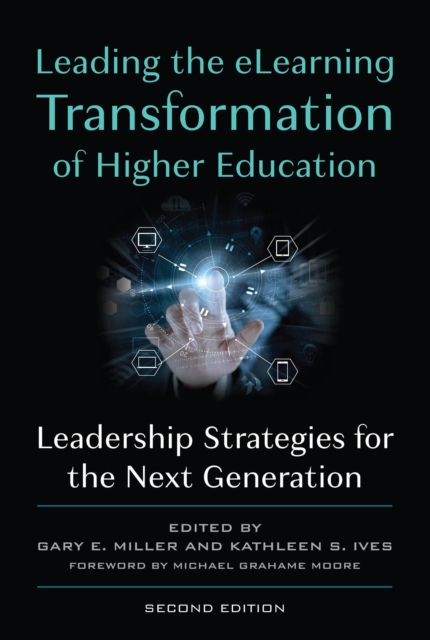
Leading the Elearning Transformation of Higher Education
Published in Association with eLearning has entered the mainstream of higher education as an agent of strategic change. This transformation requires eLearning leaders to develop the skills to innovate successfully at a time of heightened competition and rapid technological change. In this environment eLearning leaders must act within their institutions as much more than technology managers and assume the prime role of helping their institutions understand the opportunities that eLearning presents for faculty, for students, and for client organizations in the community. They need to prepare to participate in policy development around these opportunities. They must understand the multiple dimensions of practice in the field-operations, administration, and working within the complex culture of a higher education institution-while also functioning as scholars of the field who can bring the best ideas from other institutions to help shape policy around eLearning.The second edition builds on the success of the first edition and presents both the collective expertise of veterans who have pioneered the field for 20 years, and of a rising generation of eLearning leaders that are transforming online programs at their own institutions, to address these challenges.This edition has been updated and expanded to reflect the increasing complexity of the field with seven new chapters and the revision of eight chapters that appeared in the first edition. New and updated topics include:
The evolving role of the chief online learning officer
Issues of diversity as more women and minorities enter leadership roles in the field
The increasing role of learning analytics and data-based decisions
The potential tensions involved in cohort-based versus individualized instruction
The increasing need for faculty professional development
The affordances of cloud computing, adaptive learning, artificial intelligence, the internet of things, and mobile learning to the field
The open educational r
eBook

Creating Space for Democracy
Published in Association with and We live in divisive and polarizing times, often remaining in comfortable social bubbles and experiencing few genuine interactions with people who are different or with whom we disagree. Stepping out and turning to one another is difficult but necessary. For our democracy to thrive at a time when we face wicked problems that involve tough trade-offs it is vital that all citizens participate fully in the process. We need to learn to listen, think, and act with others to solve public problems. This collaborative task begins with creating space for democracy. This book provides a guide for doing so on campus through deliberation and dialogue.At the most basic level, this book describes collaborative and relational work to engage with others and co-create meaning. Specifically, dialogue and deliberation are processes in which a diverse group of people moves toward making a collective decision on a difficult public issue.This primer offers a blueprint for achieving the civic mission of higher education by incorporating dialogue and deliberation into learning at colleges and universities. It opens by providing a conceptual framework, with leading voices in the dialogue and deliberation field providing insights on issues pertinent to college campuses, from free speech and academic freedom to neutrality and the role of deliberation in civic engagement. Subsequent sections describe a diverse range of methods and approaches used by several organizations that pioneered and sustained deliberative practices; outline some of the many ways in which educators and institutions are using dialogue and deliberation in curricular, co-curricular, and community spaces, including venues such as student centers, academic libraries, and residence halls. All of the chapters, including a Resource Section, provide readers with a starting point for conceptualizing and implementing their own deliberation and dialogue initiatives.This book, intended for all educ
eBook

The Productive Online and Offline Professor
What does it mean to be a productive professor in higher education? What would it feel like to have more peace and productivity? To have nothing fall through the cracks? The Productive Online and Offline Professor is written for today's busy higher education professional. Through an exploration of what it means to make work meaningful, this book offers practical strategies and tips to support higher education professionals in efficiently managing and effectively using a wide range of technologies and productivity tools.Higher education instructors will find this guide helps them to fulfill their teaching roles with excellence and to build engaging relationships with students while also successfully managing other priorities in their professional and personal lives. The Productive Online and Offline Professor assists those who teach online and blended courses with managing their personal productivity. Faculty are often expected to provide support and feedback to learners outside of normal work hours in non traditional classes. Programs that are designed with more asynchronous content may cause faculty to perceive that it is difficult to ever press the \"off button\" on their teaching. The author offers guidance and suggests software tools for streamlining communication and productivity that enable faculty to better balance their lives while giving rich feedback to students. Part 1 addresses the challenges in defining productivity and presents a working definition for the text. Part 2 describes the ability to communicate using both synchronous and asynchronous methods, along with ways of enriching such communication. Part 3 describes methods for finding, curating, and sharing relevant knowledge both within one's courses and to a broader personal learning network (PLN). Part 4 examines specific tools for navigating the unique challenges of productivity while teaching online. It includes ways to grade more productively while still providing rich feedback to students.Part 5 shares techniques for keeping one's course materials current and relevant in the most efficient ways possible.The Productive Online and Offline Professor is a practical guide for how to provide high quality online classes to diverse students. This book shares specific technology and other tools that may be used in charting a course toward greater productivity. It is intended to be a professional resource for fulfilling our roles with excellence and joy, while managing other priorities in our personal and professional lives.
eBook

Real-time student assessment : meeting the imperative for improved time to degree, closing the opportunity gap, and assuring student competencies for 21st century needs
This book challenges institutions and their programs to prioritize the use of chronological assessment results to benefit enrolled students in comparison with the more common practice of prolonged assessment cycles that generally benefit future students.
eBook

Educators in Transition: Unpacking Argentinean Teachers' Attitudes Towards AI in Higher Education
Artificial intelligence (AI) technology is revolutionizing the way we live, learn, and work. In academic settings, AI tools such as chatbots, machine translation and plagiarism detectors are becoming increasingly popular. However, as the use of AI by students becomes more widespread, concerns about the impact it may have on learning, academic integrity, and the role of traditional teaching methods are growing. This paper aims to explore the perspectives of Argentinean teachers on the use of AI in higher education and on its advantages and drawbacks. Through qualitative interviews and quantitative surveys, we investigated how much knowledge teachers have about AI and whether or not they perceive its potential benefits and challenges and its impact on their teaching practices. Results show that L2 instructors exhibit varying levels of familiarity and experience with AI tools, specifically Generative Machine Translation (GMT) and chat Generative Pre-trained Transformer (GPT). Notably, there exists a degree of reluctance among instructors towards incorporating AI tools into language classes, stemming from concerns related to potential hindrances to language development, over-reliance on technology, and accuracy, among other considerations.
Journal Article

Arte y emprendimiento
Arte y emprendimiento: por nuevas formas de aprender es una compilación de reflexiones de la comunidad de la Universidad del Rosario, que explora la conexión entre el arte y el emprendimiento como estrategia pedagógica innovadora. La obra refleja un enfoque educativo que va más allá de la transferencia de conocimientos y, en cambio, transforma aulas en laboratorios de experimentación. La iniciativa “El arte de emprender\" busca desarrollar personalidades emprendedoras, al combinar habilidades creativas y ejecutivas, promover una comprensión integral del entorno y fomentar proyectos emprendedores innovadores. Destaca la importancia de las emociones en el emprendimiento y presenta testimonios de profesores, estudiantes y emprendedores que han encontrado su propósito mediante la combinación de estos dos saberes. Así, este libro se constituye en una valiosa contribución al campo educativo, al mostrar cómo el arte y el emprendimiento son capaces de potenciar la creatividad y el pensamiento crítico de los estudiantes, marcando un hito en la transformación educativa de la Universidad del Rosario y promoviendo metodologías innovadoras en el futuro.
eBook

Identificación de herramientas de internacionalización del currículo implementadas en las instituciones de educación superior
The purpose of the article is to reflect and analyze the concept and tools of internationalization of the curriculum in higher education. The defined methodology was based on a systematic review of the literature of some pioneering texts, specialized publications and institutional repositories, based on defined search descriptors. This review constitutes an opportunity to systematize the tools used for the internationalization of the curriculum in higher education institutions and investigate how these contribute to the quality of their substantive functions. Among the findings, we can highlight the identification of the dimensions of the internationalization of the curriculum, the participation and responsibilities of teachers, students and administrators, the tools used by institutions for the insertion of the curriculum and their actors in global environments. The comparability of studies between institutions, virtual education, academic committees, international collaborative learning and business practices in international environments stand out among the most used tools. The internationalization of the curriculum is recognized as a characteristic of the quality of higher education institutions.
O principal objetivo deste artigo é refletir e analisar o conceito e os instrumentos de internacionalização do currículo no ensino superior. A metodologia utilizada baseou-se numa revisão sistemática da literatura, incluindo textos pioneiros, publicações especializadas e repositórios institucionais, utilizando descritores de pesquisa definidos. Esta análise sistematiza os instrumentos utilizados pelas instituições de ensino superior para a internacionalização do currículo e explora a forma como contribuem para melhorar a qualidade das suas funções essenciais.
Entre as conclusões mais significativas contam-se a identificação das dimensões da internacionalização do currículo, bem como a participação e as responsabilidades dos professores, dos estudantes e dos gestores. Além disso, são examinadas as ferramentas utilizadas para integrar o currículo e os seus intervenientes em contextos globais, incluindo a comparabilidade dos estudos entre instituições, a educação virtual, os comités académicos, a aprendizagem colaborativa internacional e as práticas empresariais em contextos internacionais. Este estudo reconhece a internacionalização do currículo como um indicador-chave da qualidade das instituições de ensino superior.
El objetivo principal de este artículo es reflexionar y analizar el concepto y las herramientas de la internacionalización del currículo en la educación superior. La metodología utilizada se basó en una revisión sistemática de la literatura, incluyendo textos pioneros, publicaciones especializadas y repositorios institucionales, utilizando descriptores de búsqueda definidos. Esta revisión permite sistematizar las herramientas empleadas por las instituciones de educación superior para la internacionalización del currículo y explorar cómo estas contribuyen a mejorar la calidad de sus funciones esenciales.
Entre los hallazgos más significativos se destacan la identificación de las dimensiones de la internacionalización del currículo, así como la participación y responsabilidades de profesores, estudiantes y directivos. Además, se examinan las herramientas utilizadas para integrar el currículo y sus actores en entornos globales, entre las que sobresalen la comparabilidad de estudios entre instituciones, la educación virtual, los comités académicos, el aprendizaje colaborativo internacional y las prácticas empresariales en contextos internacionales. Este estudio reconoce la internacionalización del currículo como un indicador clave de la calidad en las instituciones de educación superior.
Journal Article