
Catalogue Search | MBRL


Are you sure you want to remove the book from the shelf?

{{itemTitle}}
59
result(s) for
"Education, Elementary Activity programs Great Britain."
Sort by:

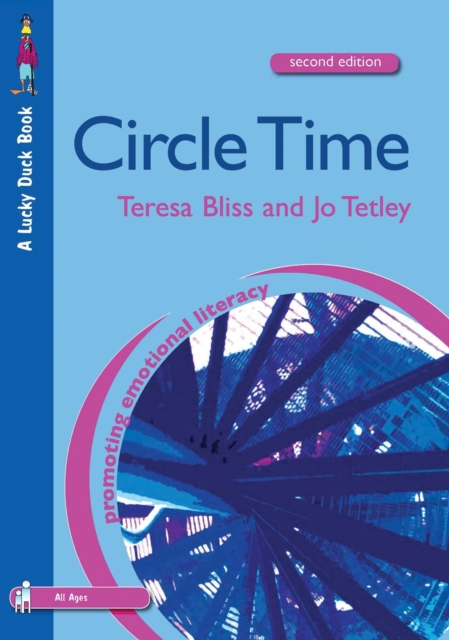
Circle Time
- NEW: The developmental nature of Circle Time is clearly explained - NEW: Ideas for professionals on how to implement non-confrontational language - NEW: Ideas for professionals on how to apply a problem solving approach with in social situations - Games are clearly laid out and immediately accessible to save time Written for the busy classroom teacher, this book provides quick access to an abundance of Circle Time activities. Building on the success of the first edition, this new book retains the original edition′s clarity and ease-of-access, whilst providing more than twice as much material. It has also been updated to take account of new legislation, including Every Child Matters and The National Standard for Healthy Schools. Clear headers guide the reader to core games and appropriate themes, each with helpful hints for planning and implementation, and to assist the smooth running of the sessions. The theme section demonstrates ways of using core Circle Time activities such as ′Sentence Completion′ and ′Silent Statements′ to explore sensitive issues such as friendships and bullying. An important new feature is a structure to help readers understand what they should be expecting from pupils during Circle Time at each key stage. New and expanded sections on group work and the development of Circle Time are also included. This is a valuable resource for teachers, educational psychologists and youth workers, whether they are experienced Circle Time practitioners or new to the technique.
eBook
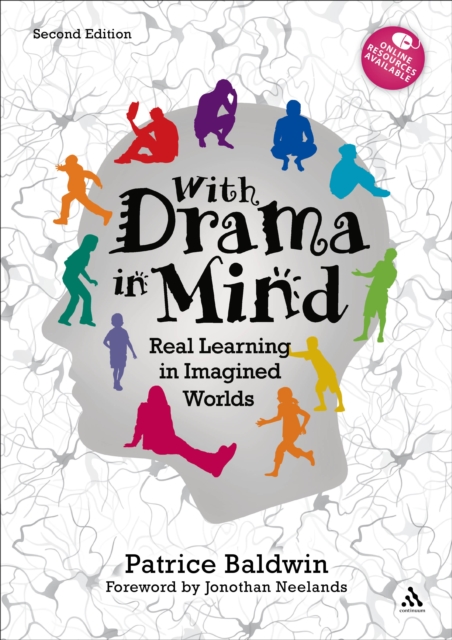
With Drama in Mind
Discover Your Hidden Talents will show you how to: Use drama to support multisensory learning accross a wide range of subjects Toolkit of multipurpose drama strategies to encourage learning Masses of photocopiable resource sheets and templates Includes 5 drama units of work with VAK thinking frames - instantly useable and ideal as templates for.
eBook

Children as Researchers in Primary Schools
How often do your primary school pupils have the opportunity to engage in open-ended, sustained pieces of work that offer them choice and control?
Do you find that the curriculum restricts openings to provide your pupils with real challenge?
Is your school grappling with finding effective ways in which to elicit authentic pupil voice?
Children as Researchers in Primary Schools is an innovative and unique resource for practitioners supporting children to become 'real world' researchers in the primary classroom. It will supply you with the skills and ideas you need to implement a 'children as researchers' framework in your school that can be adapted for different ages and abilities. Children in primary schools are accustomed to being set short-term goals and are often unaware of long-term aims or of the connections between the concepts and skills they are learning. In contrast, this book demonstrates that children engaging in the research process have authentic opportunities to apply invaluable personal, learning and thinking skills while managing their own projects, making their 'voices' heard and experiencing increased levels of engagement and self-esteem.
Based on the author's 4-year research study exploring the experiences of young researchers and teachers in primary schools, and on her considerable experience of training young researchers, this book also contains:
the history and theory behind 'children as researchers' initiatives;
a model for good practice based on successful real life case studies;
questions for reflective practice;
practical examples of research in the classroom;
photocopiable resources;
opportunities for self-evaluation.
This comprehensive resource will be appeal to primary teachers, educational p
eBook

Using and Applying Mathematics at Key Stage 2
All pupils - able children included - need to be taught strategies to enable their thinking skills to progress. They also need help with developing different approaches to problem solving. A sustained piece of work that requires perseverance, logical strategies, and refinement of method and extension of the original task is not the same as a straightforward quick-fix type problem. Both types of problem solving need to be taught. This book presents a series of activities that can be used with whole classes to provide a curriculum for the teaching of problem solving and the development of thinking skills. Each tried and tested investigation is clearly explained with ideas on how to introduce the task to a class, full solutions and resource sheets.
Activities include prisoners: a fun way of generating square numbers; handshakes: exploring arithmetic progressions; T-shape: an activity to lead pupils from numerical calculations to algebraic generalizations; frogs: encouraging systematic working and listing; and opposite corners: an advanced piece of work for independent learners.
eBook

Science Homework for Key Stage 2
\"Science Homework for Key Stage 2 is a unique resource for busy teachers - a selection of 'pencil-free', hands-on activities, aligned with the National Curriculum Programmes of Study and with clear links to the topics set out in the QCA scheme of work for KS2 science, that teachers can use as extension activities or give to pupils as homework to do with members of their family or friends. Each of the activities encourages the pupils to learn through discussion and through practical activities utilising everyday resources.
Each activity is quick and easy for pupils and teachers to manage, and includes:
a learning aim, full, clear instructions and discussion points
tasks to foster collaboration and partnership between pupils, parents and teachers
photocopiable resources.
A refreshing approach for teachers and pupils, these activities will foster enthusiasm for learning and inspire pupils' interest in science.\"
eBook

Language, literacy and learning in primary schools
'Language, Literacy, and Learning in Primary Schools' is a synthesis of the findings arising from four years of policy research and development in Nigeria's primary schools that focused on the gap between what teachers should know and be able to do, and the realities of teaching and learning in classrooms. It begins by critically examining the outcomes of primary schooling as measured by learning achievement results from national assessments, and by identifying some core learning problems for Nigerian primary school children. It reviews the findings from recent research reports that studied teaching and learning processes in primary school classrooms, and it identifies the pedagogical issues in primary classrooms that contribute to poor learning achievements. This report describes a research and development program that set out to improve teaching and learning in core learning skill areas of the curriculum. This study identifies priority areas for teachers' professional development. It suggests a policy framework for the continuing professional development of primary school teachers, including the initial preparation of teachers and their induction into teaching. It proposes medium and long-term strategies to bring about the desired changes in teaching and learning through school-based approaches to teacher development.
eBook

English Homework for Key Stage 2
\"English Homework for Key Stage 2 is a unique resource for busy teachers - a selection of 'pencil-free', hands-on activities, aligned with the National Curriculum Programmes of Study and with clear links to the topics set out in the PNS Framework for English, that teachers can use as extension activities or give to pupils as homework to do with members of their family or friends. Each of the activities encourages the pupils to learn through discussion and through practical activities utilising everyday resources.
Each activity is quick and easy for pupils and teachers to manage, and includes:
a learning aim, full, clear instructions and discussion points
tasks to foster collaboration and partnership between pupils, parents and teachers
photocopiable resources.
A refreshing approach for teachers and pupils, these activities will foster enthusiasm for learning and inspire pupils' interest in English.\"
eBook
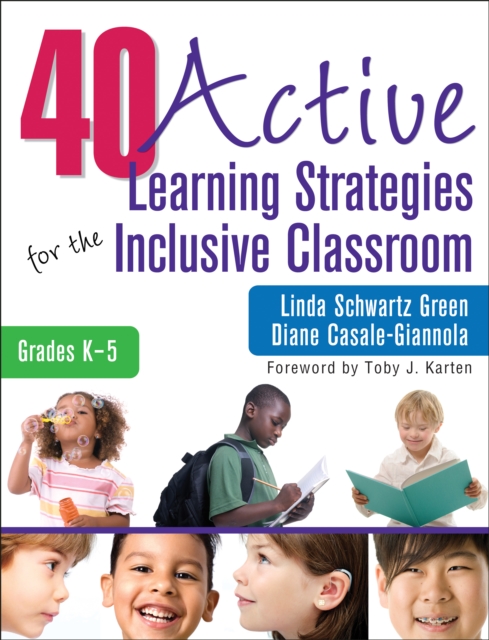
40 active learning strategies for the inclusive classroom, grades K-5
“An excellent tool to help teachers help students, this book would be particularly useful within a professional learning community or in a mentoring setting.”—Jim Hoogheem, Retired PrincipalFernbrook Elementary School, Maple Grove, MN“This book got me excited to teach in an inclusive setting! The tips and directions will work with every child and will ensure that ALL students can learn in the same environment.”—Rachel Aherns, Instructional Strategist IWestridge Elementary School, West Des Moines, IAEngage all learners with research-based strategies from acclaimed educatorsResearch indicates that students of all ages and demographics benefit from active learning strategies. The challenge is translating what we know into what we do. Award-winning educators Linda Schwartz Green and Diane Casale-Giannola build that bridge with more than 40 easy-to-implement strategies for today's inclusive classroom. This practical guide includes: Field-tested practices that are easily adaptable to various grade levels and subjects; Vignettes that demonstrate how to apply today's brain-compatible strategies in the classroom; Tools for differentiating instruction to serve ALL students, including high-ability students, those with ADHD or learning disabilities, and English learnersGrounded in foundational research and educational literature, these strategies include directions for use, sample applications across content areas, and how-to's for groups and individuals. Teachers and administrators will find this comprehensive guidebook an indispensable at-your- fingertips resource for enhancing student engagement, furthering professional development, and increasing positive learning outcomes.
eBook
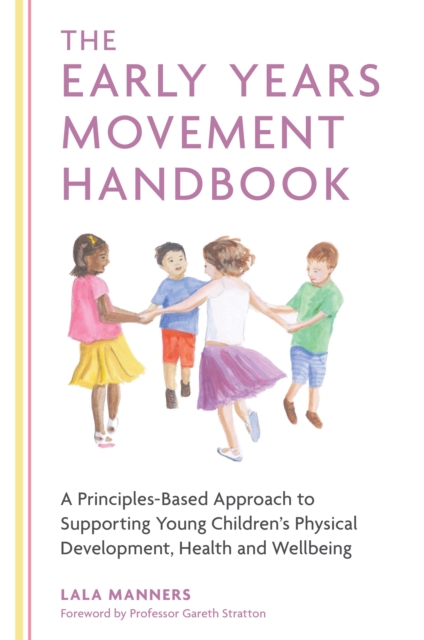
The Early Years Movement Handbook
Lala Manners PhD has enjoyed a long and varied career promoting the importance of EY movement development and physical activity - as educator, teacher, writer, researcher and consultant - both in the UK and internationally.
eBook