
Catalogue Search | MBRL


Are you sure you want to remove the book from the shelf?

{{itemTitle}}
6,060
result(s) for
"Education, Higher Computer-assisted instruction"
Sort by:


Students' Experiences of E-learning in Higher Education
Students' Experiences of e-learning in Higher Education helps higher education instructors and university managers understand how e-learning relates to, and can be integrated with, other student experiences of learning. Grounded in relevant international research, the book is distinctive in that it foregrounds students' experiences of learning, emphasizing the importance of how students interpret the challenges set before them, along with their conceptions of learning and their approaches to learning. The way students interpret task requirements greatly affects learning outcomes, and those interpretations are in turn influenced by how students read the larger environment in which they study. The authors argue that a systemic understanding is necessary for the effective design and management of modern learning environments, whether lectures, seminars, laboratories or private study. This ecological understanding must also acknowledge, though, the agency of learners as active interpreters of their environment and its culture, values and challenges.
Students' Experiences of e-learning in Higher Education reports research outcomes that locate e-learning within the broader ecology of higher education and:
Offers a holistic treatment of e-learning in higher education, reflecting the need for integrating e-learning and other aspects of the student learning experience
Reports research on students' experiences with e-learning conducted by authors in the United States, Europe, and Australia
Synthesizes key themes in recent international research and summarizes their implications for teachers and managers.
eBook

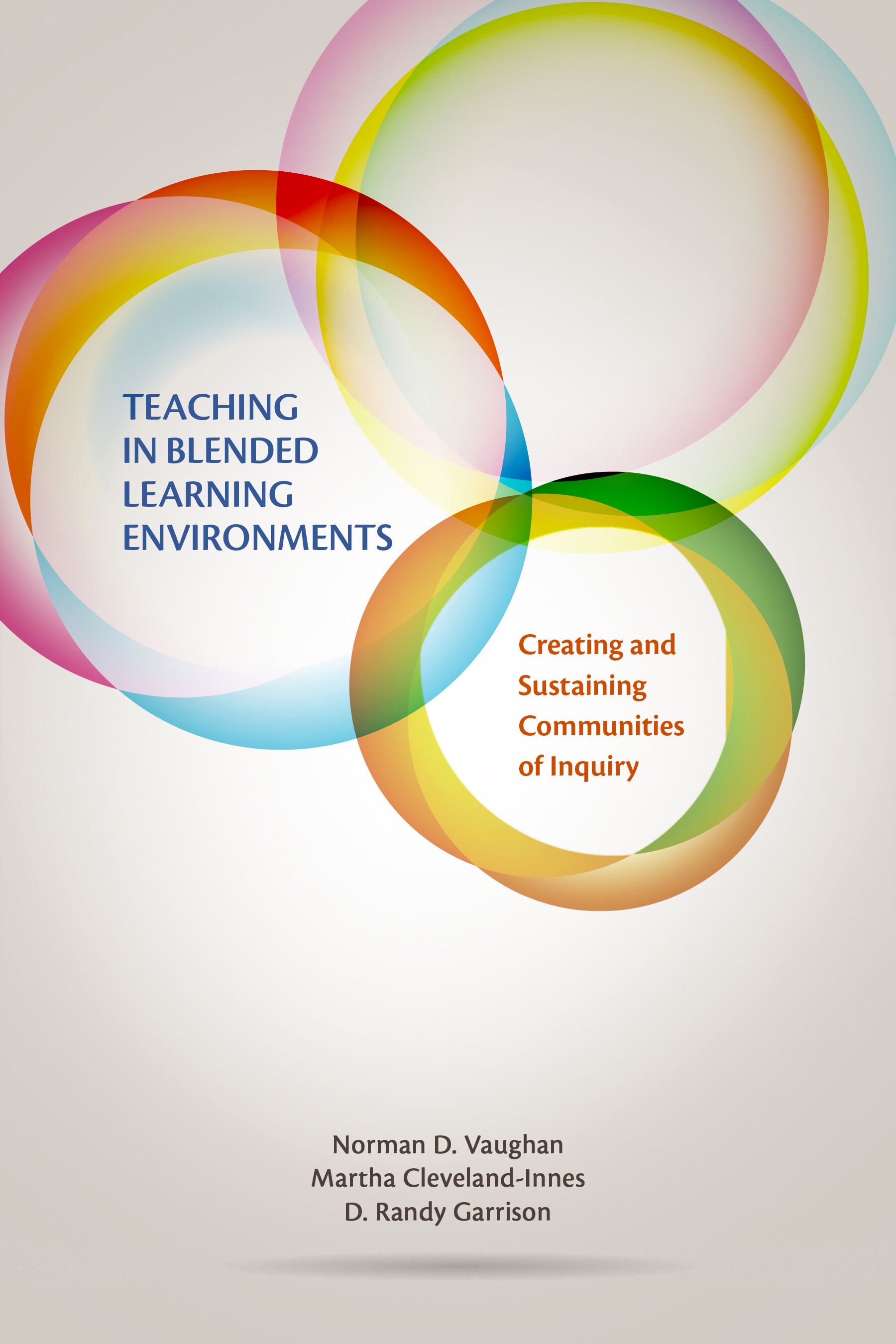
Teaching in Blended Learning Environments: Creating and Sustaining Communities of Inquiry
Teaching in Blended Learning Environments provides a coherent framework in which to explore the transformative concept of blended learningÑthe organic integration of complementary face-to-face and online approaches and technologies. Built upon the theoretical framework of the Community of InquiryÑthe premise that higher education is both a collaborative and individually constructivist learning experienceÑthe authors present seven principles for harnessing the opportunities for teaching and learning available through technology. Focusing on teaching practices related to the design, facilitation, direction, and assessment of blended learning experiences, this text addresses the growing demand for improved teaching in higher education.
eBook

e-Learning and the science of instruction : proven guidelines for consumers and designers of multimedia learning
The authors offer useful information and guidelines for selecting, designing, and developing asynchronous and synchronous e-Learning courses that build knowledge and skills for workers learning in corporate, government, and academic settings.
Book
Online learning and teaching in higher education
What are the links between theory and practice in the area of online learning in higher education?What are the strengths and weaknesses of the online approach?How can online learning be used to enhance the student experience?.
eBook

College made whole : integrative learning for a divided world
\"This optimistic big-idea book about the philosophy and organization of higher education explains how universities can form creative, adaptive, and integrative graduates who are ready to take on the complex, systemic problems of the contemporary world. The author argues against those who propose to unbundle higher education institutions into discrete providers of goods and services who aim to prepare students for existing professions\" Provided by publisher.
Book

Online learning and assessment in higher education : a planning guide
The use of e-learning strategies in teaching is becoming increasingly popular, particularly in higher education. Online Learning and Assessment in Higher Education recognises the key decisions that need to be made by lecturers in order to introduce e-learning into their teaching. An overview of the tools for e-learning is provided, including the use of Web 2.0 and the issues surrounding the use of e-learning tools such as resources and support and institutional policy. The second part of the book focuses on e-assessment; design principles, different forms of online assessment and the benefits and limitations of e-assessment. Provides an accessible introduction to teaching with technologyAddresses the basic aspects of decision-making for successful introduction of e-learning, drawing on relevant pedagogical principles from contemporary learning theoriesCrosses boundaries between the fields of higher education and educational technology (within the discipline of education), drawing on discourse from both areas
eBook

Teaching Higher Education to Lead
Competition to provide education is tense, attributed to the ease to access and process information. Technological development has also landed a terrible blow to the employment situation, which forces higher education institutions to review what and how their students learn. Yet, the desire to retain and grow the number of students and gain commercially can sometimes cloud judgment of educational leaders. They need to know that poorly made decisions hurt the businesses and students. In this book, Sam Choon-Yin explores how technological development has the potential to transform higher education. However, the same technology also has the potential to disrupt the education sector. The author provides a critical outlook on the prevailing practices of the higher education institutions. By drawing our attention to the various challenges, the author shows how teaching and learning can be effectively carried out in the digital age to serve the needs of students and hiring companies, and ultimately the institutions of higher learning. Understanding the issues and challenges means better design of and delivery of the curriculum. At a deeper level, the book raises a complex question of \"what makes an education institution different\" as they aim to define themselves by fulfilling students' desire. Understanding these issues forms the basis of power for higher education institutions to remain competitive and relevant in the age of digitization.
eBook