
Catalogue Search | MBRL


Are you sure you want to remove the book from the shelf?

{{itemTitle}}
22,053
result(s) for
"Education, Professional - standards"
Sort by:

Ethics and the early childhood educator : using the NAEYC code
Do you need support and guidance to help you to navigate tough issues in your work? The NAEYC code of ethical conduct is every early childhood educator's foundation for moral preactice, and the third edition of Ethics and the Early Childhood Educator shows how to use the Code to guide your actions and responses to challenging situations in the workplace. Here, you'll find real cases from early childhood programs that illustrate the process of identitying and addressing ethical issues by applying the NAEYC Code. Reflection questions encourage you to think deeply about how your own experiences relate to the examples. Ethical conduct is critical, and the Code and this book are resources you can turn to againand again as you seek to make the right decisions for young children and their families.--Book cover.
Book

The Impact of Teacher Responsivity Education on Preschoolers' Language and Literacy Skills
Purpose: This study examined the extent to which teacher responsivity education affected preschoolers' language and literacy development over an academic year. Additional aims were to determine whether children's initial language abilities and teachers' use of responsivity strategies were associated with language outcomes, in particular. Method: In this randomized controlled trial, preschool centers were assigned to a responsivity education intervention (n = 19 centers, 25 teachers, and 174 children) or a \"business-as-usual\" control condition (n = 19 centers, 24 teachers, and 156 children). Teachers within the intervention centers received training focused on a set of strategies designed to promote children's engagement and participation in extended conversational interactions across the school day. Results: Hierarchical linear models showed no main effects on children's language skills, although moderating effects were observed such that the intervention appeared to have positive effects for children with relatively high initial language abilities. In addition, teacher use of responsivity strategies was positively associated with vocabulary development. With regard to children's literacy skills, there was a significant main effect of the intervention on print-concept knowledge. Conclusions: Although teacher responsivity education is viewed as benefitting children's language and literacy development, the impacts of this type of intervention on children's skills warrant further investigation. (Contains 6 tables and 1 figure.)
Journal Article
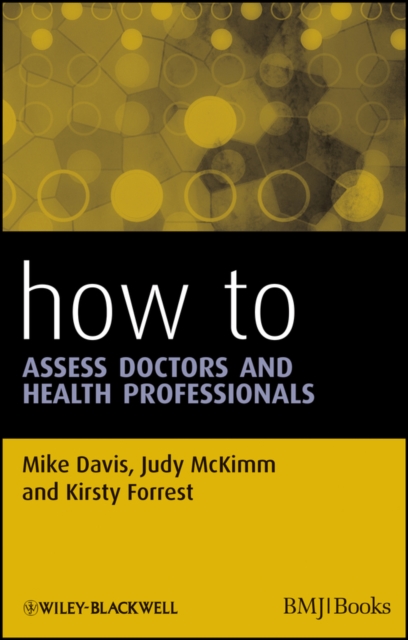
How to assess doctors and health professionals
This important book offers an introduction to the theory and the varying types of assessment for health care professionals. The book includes information on such topics as Where have work based assessments come from?; Why do we have different parts to the same exam like MCQs and OSCEs?; How do colleges decide who has passed or not?; Why can people pick their own assessors for their MSF?; The role of formative assessment Portfolios and their value. The book avoids jargon, is clear and succinct, and gives the pros and cons of the different assessment processes.
eBook

The road to collaboration: The transformative effects of interprofessional education on students' interprofessional attitudes and readiness, socialisation and valuing in medical and nursing students
This study aims to evaluate the impact of interprofessional education on first-year medical and nursing students' attitudes, readiness to learn and interprofessional socialization using a randomized controlled trial.
Interprofessional collaboration is crucial in healthcare to enhance patient safety and outcomes. Interprofessional education (IPE) promotes teamwork, communication and understanding of professional roles among healthcare professionals.
The study was conducted using a randomized controlled pretest-posttest experimental design.
The randomized controlled trial was conducted from January to June 2024 at Atatürk University’s Faculties of Medicine and Nursing. The sample consisted of 120 first-year students, randomly assigned to experimental and control groups. Data were collected using the \"Sociodemographic Information Form,” \"Interprofessional Attitude Scale,\" \"Interprofessional Learning Readiness Scale,\" and \"Interprofessional Socialisation and Valuing Scale.\" The experimental group participated in 16 hours of interprofessional education over four weeks, including simulated patient applications, role-play and group work. The control group continued with standard education without interprofessional training.
Interprofessional education resulted in significant improvement in students' interprofessional attitudes, particularly among nursing students, whose scores changed positively compared with the control group. Additionally, interprofessional socialization and valuing levels improved significantly in the experimental group. However, no substantial change was observed in the readiness for interprofessional learning in the experimental or control groups.
Interprofessional education had a positive impact on the attitudes and socialization of medical and nursing students, highlighting the importance of incorporating IPE into healthcare curricula to foster collaboration and improve patient care.
Journal Article

Impact of interprofessional service-learning on the effectiveness of knowledge transfer of antimicrobial resistance to Hong Kong elders: a quasi-experiment
Background
Community perception on antimicrobials plays a role in driving the development of antimicrobial resistance (AMR). The aim of the study was to evaluate the impact of interprofessional service-learning on the effectiveness of AMR knowledge transfer in Hong Kong elders aged 65 or above and students from university and secondary schools.
Methods
A quasi-experimental pretest–posttest controlled study was carried out from July 2018 to March 2019 for elderly subjects and a pre- and post-test were conducted in students from May to August 2018. Elderly subjects were recruited from the university-based community outreach program. The community outreach team consisted of both university and secondary school students. Students were provided with training of geriatric care and AMR before they reached out to the community. The one-to-one intervention with the aid of video and verbal explanation to educate the elderly about the definition, causes, and consequences of AMR, and preventive measures against AMR was provided. Questionnaires on knowledge of antibiotics and AMR were used as tools to reflect on the effectiveness for both students and elderly subjects. The questionnaire was completed twice, before and 1 week after the intervention. Chi-square test,
t
tests and regression analysis were used to analyze the data.
Results
A total of 93 Chinese elders, 61 of them in the intervention group and 32 in the control group participated in the study. The score obtained by the intervention group increased from 40.1 to 83.3% (
p
< 0.001) following intervention, while that of control group increased from 33.0 to 44.0% (
p
< 0.001). The increase attained in the intervention group was significantly greater than that of the control group (
p
< 0.001). A total of 95 secondary students and 88 university students have completed the pre-post questionnaires with 42.21% and 13% increment in AMR knowledge after the training (
p
< 0.001).
Conclusion
The significant change in knowledge level showed effective AMR knowledge transfer to both elders and students. The study could be used as a reference when allocating resources to implement effective interprofessional service-learning for better community health education in elderly populations.
Trial registration
: This study was approved by the Chinese University of Hong Kong Survey and Behavioural Research Ethics Committee in December 2018 (Ref no. SBRE-18-214).
Journal Article

Health professionals for a new century: transforming education to strengthen health systems in an interdependent world
The problems are systemic: mismatch of competencies to patient and population needs; poor teamwork; persistent gender stratification of professional status; narrow technical focus without broader contextual understanding; episodic encounters rather than continuous care; predominant hospital orientation at the expense of primary care; quantitative and qualitative imbalances in the professional labour market; and weak leadership to improve health-system performance. Major findings Worldwide, 2420 medical schools, 467 schools or departments of public health, and an indeterminate number of postsecondary nursing educational institutions train about 1 million new doctors, nurses, midwives, and public health professionals every year.
Journal Article

A scoping review of interprofessional education in healthcare: evaluating competency development, educational outcomes and challenges
Background
Interprofessional education (IPE) is essential in healthcare to enhance collaboration, communication and teamwork among health professions education students. This review aimed to map out the core competencies health professions education students develop during IPE and identify the positive and negative educational outcomes.
Methods
A comprehensive search strategy was developed and reported in accordance with the PRISMA ScR guidelines. The search was conducted across five electronic databases (Medline, Scopus, Web of Science, PsycINFO and EBSCO) for peer-reviewed articles published in English within the last 20 years. Data was extracted and core competencies were categorised into four defined areas—roles and responsibilities; interprofessional communication; values for interprofessional practice; teams and teamwork. The frequency of occurrence of each core competency, along with the positive and negative outcomes of IPE were analysed. Mixed methods analysis was used to integrate both qualitative and quantitative data.
Results
Team and teamwork emerged as the most frequently attained core competency in IPE. The positive impacts of IPE include significant improvements in role clarity, communication skills, and teamwork dynamics. However, negative impacts were also noted, such as logistical challenges and interpersonal issues like power dynamics and communication barriers, which impeded the personal professional growth and professional interactional skill-related benefits of IPE. Additionally, some participants reported feeling overwhelmed by the extra workload required for IPE activities.
Conclusion
IPE is a valuable component of health professions education, significantly contributing to the development of core competencies necessary for interprofessional collaborative practice. Addressing the challenges and implementing best practices can further enhance the effectiveness of IPE programs, ultimately improving healthcare outcomes. The implications for practice, training of healthcare students and future research are discussed.
Journal Article

An Ethics Framework for a Learning Health Care System: A Departure from Traditional Research Ethics and Clinical Ethics
Calls are increasing for American health care to be organized as a learning health care system, defined by the Institute of Medicine as a health care system “in which knowledge generation is so embedded into the core of the practice of medicine that it is a natural outgrowth and product of the healthcare delivery process and leads to continual improvement in care.” We applaud this conception, and in this paper, we put forward a new ethics framework for it. No such framework has previously been articulated. The goals of our framework are twofold: to support the transformation to a learning health care system and to help ensure that learning activities carried out within such a system are conducted in an ethically acceptable fashion.
Journal Article

DeepLMS: a deep learning predictive model for supporting online learning in the Covid-19 era
Coronavirus (Covid-19) pandemic has imposed a complete shut-down of face-to-face teaching to universities and schools, forcing a crash course for online learning plans and technology for students and faculty. In the midst of this unprecedented crisis, video conferencing platforms (e.g., Zoom, WebEx, MS Teams) and learning management systems (LMSs), like Moodle, Blackboard and Google Classroom, are being adopted and heavily used as online learning environments (OLEs). However, as such media solely provide the platform for e-interaction, effective methods that can be used to predict the learner’s behavior in the OLEs, which should be available as supportive tools to educators and metacognitive triggers to learners. Here we show, for the first time, that Deep Learning techniques can be used to handle LMS users’ interaction data and form a novel predictive model, namely DeepLMS, that can forecast the quality of interaction (QoI) with LMS. Using Long Short-Term Memory (LSTM) networks, DeepLMS results in average testing Root Mean Square Error (RMSE)
<
0.009
, and average correlation coefficient between ground truth and predicted QoI values
r
≥
0.97
(
p
<
0.05
)
, when tested on QoI data from one database pre- and two ones during-Covid-19 pandemic. DeepLMS personalized QoI forecasting scaffolds user’s online learning engagement and provides educators with an evaluation path, additionally to the content-related assessment, enriching the overall view on the learners’ motivation and participation in the learning process.
Journal Article

Towards developing and validating Quality Physical Education in schools—The Asian physical education professionals’ voice
Physical education professionals aim to develop quality programmes for physical education. This study aimed to develop and validate a scale using professionals' perceptions of Quality Physical Education QPE in Asia using twenty-four items regarding QPE quality issues. The items covered status and roles, development of educational elements and supportive features in physical education. A sample of N = 799 sport and physical education professionals from eleven Asian cities participated in this questionnaire survey. Twenty-four items relating to QPE were examined via exploratory factor analysis (EFA) using maximum likelihood extraction and direct oblimin rotation methods. Nevertheless, only 20 items were extracted following the EFA examination. Items 1, 9, 14 and 18 were excluded because of low factor loadings. The remaining items were clustered into four subscales: Development and Supportive Elements for Quality Physical Education in Schools (DSFQPE; α = .918), Core Values of Quality Physical Education (CVPE; α = .908), Curriculum Arrangement of Physical Activities (CAPA; α = .884) and Provision and Norms in Physical Education (PNPE; α = .865). The Cronbach's alpha coefficient (α = .875) indicated excellent internal consistency for the overall measure. Furthermore, the 4 retained factors from the EFA were assessed via robust confirmatory factor analysis (CFA). The 4-factor model demonstrated a good fit with the data (CMIN/DF = 3.450, CFI = .928, TLI = .916, PCFI = .801, RMSEA = .078). The study identified a 4-factor structure with internal consistency and acceptable interfactor correlations. The structure seemed to be applicable, including the twenty items identified as useful and necessary tools for the framework of analysis in the investigation of diverse settings for the study of quality physical education.
Journal Article