
Catalogue Search | MBRL


Are you sure you want to remove the book from the shelf?

{{itemTitle}}
420
result(s) for
"Education, higher arab countries"
Sort by:


The American University of Beirut : Arab nationalism and liberal education
No detailed description available for \"The American University of Beirut\".
eBook

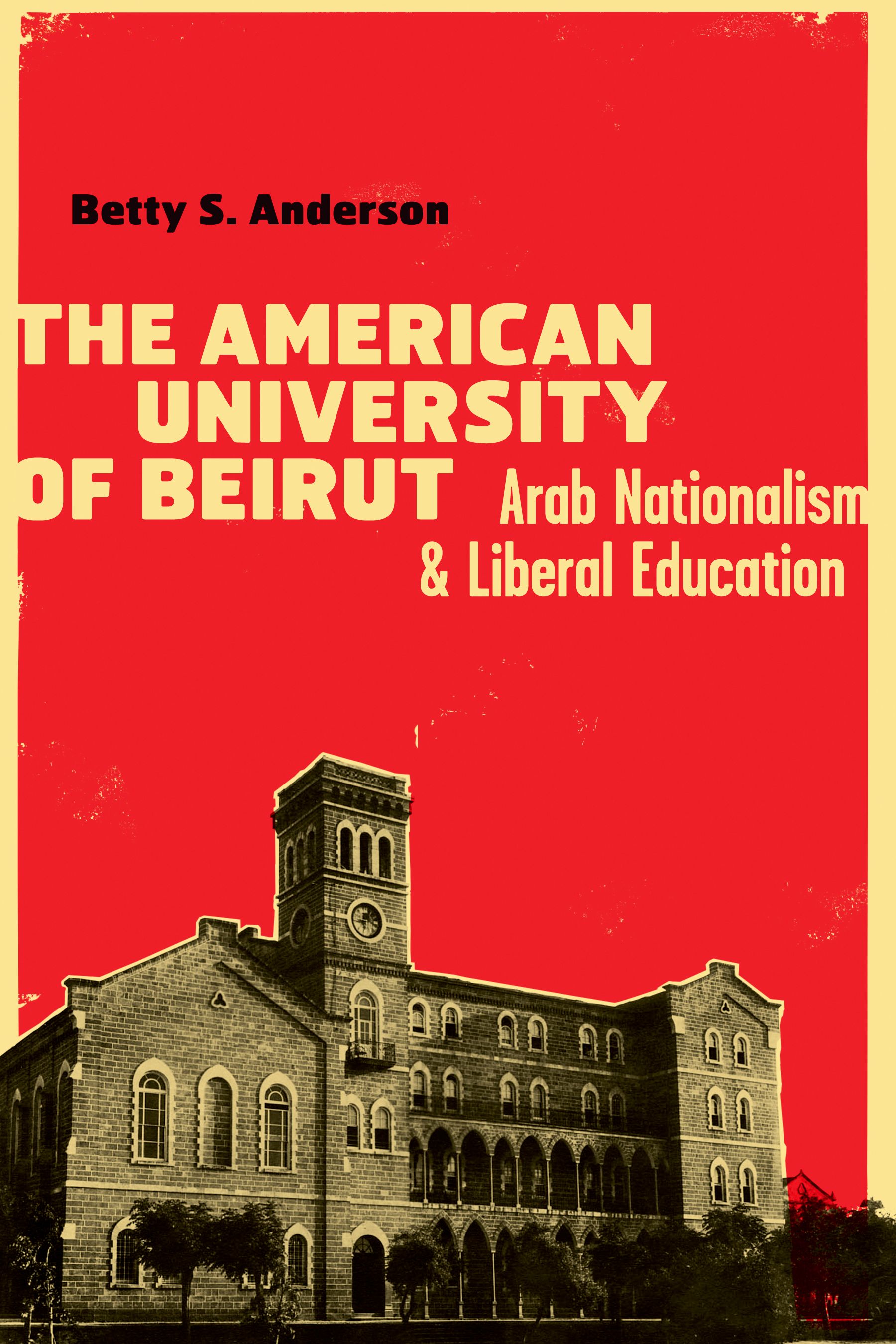
The American University of Beirut
Since the American University of Beirut opened its doors in 1866, the campus has stood at the intersection of a rapidly changing American educational project for the Middle East and an ongoing student quest for Arab national identity and empowerment. Betty S. Anderson provides a unique and comprehensive analysis of how the school shifted from a missionary institution providing a curriculum in Arabic to one offering an English-language American liberal education extolling freedom of speech and analytical discovery. Anderson discusses how generations of students demanded that they be considered legitimate voices of authority over their own education; increasingly, these students sought to introduce into their classrooms the real-life political issues raging in the Arab world. The Darwin Affair of 1882, the introduction of coeducation in the 1920s, the Arab nationalist protests of the late 1940s and early 1950s, and the even larger protests of the 1970s all challenged the Americans and Arabs to fashion an educational program relevant to a student body constantly bombarded with political and social change. Anderson reveals that the two groups chose to develop a program that combined American goals for liberal education with an Arab student demand that the educational experience remain relevant to their lives outside the school's walls. As a result, in eras of both cooperation and conflict, the American leaders and the students at the school have made this American institution of the Arab world and of Beirut.
eBook

Missions impossible : higher education and policymaking in the Arab world
None of the momentous challenges Arab universities face is unique either in kind or degree. Other societies exhibit some of the same pathologies-insufficient resources, high drop-out rates, feeble contributions to research and development, inappropriate skill formation for existing job markets, weak research incentive structures, weak institutional autonomy, and co-optation into the political order. But, it may be that the concentration of these pathologies and their depth is what sets the Arab world apart.0Missions Impossible seeks to explain the process of policymaking in higher education in the Arab world, a process that is shaped by the region's politics of autocratic rule. Higher education in the Arab world is directly linked to crises in economic growth, social inequality and, as a result, regime survival. If unsuccessful, higher education could be the catalyst to regime collapse. If successful, it could be the catalyst to sustained growth and innovation-but that, too, could unleash forces that the region's autocrats are unable to control. Leaders are risk-averse and therefore implement policies that tame the universities politically but in the process sap their capabilities for innovation and knowledge creation.
Book

Why was the Arab World poised for revolution?
What underlying long-term conditions set the stage for the Arab Spring? In recent decades, the Arab region has been characterized by an expansion in schooling coupled with weak labor market conditions. This pattern is especially pronounced in those countries that saw significant upheaval during the first year of the Arab Spring uprisings. We argue that the lack of adequate economic opportunities for an increasingly educated populace can help us understand episodes of regime instability such as the Arab Spring.
Journal Article


The status of education for sustainable development and sustainability knowledge, attitudes, and behaviors of UAE University students
Purpose
This study aims to investigate United Arab Emirates University (UAEU) students’ knowledge, attitudes and behaviors toward education for sustainable development (ESD) and the environment. Several independent variables (i.e. students’ gender, nationality, college, academic level and grade point average [GPA]) were also considered.
Design/methodology/approach
This study was descriptive in nature, and the data were obtained using a cross-sectional survey. A total of 823 participants responded to an e-education for sustainable development survey. Several data analysis procedures were used, including descriptive analyses, analyses of variance and t-tests.
Findings
The study revealed that the UAEU students showed a high level of understanding, very strong positive attitudes and moderate positive behavior toward ESD and the environment. Findings associated with students’ gender, nationality, college, academic level and GPA were also reported and discussed.
Research limitations/implications
First, the participating students came from one public university. Although this university is a major university in the nation, further studies should include samples from other public and private institutions. Second, this study did not examine the correlation among the three main components: knowledge, attitude and behavior. Thus, similar to other previous studies, the correlations among these three components should be investigated. Third, this study used previous research findings in the areas of ESD, SD and environmental education (EE) because they all relate to each other and ESD is currently the active trend in the field.
Originality value
No previous ESD studies have been conducted in the United Arab Emirates (UAE), although the country is working hard to support ESD and SD. Therefore, this study explored the current education levels with regard to SD and sustainability knowledge, attitudes and behavior of tertiary students in the UAE. In addition, previous studies have clearly recommended investigating the status of EE and ESD in younger generations, especially those with higher education levels, because they are the agents of change, and they will be affected by the environmental problems that are being created by present human activities.
Journal Article

Degrees of dignity : Arab higher education in the global era
\"Presenting an analysis of higher education in eight countries in the Arab Middle East and North Africa, Degrees of Dignity works to dismantle narratives of crisis and assert approaches to institutional reform. Drawing on policy documents, media narratives, interviews, and personal experiences, Elizabeth Buckner explores how apolitical external reform models become contested and modified by local actors in ways that are simultaneously complicated, surprising, and even inspiring. Degrees of Dignity documents how the global discourses of neoliberalism have legitimized specific policy models for higher education reform in the Arab world, including quality assurance, privatization, and internationalization. Through a multi-level and comparative analysis, this book examines how policy models are implemented, with often complex results, in countries throughout the region. Ultimately, Degrees of Dignity calls on the field of higher education development to rethink current approaches to higher education reform: rather than viewing the Arab world as a site for intervention, it argues that the Arab world can act as a source for insight on resilient higher education systems.\"-- Provided by publisher.
BOOK

Separate But Equal? Diversity Policy Narratives in Israeli Higher Education
Student body diversity is a key goal of Israeli higher education policy. While this goal aims to reduce inequality, a group-based national plan with differential guidelines for Arabs, ultra-Orthodox Jews, and Jews of Ethiopian descent uncovers systemic stratifying mechanisms. This article examines why a policy intent on promoting equality does so through different paths for different groups. It employs discourse analysis of policy narratives arising from 75 policy documents and 54 interviews with national and institutional policymakers. The findings reveal that simultaneous equalizing and stratifying mechanisms are explained by an intersection of socioeconomic and ethnonational guiding logics. This is conceptualized through a threefold diversity policy model: (1) Universal, encouraging higher education participation as an inclusive civic and social right; (2) Socioeconomic, providing enhanced support based on needs and on perceived economic benefit; and (3) Ethnonational, with stratified recognition, allocation, and implementation mechanisms. This model clarifies how the policy is designed to reduce socioeconomic inequality while still allowing for ethnonational stratification. It contributes to the higher education policy literature by adding citizenship as an important construct of policy processes in diverse societies, to be considered in the pursuit of equity and equality.
Journal Article