
Catalogue Search | MBRL


Are you sure you want to remove the book from the shelf?

{{itemTitle}}
1,311
result(s) for
"Education Arab countries."
Sort by:

Education in the Arab world
\"Education in the Arab world is a critical reference guide to development of education in Iraq, Jordan, Lebanon, Palestine, Syria, Bahrain, Kuwait, Oman, Qatar, Saudi Arabia, the United Arab Emirates, Yemen, Algeria, Egypt, Libya, Morocco, Sudan and Tunisia. The chapters, written by local experts, provide an overview of the education system in each country, as well as discussion of educational reforms and socio-economic and political issues. Including a comparative introduction to the issues facing education in the region as a whole and guides to available online datasets, this book is an essential reference for researchers, scholars, international agencies and policy-makers.\"--Back cover.
Book

The American University of Beirut : Arab nationalism and liberal education
No detailed description available for \"The American University of Beirut\".
eBook

Missions impossible : higher education and policymaking in the Arab world
None of the momentous challenges Arab universities face is unique either in kind or degree. Other societies exhibit some of the same pathologies-insufficient resources, high drop-out rates, feeble contributions to research and development, inappropriate skill formation for existing job markets, weak research incentive structures, weak institutional autonomy, and co-optation into the political order. But, it may be that the concentration of these pathologies and their depth is what sets the Arab world apart.0Missions Impossible seeks to explain the process of policymaking in higher education in the Arab world, a process that is shaped by the region's politics of autocratic rule. Higher education in the Arab world is directly linked to crises in economic growth, social inequality and, as a result, regime survival. If unsuccessful, higher education could be the catalyst to regime collapse. If successful, it could be the catalyst to sustained growth and innovation-but that, too, could unleash forces that the region's autocrats are unable to control. Leaders are risk-averse and therefore implement policies that tame the universities politically but in the process sap their capabilities for innovation and knowledge creation.
Book
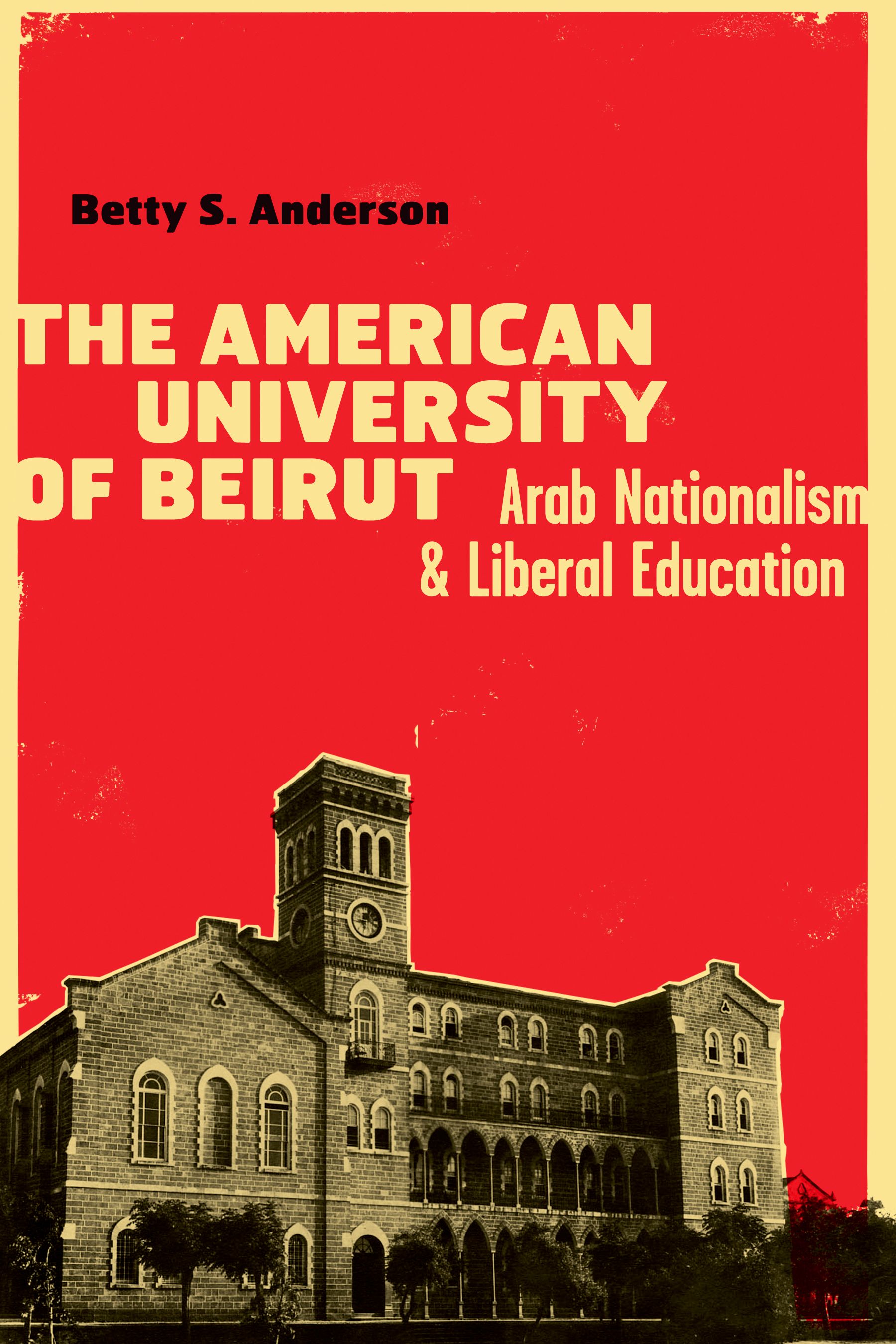
The American University of Beirut
Since the American University of Beirut opened its doors in 1866, the campus has stood at the intersection of a rapidly changing American educational project for the Middle East and an ongoing student quest for Arab national identity and empowerment. Betty S. Anderson provides a unique and comprehensive analysis of how the school shifted from a missionary institution providing a curriculum in Arabic to one offering an English-language American liberal education extolling freedom of speech and analytical discovery. Anderson discusses how generations of students demanded that they be considered legitimate voices of authority over their own education; increasingly, these students sought to introduce into their classrooms the real-life political issues raging in the Arab world. The Darwin Affair of 1882, the introduction of coeducation in the 1920s, the Arab nationalist protests of the late 1940s and early 1950s, and the even larger protests of the 1970s all challenged the Americans and Arabs to fashion an educational program relevant to a student body constantly bombarded with political and social change. Anderson reveals that the two groups chose to develop a program that combined American goals for liberal education with an Arab student demand that the educational experience remain relevant to their lives outside the school's walls. As a result, in eras of both cooperation and conflict, the American leaders and the students at the school have made this American institution of the Arab world and of Beirut.
eBook


Education for a Knowledge Society in Arabian Gulf Countries
This volume investigates the agendas and initiatives for using education to transition Gulf communities from being dependent on natural resources into knowledge societies. This volume presents information, case studies and empirical research about the development of information-based economies across the Arabian Gulf as a whole.
eBook


Trajectories of Education in the Arab World
Trajectories of Education in the Arab World gives a broad yet detailed historical and geographical overview of education in Arab countries. Drawing on pre-modern and modern educational concepts, systems, and practices in the Arab world, this book examines the impact of Western cultural influence, the opportunities for reform and the sustainability of current initiatives.
The contributors bring together analyses and case studies of educational standards and structures in the Arab world, from the classical Islamic period to contemporary local and international efforts to re-define the changing needs and purposes of Arab education in the contexts of modernization, multiculturalism, and globalization. Taking a thematic and chronological approach, the first section contrasts the traditional notions, approaches, and standards of education with the changes that were initiated or imposed by European influences in the nineteenth century. The chapters then focus on the role of modern state-based educational systems in constructing and preserving national identities, cultures, and citizenries and concentrates on the role of education in state-formation and the reproduction of socio-political hierarchies. The success of educational reforms and policy-making is then assessed, offering perspectives on future trends and prospects for generating institutional and organizational change.
This book will be of interest to graduate and postgraduate students and scholars of education, history, Arab and Islamic history and the Middle East and North Africa.
Osama Abi-Mershed is Assistant Professor of History at Georgetown University, where he currently teaches classes on the medieval and modern histories of the Middle East, North Africa and the Western Mediterranean world. His current research focuses on the processes of cultural transformation in colonial Algeria.
Introduction: The Politics of Arab Educational Reforms Osama Abi-Mershed Part I: Historical Perspectives 1. The Principles of Instruction are the Grounds of Our Knowledge: Al-Farabi’s Philosophical and al-Ghazali’s spiritual approaches to learning Sebastian Günther 2. Between the Golden Age and the Renaissance: Islamic Higher Education in Eighteenth-Century Damascus Stephen Tamari 3. \"If the Devil Taught French\": Strategies of Language and Learning in French Mandate Beirut Nadya Sbaiti 4. \"According to a Logic Befitting the Arab Soul\": Cultural Policy and Popular Education in Morocco Since 1912 Spencer Segalla Part II: Education and the Post-Colonial State 5. Public Institutions of Religious Education in Egypt and Tunisia: Contrasting the Post-Colonial Reforms of Al-Azhar and the Zaytuna Malika Zeghal 6. Palestinian Education in a Virtual State Nubar Hovsepian 7. Language-in-Education Policies in Contemporary Lebanon: Youth Perspective Zeena Zakharia 8. Education as a Humanitarian Response as Applied to the Arab World, With Special Reference to the Palestinian Case Colin Brock and Lala Demirdjian Part III: Education and Socio-Political Development: Reform, Policy and Practice 9. Naming the Imaginary:”Building an Arab Knowledge Society” and the Contested Terrain of educational Reforms for development Andre Elias Mazawi 10. An Introduction to Qatar’s Primary and Secondary Education Reform Dominic Brewer 11. Observations from the Edge of the deluge: Are we going too far too fast in our Educational Transformation in the Arab World? Munir Bashshur
eBook


Issues in English Education in the Arab World
Though diverse, the Arab world boasts a unique culture and native language, both of which are unlike those found in English-speaking countries. Perhaps due to the nature of these differences, Arab-Western relations have been described as existing on one of the world's great cultural fault-lines. Debate about the potential effects, both positive and negative, of English-medium education and the learning of English in the region's schools and universities is one expression of this. Even as debate continues, issues of politics, culture, social mobility, and identity are played out in the English language classrooms of the Arab world on a daily basis. The current volume explores some of the concerns related to the place of English and English-medium education in the Arab world. It examines issues of the relationship between English, Arabic, cultural identity and power in the region within a historical and contemporary framework; the experiences of learners from Arabic-medium secondary schools adjusting to English-medium colleges; and the challenges and potential rewards of promoting student-centered classrooms and technology in traditionally teacher-centered environments. These issues are explored from the perspectives of teachers, students, researchers and other stakeholders in Oman, Saudi Arabia, the UAE, and Sudan.
eBook