
Catalogue Search | MBRL


Are you sure you want to remove the book from the shelf?

{{itemTitle}}
1,208
result(s) for
"Education Curricula Europe."
Sort by:


Beyond the National Curriculum
The National Curriculum is due for review. This is a central area of educational debate in England and Wales. Increasingly politicians and their entourages are looking for quick fixes from abroad to solve what they see to be problems in the educational system of the UK. Drawing on insights from other European curricular systems, this provocative book will contribute, in a timely way, to the debate on reformations of the National Curriculum. The style is concise, with points for discussion and lists of further reading. debate in England and Wales. Increasingly politicians are looking for quick fixes from abroad to solve what they see to be problems in the educational system. Drawing on insights from other European curricular systems, this volume will contribute, in a timely way, to the debate on the reformations of the National Curriculum. The style is short and concise, with points for discussion and lists of further reading. _
eBook

Education for democratic intercultural citizenship
\"Education for Democratic Intercultural Citizenship (EDIC) is very relevant in contemporary societies. All citizens, but in particular teachers, curriculum developers, educational policy makers, and educational professionals in civil society (NGOs) have a crucial role in this. Seven European universities are working together in developing a curriculum to prepare their students for this important academic, societal and political task. As part of an Erasmus+ Strategic Partnership they each develop a module in the area of moral, intercultural and citizenship education. All modules are international and inquiry oriented, and make links with society. In this book the leading scholars write the theoretical background of their module, their curriculum guidelines and goals, the concrete programmes, and the experiences of students. The universities had an annual intensive programme in which students and teachers of all universities came together to have try-outs of parts of the modules. These programmes contributed strongly to the network building of researchers, teachers and students. The activities have given a strong stimulus to the implementation of Education for Democratic Intercultural Citizenship in the participating universities and in educational organisations worldwide. The experiences show both the necessity and the relevance of this topic and this kind of collaboration\"-- Provided by publisher.
Book

Changes and continuities in undergraduate nursing education during and after COVID-19: a European comparative study from the perspective of health science
Background
The education of healthcare professionals, including nurses, represents a critical intersection with health systems science (HSS), which is often considered the third pillar of healthcare education alongside basic and clinical sciences. Despite the amount of research on nursing education during the COVID-19 pandemic, there remains a gap in analysis from an HSS perspective.
Methods
A Comparative Education Approach involving undergraduate nursing programs (UNPs) across Europe, with longitudinal data collection from 2002 to 2023. The aim of the study was threefold: (a) to summarize the overall changes in UNPs during the COVID-19 pandemic; (b) to identify the changes retained in the post-pandemic era; and (c) to identify the impact of the pandemic on nursing education as perceived by nurse educators across nine European countries.
Results
This study compares the changes in nursing education in European countries during and after the COVID-19 pandemic using a qualitative approach with data from nine universities. The COVID-19 pandemic had a significant impact on education provision. During the first wave, government restrictions forced a complete shift to online learning for theory classes, clinical training and laboratories. In subsequent waves, a hybrid format was chosen that combined online and face-to-face sessions. A major challenge was the placement of nursing students alongside general university students. This approach neglected their need for practical clinical training, which is crucial for their future careers. To compensate for the lack of clinical hours, various alternative teaching methods were introduced. Students were also offered the opportunity to volunteer in large-scale public health initiatives such as vaccination and testing campaigns, although bedside care for COVID-19 patients remained limited. The pandemic has also left its mark in the post-pandemic period. Some UNPs have retained elements of online education, notably lectures, research seminars, meetings, consultations and even online exams. Interestingly, an initial increase in applicant numbers was observed at six of the nine participating UNPs.
Conclusions
The COVID-19 pandemic has widened the gap between university-educated nurses and the clinical setting, i.e. between theory and practise, underlining the importance of HSS in nursing education. Rebuilding strong partnerships is crucial, but simply returning to the pre-pandemic model is not enough. To ensure uninterrupted education during future crises, proactive planning, including the creation of predefined protocols for collaboration, is essential. The pandemic underscores the need for closer alignment between the two sectors, which would better equip future nurses with the skills they need to thrive in the nursing workforce and ensure they are prepared for the challenges of the 21st century.
Journal Article

Secondary school education in Ireland : history, memories and life stories, 1922 - 1967
\"Exploring the memories of those who attended Irish secondary schools prior to 1967, this book makes an important contribution to a growing field of study which seeks to understand school experience through participants' memories. Adopting a life story approach, the book serves to initiate and enhance the practice of remembering secondary school education amongst those who attended secondary schools not just in Ireland, but around the world and explores a range of schools including Diocesan Colleges, Christian Brothers' schools, schools run by other orders of brothers and priests, schools run by Mercy and Presentation nuns, schools run by other orders of nuns, Protestant schools and other categories of secondary schools. The year 2017 will mark the 50th anniversary of the introduction of 'the free education scheme' for second-level schooling in Ireland and considered against this background the book will make a significant addition to the history of secondary school education internationally and will be of interest to academics, students, policymakers and educationalists across history, sociology, education and Irish studies\"-- Provided by publisher.
Book

Perceptions of Digital Health Education Among European Medical Students: Mixed Methods Survey
Digital health technologies hold promise to enhance patient-related outcomes, to support health care staff by reducing their workload, and to improve the coordination of care. As key users of digital health technologies, health care workers are crucial to enable a meaningful digital transformation of health care. Digital health literacy and digital skills should become prerequisite competencies for health professionals to facilitate the implementation and leverage the potential of digital technologies to improve health.
We aimed to assess European medical students' perceived knowledge and opinions toward digital health, the status of digital health implementation in medical education, and the students' most pressing needs.
The explanatory design of our mixed methods study was based on an online, anonymous, self-administered survey targeted toward European medical students. A linear regression analysis was used to identify the influence of the year of medical studies on the responses. Additional analysis was performed by grouping the responses by the self-evaluated frequency of eHealth technology use. Written responses to four qualitative questions in the survey were analyzed using an inductive approach.
The survey received a total of 451 responses from 39 European countries, and there were respondents for every year of medical studies. The majority of respondents saw advantages in the use of digital health. While 40.6% (183/451) felt prepared to work in a digitized health care system, more than half (240/451, 53.2%) evaluated their eHealth skills as poor or very poor. Medical students considered lack of education to be the reason for this, with 84.9% (383/451) agreeing or strongly agreeing that more digital health education should be implemented in the medical curriculum. Students demanded introductory and specific eHealth courses covering data management, ethical aspects, legal frameworks, research and entrepreneurial opportunities, role in public health and health systems, communication skills, and practical training. The emphasis lay on tailoring learning to future job requirements and interprofessional education.
This study shows a lack of digital health-related formats in medical education and a perceived lack of digital health literacy among European medical students. Our findings indicate a gap between the willingness of medical students to take an active role by becoming key players in the digital transformation of health care and the education that they receive through their faculties.
Journal Article

Engaging business in curriculum design and delivery
University-business cooperation has risen to one of the top priorities for many higher education institutions, with its importance mirroring attention from scholars and policy makers worldwide. Despite prolific research in this area, however, few have investigated curriculum-related university-business cooperation or its facilitators. Hence, this study investigates five mechanisms as drivers of business engagement in the design and delivery of the curriculum and the alignment of the curriculum with business needs. Results of a European-wide survey of higher education institution managers show the positive impact of senior management engagement, alumni networks and external communication of university-business cooperation, particularly on business engagement in curriculum design and the curriculum meeting industry needs. The higher education institution's dedication of resources emerged as irrelevant in this context. The conceptual model is validated across higher education institutions with different levels of curriculum-related cooperation with business and across three countries, leading to implications for management and future research directions.(HRK / Abstract übernomen)
Journal Article

Mind the gender gap: the impact of university education on the entrepreneurial entry of female and male STEM graduates
Women are consistently underrepresented among graduate entrepreneurs. This is especially true among the entrepreneurs who graduate in STEM fields. Here, we aim at identifying factors that reduce/enlarge the gender imbalance in entrepreneurship among STEM graduates. In particular, we explore the underinvestigated association between university education in STEM fields and entrepreneurial entry of recent female and male graduates considering graduates’ whole university curriculum. Our analyses on the graduates who obtained a Master of Science degree in the 2005–2009 period from Politecnico di Milano reveal that training in economics and management reduces the gender imbalance in entrepreneurial entry among STEM recent graduates. The gap is instead larger among the graduates who attended courses that aggregate students from different STEM fields or did an internship.Plain English SummaryUniversity education affects the gender gap in entrepreneurship among STEM graduates! Attending courses aggregating students from multiple STEM programs and doing internships enhance this gap, while training in economics and management reduces it. Women are severely underrepresented among STEM graduate entrepreneurs. Our study investigates the relationship between university education in STEM fields and entrepreneurial entry of recent female and male graduates. Using data on 13,840 graduates who obtained a Master of Science degree in the 2005–2009 period from Politecnico di Milano, we find that attending courses in economics and management reduces the gender imbalance in entrepreneurial entry among STEM recent graduates. The gap is instead larger among the graduates who attended courses aggregating students from different STEM fields or did an internship. Our study offers important implications for university managers, as it helps them design university curricula in STEM fields that may be more conducive to female entrepreneurial entry.
Journal Article

Distance learning in higher education during COVID-19: The role of basic psychological needs and intrinsic motivation for persistence and procrastination–a multi-country study
Due to the COVID-19 pandemic, higher educational institutions worldwide switched to emergency distance learning in early 2020. The less structured environment of distance learning forced students to regulate their learning and motivation more independently. According to self-determination theory (SDT), satisfaction of the three basic psychological needs for autonomy, competence and social relatedness affects intrinsic motivation, which in turn relates to more active or passive learning behavior. As the social context plays a major role for basic need satisfaction, distance learning may impair basic need satisfaction and thus intrinsic motivation and learning behavior. The aim of this study was to investigate the relationship between basic need satisfaction and procrastination and persistence in the context of emergency distance learning during the COVID-19 pandemic in a cross-sectional study. We also investigated the mediating role of intrinsic motivation in this relationship. Furthermore, to test the universal importance of SDT for intrinsic motivation and learning behavior under these circumstances in different countries, we collected data in Europe, Asia and North America. A total of N = 15,462 participants from Albania, Austria, China, Croatia, Estonia, Finland, Germany, Iceland, Japan, Kosovo, Lithuania, Poland, Malta, North Macedonia, Romania, Sweden, and the US answered questions regarding perceived competence, autonomy, social relatedness, intrinsic motivation, procrastination, persistence, and sociodemographic background. Our results support SDT’s claim of universality regarding the relation between basic psychological need fulfilment, intrinsic motivation, procrastination, and persistence. However, whereas perceived competence had the highest direct effect on procrastination and persistence, social relatedness was mainly influential via intrinsic motivation.
Journal Article
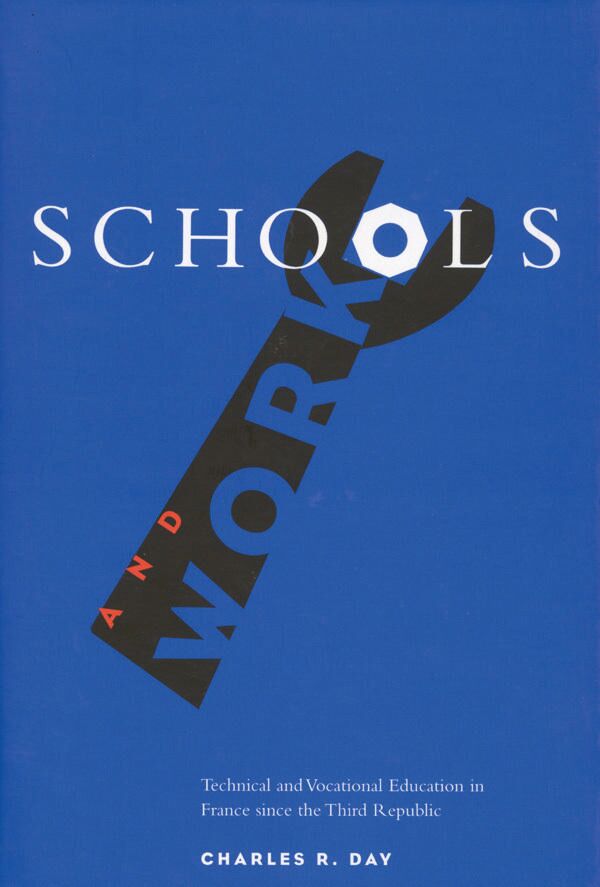
Schools and Work
In the half century since the World War II, France has developed from a conservative, semi-rural society in which the great majority of the population had only a primary education to a highly developed modern one with a remarkably well-educated and well-trained citizenry and labour force. Technical and vocational education, which before 1960 were confined to an enclave within the French education system, now permeate the entire system. Business and industry, long isolated from education, now play a major role in educational decision making. The French educational system today meets the demand for skilled personnel in almost all fields while maintaining \"a complement of general culture.\" The first book in English to treat the important subject of technical education in France, Schools and Work places technical education within the larger field of French public education, including the administrative and political backdrop, European industrial development, the nature of work, and global competitiveness.
eBook