
Catalogue Search | MBRL


Are you sure you want to remove the book from the shelf?

{{itemTitle}}
32
result(s) for
"Education Data processing Cross-cultural studies."
Sort by:

Thinking globally, composing locally : rethinking online writing in the age of the global Internet
\"How writing and its pedagogy should adapt to the ever-expanding environment of international online communication. A global audience presents many challenges: writers seeking to contact and connect with individuals from different cultures must rethink their concept of audience, but prepare to address friction from cross-cultural rhetorical situations\"--Provided by publisher.
Book

The cognitive-linguistic profiles and academic performances of Chinese children with dyslexia across cultures: Beijing, Hong Kong, and Taipei
This study examined the cognitive-linguistic and literacy-related correlates of dyslexia in three Chinese cities and the English word reading and mathematics performances of Chinese children with dyslexia. Chinese children with/without dyslexia were measured with an equivalent test battery of literacy and mathematics in Beijing, Hong Kong, and Taipei. Univariate analysis results suggested that phonological sensitivity distinguished those with and without dyslexia across all three cities in group comparisons. In Taipei and Hong Kong, morphological awareness, delayed copying, and spelling also distinguished the groups. Logistic regression analyses demonstrated that Chinese character reading, as directly compared to Chinese word reading, also distinguished the groups particularly well. In addition, in Beijing and Hong Kong, children with dyslexia performed significantly less well in English word reading than those without dyslexia. In Hong Kong and Taipei, children with dyslexia also had difficulties in mathematics performance. Findings highlight the fundamental importance of some cognitive-linguistic skills for explaining Chinese dyslexia across cultures, the utility of recognizing the individual Chinese character as a foundational unit of analysis in Chinese across cultures, and the generalizability of the comorbidity of both English as a second language (L2) and mathematics with dyslexia in Chinese children in both Beijing and Hong Kong.
Journal Article

Sequential Progressions in a Theory-of-Mind Scale: Longitudinal Perspectives
Consecutive retestings of 92 U.S. preschoolers (n = 30), Chinese preschoolers (n = 31), and deaf children (n = 31) examined whether the sequences of development apparent in cross-sectional results with a theory-of-mind scale also appeared in longitudinal assessment. Longitudinal data confirmed that theory-of-mind progressions apparent in cross-sectional scaling data also characterized longitudinal sequences of understanding for individual children. The match between cross-sectional and longitudinal sequences appeared for children who exhibit different progressions across cultures (United States vs. China) and for children with substantial delays (deaf children of hearing parents). Moreover, greater scale distances reflected larger longitudinal age differences.
Journal Article

Innovation and sustainability from the perspective of entrepreneurial intention: a cross-cultural approach
PurposeThis study aims to investigate the influence of the theory of planned behavior (TPB), innovation and sustainability, through environmental awareness, in the formation of entrepreneurial intention (EI).Design/methodology/approachBased on the alignment between theoretical axes, such as the theory of planned behavior, adaptation–innovation theory and the environmental axis of sustainability, quantitative research was developed with students from Brazilian and Spanish universities. We obtained a sample of 686 university students enrolled in courses related to management in both countries. Data analysis included exploratory factor analysis and logistic regression.FindingsOur results revealed that the constructs of TPB (personal attitudes and perceived behavioral control) influenced EI, excluding subjective norms. Innovation had an influence on the EI of students from both countries. In Brazilians, valuing change predicts EI, highlighting the importance of flexibility. Conversely, Spaniards emphasize originality, valuing uniqueness and creativity as drivers of EI. Sustainability, via environmental awareness, did not influence EI.Originality/valueWith this study, we aim to encourage policies and practices aimed at higher education institutions globally, to broaden the understanding about the importance of environmental, innovative and social studies and practices aligned with the context of entrepreneurship. The final aim is to enhance social and environmental benefits generated by future entrepreneurs.
Journal Article
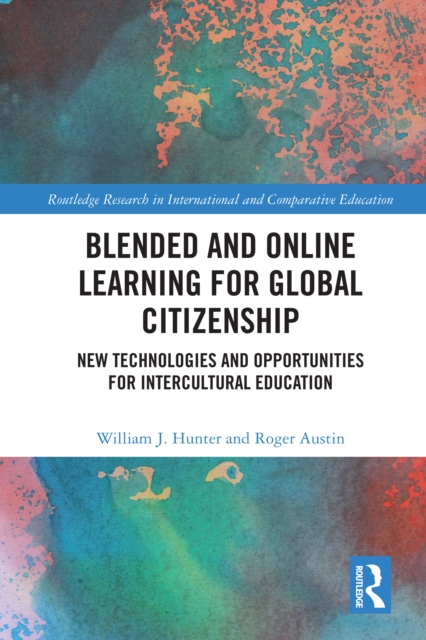
Blended and Online Learning for Global Citizenship
By showcasing international, European, and community-based projects, this volume explores how online technologies using collaborative and blended learning can be used to bolster social cohesion and increase students' understanding of what it means to be a global citizen.
With the pace of technology rapidly increasing, Blended and Online Learning for Global Citizenship draws timely attention to the global lessons being learned from the impact of these technologies on peace building, community development, and acceptance of difference. In-depth case studies showcasing successful projects in Europe, Northern Ireland, and Israel explore blended learning and illustrate how schools and educators have embraced online technologies to foster national and international links both within and beyond communities. This has, in turn, equipped students with experiences that have informed their attitudes to cultural and political conflicts, as well as racial, ethnic, and social diversity.
Building on the authors' previous work Online Learning and Community Cohesion (2013), this thought-provoking text will be of interest to researchers, academics, and postgraduate students in the fields of international and comparative education. Educators and school leaders concerned with how multiculturalism and technology play out in the classroom environment will also benefit from reading this text.
eBook

TACO: A Turkish database for abstract concepts
The organization of abstract concepts reflects different dimensions, grounded in the brain regions coding for the corresponding experience. Normative measures of linguistic stimuli offer noteworthy insights into the organization of conceptual knowledge, but studies differ in the dimensions and classes of concepts considered. Additionally, most of the available information has been collected in English, without considering possible linguistic and cultural differences. Here, we aimed to create a comprehensive Turkish database for abstract concepts (TACO), including rarely investigated classes such as political concepts. We included 503 words-78 concrete (fruits, animals, tools) and 425 abstract (emotions, social, mental states, theoretical, quantity, space, political)-rated by 134 Turkish speakers for familiarity, imageability, age of acquisition, valence, arousal, quantity, space, theoretical, social, mental state, and political dimensions. We calculated dominance and exclusivity, indicating the dimension receiving the highest mean score for each word, and the position of the word along the unidimensional–multidimensional continuum, respectively. A principal component analysis (PCA) was conducted on the semantic dimensions. The results showed that mental state was the dominant dimension for most concepts. Moderate to low levels of exclusivity indicated that the concepts were multidimensional. PCA revealed three components: Component 1 captured the juxtaposition between social/mental state and magnitude polarities, Component 2 highlighted affective components, and Component 3 grouped together political and theoretical dimensions. The introduction of political concepts provided insights into the multidimensional nature of this unexplored class, closely intertwined with the theoretical dimension. TACO constitutes the first comprehensive Turkish database covering several abstract dimensions, paving the way for cross-linguistic and cross-cultural studies of semantic representations.
Journal Article

The relation of culture, socio-economics, and friendship to music preferences: A large-scale, cross-country study
Music listening is an inherently cultural behavior, which may be shaped by users' backgrounds and contextual characteristics. Due to geographical, socio-economic, linguistic, and cultural factors as well as friendship networks, users in different countries may have different music preferences. Investigating cultural-socio-economic factors that might be associated with between-country differences in music preferences can facilitate music information retrieval, contribute to the prediction of users' music preferences, and improve music recommendation in cross-country contexts. However, previous literature provides limited empirical evidence of the relationships between possible cross-country differences on a wide range of socio-economic aspects and those in music preferences. To bridge this research gap, and drawing on a large-scale dataset, LFM-1b, this study examines the possible relationship between cross-country differences in artist, album, and genre listening frequencies as well as the cross-country distance in geographical, socio-economic, linguistic, cultural, and friendship connections using the Quadratic Assignment Procedure. Results indicate: (1) there is no significant relationship between geographical and economic distance on album, artist, and genre preferences' distance at the country-level; (2) the cross-country distance of three cultural dimensions (masculinity, long-term orientation, and indulgence) is positively associated with both the album and artist preferences distances; (3) the between-country distance in main languages has a positive relationship with the album, artist, and genre preferences distances across countries; (4) the density of friendship connections among countries negatively correlates to the cross-country preference distances in terms of artist and genre. Findings from this study not only expand knowledge of factors related to music preferences at the country level, but also can be integrated into real-world music recommendation systems that consider country-level music preferences.
Journal Article

Comparative Analysis of Cross-Cultural Teaching Management in Big Data Environment
Cross-cultural teaching management in the big data environment not only enhances the quality and effectiveness of education but also promotes global cooperation and exchange in education, which has important practical significance and value. Existing methods for analyzing effectiveness and practicality are usually qualitative analysis methods. While this method emphasizes the complexity and diversity of educational phenomena, it may lead to subjectivity and instability in data processing and result presentation, affecting the reliability and objectivity of the analysis results. In this paper, a quantitative comparative analysis of the effectiveness and practicality of cross-cultural teaching management in the big data environment is conducted, which helps educators better understand the needs of students from different cultural backgrounds and develop more targeted teaching plans to improve the quality of education. First, the content of cross-cultural teaching management in the big data environment is explained, and the reasons and implementation process of the comparative analysis of effectiveness and practicality are provided. The evaluation indicators for the effectiveness and practicality of cross-cultural teaching management in the big data environment are determined, and the evaluation methods are given. Experimental analysis results are presented with examples to validate the effectiveness of the proposed method.
Journal Article

A Critical Review of the Existing Quantitative Intercultural Competence Assessment Instruments
The rapid pace of globalisation has created a substantial demand for, and subsequently ongoing evolution in, the conceptualisation of intercultural competence (IC). However, it remains unclear whether assessment methodologies have kept pace with these theoretical shifts. This paper presents a critical review of 57 quantitative IC assessment instruments published between 1980 and 2025. These instruments were identified from a pool of 3503 papers sourced from major databases including ERIC, Google Scholar, ProQuest, PsycINFO, PSYNDEX, Scopus, and Web of Science. Despite the increasing demand to develop global citizens, the review revealed an overreliance on self-report Likert-type surveys, which accounted for 98% of the tools analysed. Significant flaws were identified in these traditional measures, namely social desirability, also known as 'faking', cognitive biases, and limited ability to assess actual behavioural and cognitive skills. The study examined alternative formats such as Situational Judgement Tests and Intercultural Scenario-based items, highlighting their potential to provide more direct behavioural evidence despite challenges in internal consistency. The findings suggest that more innovative quantitative approaches are needed to accurately assess IC.
Journal Article

Popular and Scientific Discourse on Autism: Representational Cross-Cultural Analysis of Epistemic Communities to Inform Policy and Practice
Social media provide a window onto the circulation of ideas in everyday folk psychiatry, revealing the themes and issues discussed both by the public and by various scientific communities.
This study explores the trends in health information about autism spectrum disorder within popular and scientific communities through the systematic semantic exploration of big data gathered from Twitter and PubMed.
First, we performed a natural language processing by text-mining analysis and with unsupervised (machine learning) topic modeling on a sample of the last 10,000 tweets in English posted with the term #autism (January 2021). We built a network of words to visualize the main dimensions representing these data. Second, we performed precisely the same analysis with all the articles using the term \"autism\" in PubMed without time restriction. Lastly, we compared the results of the 2 databases.
We retrieved 121,556 terms related to autism in 10,000 tweets and 5.7x10⁹ terms in 57,121 biomedical scientific articles. The 4 main dimensions extracted from Twitter were as follows: integration and social support, understanding and mental health, child welfare, and daily challenges and difficulties. The 4 main dimensions extracted from PubMed were as follows: diagnostic and skills, research challenges, clinical and therapeutical challenges, and neuropsychology and behavior.
This study provides the first systematic and rigorous comparison between 2 corpora of interests, in terms of lay representations and scientific research, regarding the significant increase in information available on autism spectrum disorder and of the difficulty to connect fragments of knowledge from the general population. The results suggest a clear distinction between the focus of topics used in the social media and that of scientific communities. This distinction highlights the importance of knowledge mobilization and exchange to better align research priorities with personal concerns and to address dimensions of well-being, adaptation, and resilience. Health care professionals and researchers can use these dimensions as a framework in their consultations to engage in discussions on issues that matter to beneficiaries and develop clinical approaches and research policies in line with these interests. Finally, our study can inform policy makers on the health and social needs and concerns of individuals with autism and their caregivers, especially to define health indicators based on important issues for beneficiaries.
Journal Article