
Catalogue Search | MBRL


Are you sure you want to remove the book from the shelf?

{{itemTitle}}
3,552
result(s) for
"Edwards, David J"
Sort by:

NEW RUSH TO LEARN LANGUAGES
The resurgence has focused new attention on a number of education issues. How should second languages best be taught? When should instruction begin? Which languages are the most useful for Americans to learn? There also is mounting concern over a shortage of qualified teachers for the courses being ordered, as well as complaints that legislators are unwilling to supply the money needed to run the programs set up in response to their demands.
Newspaper Article
NON-ENGLISH SPEAKERS FIND ADAPTATION ELUSIVE ; FOR MANY IN CENTRAL FLORIDA, THE ROAD OUT OF \LINGUISTIC ISOLATION\ HAS PLENTY OF DETOURS
Starting over. [Maria Aguilar] works as a secretary at the office of Dr. Jose Suarez in Orlando. In her native Colombia, Aguilar was in a management position, something she hopes to achieve again once she masters the English language. SHOUN A. HILL/ORLANDO SENTINEL Melting pot of commerce. Shopper Lydia Rivera walks outside Central Park Plaza, a diverse shopping area off Oak Ridge Road in southwest Orange County. JULIE FLETCHER/ORLANDO SENTINEL CHART: ENGLISH AS A SECOND LANGUAGE With the influx of non-English speakers moving to the region in the 1990s, Central Florida has become increasingly multilingual. In 1990, about 194,999 residents of Central Florida spoke a language other than English at home. In 2000, that figure more than doubled to more than 420,000. Percentage who speak a language other than English at home. SOURCE: U.S. Census
Newspaper Article

EDUCATION WATCH; CATCHING UP WITH THE FOREIGN LANGUAGE BOOM
A. There is more stress on speaking and less on grammar and correcting grammar. Teachers don't stop students in the middle of a conversation and correct their grammar and make them feel intimidated. There has also been a shift away from the emphasis on literature as a language teaching tool. It was discovered that many students focusing on ''Don Quixote,'' for example, did not have the faintest idea how to speak Spanish. A. Very much so, and I think it's for the good. It addresses the things we're way behind in. For example, the people at the Library of Congress told me that they were about 10 years behind in their translation of Japanese materials. Language departments are trying to serve professional schools. This was one of the things that was addressed in the report of a Presidential commission in 1979. Popular courses are Spanish for trade, for example, or Spanish for hotel management. What we hear from business people is: ''We don't need French majors, but give us an M.B.A. with French. Our company in Africa can use that skill.'' A. Congress passed an education bill last year that discussed the importance of ''critical'' languages. The ones that were mentioned were Japanese, Chinese, Arabic and Russian. The enrollments in these languages are all way up.
Newspaper Article
Lollipops and Languages
\"Children exposed to this program are completely familiar with the language when they go on to study it in later grades because they have internalized it,\" Mrs. Hall said. Then she added with a chuckle, \"But most of them think my name is Senora.\" Language Renaissance \"In elementary schools, foreign languages are seen as special, likened to music and art,\" said Christine Brown, director of foreign languages for the Glastonbury, Conn., school district. \"In difficult economic times it has been among the first to be jettisoned. Obviously, that is tragic.\" \"This is something they should get in school,\" Ms. [Garces-Dochroedon] said. \"If I could afford it, I would send them somewhere for private lessons.\" Instead, she says she is shopping for other area public elementary schools that offer Spanish.
Newspaper Article
WHY FOREIGN LANGUAGES ARE RELEVANT AGAIN
Some veterans in the field, however, regard the explosion of interest with a skeptical eye. After all, it was only a quarter-century ago that languages were riding the crest of a boom. The National Defense Education Act, passed in response to alarm over Sputnik as well as other Soviet advances in science and technology, designated mastery of certain languages as ''critical'' to America's national interests and set aside large sums of money for training programs. BUT THE campus cry for ''relevance'' as a criterion of intellectual legitimacy and the elimination of course requirements in the late 1960's led to a drastic decline of enrollments in language courses at all levels, a decline that continued well into the 1970's. By 1979, in fact, President Carter's Commission on Foreign Language and International Studies concluded that ''Americans' incompetence in foreign language is nothing short of scandalous.'' The report noted that ''the United States requires far more reliable capacities to communicate with its allies, analyze the behavior of potential adversaries and earn the trust of the uncommitted.'' ''It is true,'' Mr. [Loye Miller] added, ''that due to very tough budget choices and high deficits the Secretary of Education has given priority to other programs, mostly those based on true need.'' But he said Mr. [William J. Bennett] ''has done what he can do to foster foreign-language study,'' including making available $1.6 million in discretionary grants, announced recently, ''to improve and expand instruction in critical foreign languages.'' In a sense, the nation is now paying for its neglect of languages during the 60's and 70's, which has created a gap just at a time when many older teachers are preparing to retire. ''It was necessary to discourage younger people from making career plans during the 70's when the market began to slip,'' said Richard Brod, director of special projects for the Modern Language Association, the principal professional group of university language professors. ''We didn't want people to have unrealistic expectations.'' As a result, many potential language teachers were funneled into other fields.
Newspaper Article

Healthcare Access and Quality Index based on mortality from causes amenable to personal health care in 195 countries and territories, 1990–2015: a novel analysis from the Global Burden of Disease Study 2015
National levels of personal health-care access and quality can be approximated by measuring mortality rates from causes that should not be fatal in the presence of effective medical care (ie, amenable mortality). Previous analyses of mortality amenable to health care only focused on high-income countries and faced several methodological challenges. In the present analysis, we use the highly standardised cause of death and risk factor estimates generated through the Global Burden of Diseases, Injuries, and Risk Factors Study (GBD) to improve and expand the quantification of personal health-care access and quality for 195 countries and territories from 1990 to 2015.
We mapped the most widely used list of causes amenable to personal health care developed by Nolte and McKee to 32 GBD causes. We accounted for variations in cause of death certification and misclassifications through the extensive data standardisation processes and redistribution algorithms developed for GBD. To isolate the effects of personal health-care access and quality, we risk-standardised cause-specific mortality rates for each geography-year by removing the joint effects of local environmental and behavioural risks, and adding back the global levels of risk exposure as estimated for GBD 2015. We employed principal component analysis to create a single, interpretable summary measure–the Healthcare Quality and Access (HAQ) Index–on a scale of 0 to 100. The HAQ Index showed strong convergence validity as compared with other health-system indicators, including health expenditure per capita (r=0·88), an index of 11 universal health coverage interventions (r=0·83), and human resources for health per 1000 (r=0·77). We used free disposal hull analysis with bootstrapping to produce a frontier based on the relationship between the HAQ Index and the Socio-demographic Index (SDI), a measure of overall development consisting of income per capita, average years of education, and total fertility rates. This frontier allowed us to better quantify the maximum levels of personal health-care access and quality achieved across the development spectrum, and pinpoint geographies where gaps between observed and potential levels have narrowed or widened over time.
Between 1990 and 2015, nearly all countries and territories saw their HAQ Index values improve; nonetheless, the difference between the highest and lowest observed HAQ Index was larger in 2015 than in 1990, ranging from 28·6 to 94·6. Of 195 geographies, 167 had statistically significant increases in HAQ Index levels since 1990, with South Korea, Turkey, Peru, China, and the Maldives recording among the largest gains by 2015. Performance on the HAQ Index and individual causes showed distinct patterns by region and level of development, yet substantial heterogeneities emerged for several causes, including cancers in highest-SDI countries; chronic kidney disease, diabetes, diarrhoeal diseases, and lower respiratory infections among middle-SDI countries; and measles and tetanus among lowest-SDI countries. While the global HAQ Index average rose from 40·7 (95% uncertainty interval, 39·0–42·8) in 1990 to 53·7 (52·2–55·4) in 2015, far less progress occurred in narrowing the gap between observed HAQ Index values and maximum levels achieved; at the global level, the difference between the observed and frontier HAQ Index only decreased from 21·2 in 1990 to 20·1 in 2015. If every country and territory had achieved the highest observed HAQ Index by their corresponding level of SDI, the global average would have been 73·8 in 2015. Several countries, particularly in eastern and western sub-Saharan Africa, reached HAQ Index values similar to or beyond their development levels, whereas others, namely in southern sub-Saharan Africa, the Middle East, and south Asia, lagged behind what geographies of similar development attained between 1990 and 2015.
This novel extension of the GBD Study shows the untapped potential for personal health-care access and quality improvement across the development spectrum. Amid substantive advances in personal health care at the national level, heterogeneous patterns for individual causes in given countries or territories suggest that few places have consistently achieved optimal health-care access and quality across health-system functions and therapeutic areas. This is especially evident in middle-SDI countries, many of which have recently undergone or are currently experiencing epidemiological transitions. The HAQ Index, if paired with other measures of health-system characteristics such as intervention coverage, could provide a robust avenue for tracking progress on universal health coverage and identifying local priorities for strengthening personal health-care quality and access throughout the world.
Bill & Melinda Gates Foundation.
Journal Article

Was Rolf Hochhuth's Play, The Deputy, the Result of a KGB Plot? Assessing the Merits of a Decades-old Conspiracy Theory
This article seeks to debunk a conspiracy theory regarding the origins of the German playwright Rolf Hochhuth's incendiary play from 1963, The Deputy, which denounced Pope Pius XII for his alleged silence about German crimes in the Holocaust. According to these conspiracy theories, this plays success was the result of a masterstroke by Soviet intelligence, which had infiltrated the Vatican and stolen documents from the Vatican archives. By examining letters and correspondence pertaining to the play's origins, including its original drafts, this article argues that this conspiracy theory is chronologically implausible. Hochhuth's own account of the play's origins remains more or less correct, some inaccurate details notwithstanding.
Journal Article
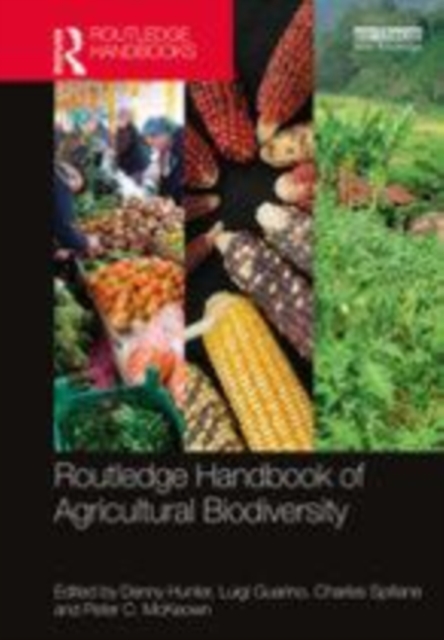
Routledge Handbook of Agricultural Biodiversity
iThe world relies on very few crop and animal species for agriculture and to supply its food needs. In recent decades, there has been increased appreciation of the risk this implies for food security and quality, especially in times of environmental change. As a result, agricultural biodiversity has moved to the top of research and policy agendas.
This Handbook presents a comprehensive overview of our current knowledge of agricultural biodiversity in a series of specially commissioned chapters. It draws on multiple disciplines including plant and animal genetics, ecology, crop and animal science, food studies and nutrition, as well as social science subjects which explore the socio-economic, cultural, institutional, legal and policy aspects of agricultural biodiversity. It focuses not only on the core requirements to deliver a sustainable agriculture and food supply, but also highlights the additional ecosystem services provided by a diverse and resilient agricultural landscape and farming practices. The book provides an indispensable reference textbook for a wide range of courses in agriculture, ecology, biodiversity conservation and environmental studies.
eBook

Acknowledgement to Reviewers of Vision in 2017
Peer review is an essential part in the publication process, ensuring that Vision maintains high quality standards for its published papers [...]
Journal Article