
Catalogue Search | MBRL


Are you sure you want to remove the book from the shelf?

{{itemTitle}}
21
result(s) for
"Egypt Guidebooks."
Sort by:


Egypt from Alexander to the Copts: an archaeological and historical guide
After its conquest by Alexander the Great in 332 bc, Egypt was ruled for the next 300 years by the Ptolemaic dynasty founded by Ptolemy I, one of Alexander's generals. With the defeat of Cleopatra VII in 30 bc, Egypt became a province of the Roman Empire, and later of the Byzantine Empire. For a millennium it was one of the wealthiest, most populous and important lands of the multicultural Mediterranean civilization under Greek and Roman rule. The thousand years from Alexander to the Arab conquest in ad 641 are rich in archaeological interest and well documented by 50,000 papyri in Greek, Egyptian, Latin, and other languages. But travelers and others interested in the remains of this period are ill-served by most guides to Egypt, which concentrate on the pharaonic buildings. This book redresses the balance, with clear and concise descriptions related to documents and historical background that enable us to appreciate the fascinating cities, temples, tombs, villages, churches, and monasteries of the Hellenistic, Roman, and Late Antique periods. Written by a dozen leading specialists and reflecting the latest discoveries and research, it provides an expert visitor's guide to the principal cities, many off the well-worn tourist paths. It also offers a vivid picture of Egyptian society at differing economic and social levels.
eBook

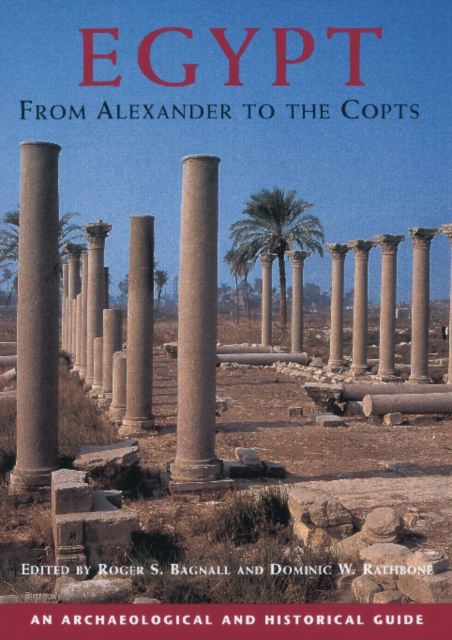
Egypt from Alexander to the Copts
After its conquest by Alexander the Great in 332 bc, Egypt was ruled for the next 300 years by the Ptolemaic dynasty founded by Ptolemy I, one of Alexander's generals. With the defeat of Cleopatra VII in 30 bc, Egypt became a province of the Roman Empire, and later of the Byzantine Empire. For a millennium it was one of the wealthiest, most populous and important lands of the multicultural Mediterranean civilization under Greek and Roman rule. The thousand years from Alexander to the Arab conquest in ad 641 are rich in archaeological interest and well documented by 50,000 papyri in Greek, Egyptian, Latin, and other languages. But travelers and others interested in the remains of this period are ill-served by most guides to Egypt, which concentrate on the pharaonic buildings. This book redresses the balance, with clear and concise descriptions related to documents and historical background that enable us to appreciate the fascinating cities, temples, tombs, villages, churches, and monasteries of the Hellenistic, Roman, and Late Antique periods. Written by a dozen leading specialists and reflecting the latest discoveries and research, it provides an expert visitor's guide to the principal cities, many off the well-worn tourist paths. It also offers a vivid picture of Egyptian society at differing economic and social levels.
eBook
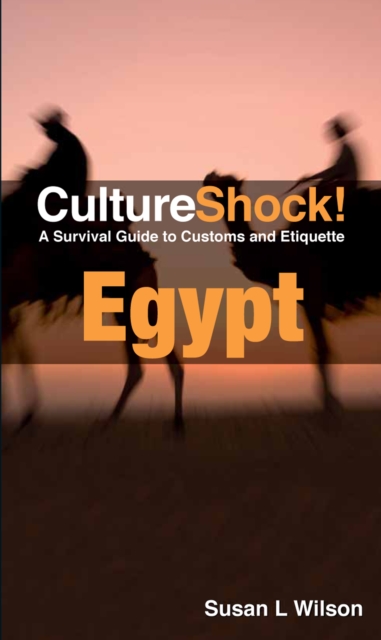
CultureShock! Egypt
CultureShock! Egypt is invaluable to anyone who wants to blend into life in the country whose existence revolves around the River Nile. Containing much insight about the Egyptian people-the class system, the importance of family, their sense of honour-this guide also provides useful information and advice for settling into your new home and getting along with the locals. For example, learn about their notion of space and eye contact, and how the men may perceive foreign women who smile at them. On the business front, be aware of the necessity of having business cards as well as how to handle uniquely Egyptian business meetings. CultureShock! Egypt is all you need to settle effortlessly into and enjoy your new life in the Land of the Great Pharoahs and magnificent pyramids.
eBook


Learning Vicariously: Tourism, Orientalism and the Making of an Architectural Photography Collection of Egypt
Andrew Dickson White, the first president of Cornell University in the United States, referred to architecture as his 'pet extravagance.' Leveraging his influential position as president, White was instrumental in the establishment of the architecture department in 1871. One of his noteworthy contributions to this newly founded department was the initiation of an architectural photography collection that was a direct result of his travels around the world as a diplomat, a scholar and, eventually, as a tourist. This architectural photography collection formed the core of the architectural history education at the school well into the 20th century. At that time, photographs provided one of the only ways for students to learn about the architecture of distant places. White’s selection of architectural subjects, however, was shaped not through deep scholarly inquiry, but rather by the nascent tourist industry. This paper examines White's Egyptian collection, acquired during his voyage to Egypt in 1889. His trip to Egypt, in his own words “marked a new epoch in [his] thinking.” Encountering the 'east' for the first time, White's photography collection both bolstered and challenged the prescribed ways of viewing Egypt and Egyptian architecture, thus having a direct influence on how Cornell students perceived the historic built environment of the ‘east’.
Journal Article
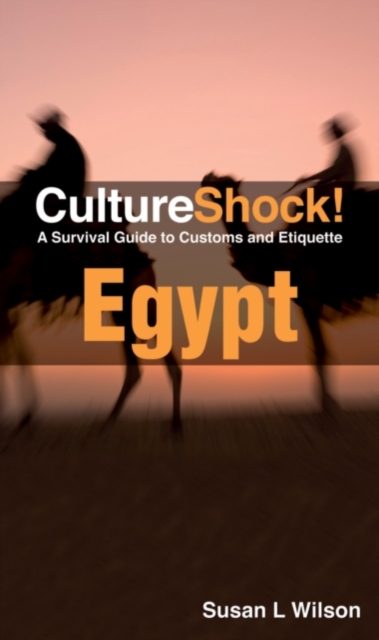
Egypt: a survival guide to customs and etiquette
Each book in the 'Culture Shock!' series provides travellers with a practical guide to the culture, customs, traditions and society of the featured country.
eBook