
Catalogue Search | MBRL


Are you sure you want to remove the book from the shelf?

{{itemTitle}}
38
result(s) for
"Egypt History Protests, 2011-"
Sort by:


Whatever Happened to the Egyptian Revolution?
In his latest exploration of the Egyptian malaise, Galal Amin first looks at the events of the months preceding the Revolution of 25 January 2011, pointing out the most important factors behind popular discontent. He then follows the ups and downs (mainly the downs) of the Revolution: the causes of rising hopes and expectations, mingled with successive disappointments, sometimes verging on despair, not least in the case of the presidential elections, when the Egyptian people were invited to choose between a rock and a hard place. This is followed by an outline of a possible brighter future for Egypt, based on a more balanced and faster growing economy, and a more democratic and equitable society, within a truly independent, modern, and secular state. The story of what happened to the 2011 Revolution may be a sad one, but if viewed within the larger context of Egypt’s economic and social developments of the last century, on which the author’s previous books threw very useful light, it can be regarded as one important step forward toward a much better future.
eBook


Arab Spring in Egypt
Beginning in Tunisia, and spreading to as many as seventeen Arab countries, the street protests of the ‘Arab Spring’ in 2011 empowered citizens and banished their fear of speaking out against governments. The Arab Spring belied Arab exceptionalism, widely assumed to be the natural state of stagnation in the Arab world amid global change and progress. The collapse in February 2011 of the regime in the region’s most populous country, Egypt, led to key questions of why, how, and with what consequences did this occur? Inspired by the “contentious politics\" school and Social Movement Theory, Arab Spring in Egypt addresses these issues, examining the reasons behind the collapse of Egypt’s authoritarian regime; analyzing the group dynamics in Tahrir Square of various factions: labor, youth, Islamists, and women; describing economic and external issues and comparing Egypt’s transition with that of Indonesia; and reflecting on the challenges of transition. “Its analysis is as fresh as the breathtaking events it covers.\"—Nathan Brown, George Washington University “Arab Spring in Egypt is a modern history study that brings much greater understanding to light about the views of modern Arab people and the future they see for their country.\"—Midwest Book Review
eBook

Chronicles of the Egyptian Revolution and its Aftermath : 2011-2016
\"This book is about the Egyptian people's 2011 Revolution for freedom, justice, and human dignity, and its aftermath. The Revolution succeeded in toppling the authoritarian Mubarak regime in less than three weeks. It was then co-opted by the Muslim Brotherhood through Egypt's first free and fair elections in 2012, which was in turn crushed in 2013 by a popularly supported military regime whose practices of repression negatively impacted the justice system and human rights. The problems facing the country and its people are daunting, particularly economic, demographic, and social pressures. The contextual analysis of these and other historic and contemporary issues give the reader a comprehensive understanding of what has occurred in the last five years and an insight into where the country is heading. Even though the Revolution has been suppressed and the promise of democracy shunted aside, the majority of the Egyptian people continue to hope for the unachieved dreams of social justice, human dignity, and freedom. Egypt's geopolitical importance makes it indispensable to the stability of the Middle East, and thus important to the world.\" -- Publisher's website.
BOOK

Contesting the Repressive State
This book advances research on the collective action dilemma in protest movements by examining protest mobilization leading up to, and during, the 2011 Egyptian Revolution and 2013 June 30th Coup in Cairo, Egypt. The book is organized chronologically and touches on why and how people make the decision to protest or not protest during different periods of the revolutionary process. The overarching question is: Why and how do individuals who are not members of political groups or organizers of political movements choose to engage or not engage in anti-government protest under a repressive regime? In answering the question, the book argues that individual decisions to protest or not protest are based on the intersection of the following three factors: political opportunity structures, mobilizing structures, and framing processes. It further demonstrates that the way these decisions to protest or not protest take place is through emotional mechanisms that are activated by specific combinations of these factors. The goal of the book is to investigate the relationship between key structural factors and the emotional responses they produce. By examining 170 interviews with individuals who either protested or did not protest, it explores how social media, violent government repression, changes in political opportunities, and the military influenced individual decisions to protest or not protest.
eBook
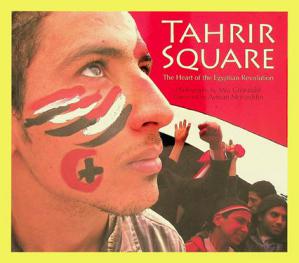

Egypt in Flux
No chapter in Egypt’s contemporary history has been more turbulent and unpredictable than the past three years. In a very short period of time, the Arab world’s most populous country has seen a transition from rule by an iron-fisted dictatorship to a populist uprising to military omnipotence to Islamist electoral victory to constitutional turmoil to societal polarization. Egypt’s iconic revolution has been neither victorious nor defeated. Egypt in Flux is a collection of essays on the political, social, economic, and cultural dimensions of change in the country’s ongoing revolutionary current. While written over a span of several years, the essays are timeless in the historical context they provide and their ability to chart the country's trajectory in the period ahead. From the conditions that precipitated the uprising and the eruption of national dissent to the derailing of the revolution, the author reflects on the pressing topics of the day while being mindful of the counterrevolutionary movements and the continuation of the unending uprising. From discussions about the illusion of fair and free elections, social inequities, and labor disparities to examinations of religion, sports, literature, and sexuality, the essays in this valuable and intellectually stimulating volume chart both the broad lines and the nuances of an unfinished revolution.
eBook