
Catalogue Search | MBRL


Are you sure you want to remove the book from the shelf?

{{itemTitle}}
109
result(s) for
"Egypt Intellectual life"
Sort by:

The Great Social Laboratory
The Great Social Laboratory charts the development of the human sciences—anthropology, human geography, and demography—in late nineteenth- and twentieth-century Egypt. Tracing both intellectual and institutional genealogies of knowledge production, this book examines social science through a broad range of texts and cultural artifacts, ranging from the ethnographic museum to architectural designs to that pinnacle of social scientific research—\"the article.\" Omnia El Shakry explores the interface between European and Egyptian social scientific discourses and interrogates the boundaries of knowledge production in a colonial and post-colonial setting. She examines the complex imperatives of race, class, and gender in the Egyptian colonial context, uncovering the new modes of governance, expertise, and social knowledge that defined a distinctive era of nationalist politics in the inter- and post-war periods. Finally, she examines the discursive field mapped out by colonial and nationalist discourses on the racial identity of the modern Egyptians.
eBook


The Great Social Laboratory
The Great Social Laboratory charts the development of the human sciences-anthropology, human geography, and demography-in late nineteenth- and twentieth-century Egypt. Tracing both intellectual and institutional genealogies of knowledge production, this book examines social science through a broad range of texts and cultural artifacts, ranging from the ethnographic museum to architectural designs to that pinnacle of social scientific research-\"the article.\"
Omnia El Shakry explores the interface between European and Egyptian social scientific discourses and interrogates the boundaries of knowledge production in a colonial and post-colonial setting. She examines the complex imperatives of race, class, and gender in the Egyptian colonial context, uncovering the new modes of governance, expertise, and social knowledge that defined a distinctive era of nationalist politics in the inter- and post-war periods. Finally, she examines the discursive field mapped out by colonial and nationalist discourses on the racial identity of the modern Egyptians.
eBook
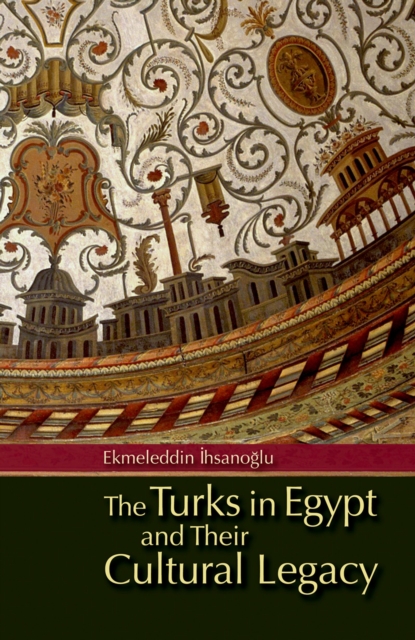
The Turks in Egypt and Their Cultural Legacy
Though Egypt was ruled by Turkish-speakers through most of the period from the ninth century until 1952, the impact of Turkish culture there remains under-studied. This book deals with the period from 1805 to 1952, during which Turkish cultural patterns, spread through reforms based on those of Istanbul, may have touched more Egyptians than ever before. An examination of the books, newspapers, and other written materials produced in Turkish, including translations, and of the presses involved, reveals the rise and decline of Turkish culture in government, the military, education, literature, music, and everyday life. The author also describes the upsurge in Turkish writing generated by Young Turk exiles from 1895 to 1909. Included is a CD containing Appendices of extensive bibliographic information concerning books and periodicals printed in Egypt during this period.
eBook

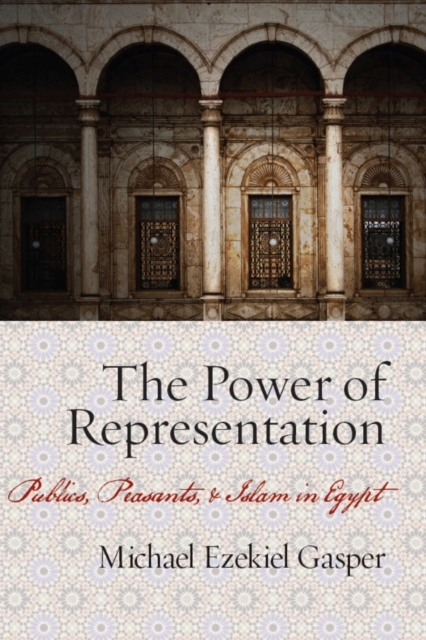
The Power of Representation
The Power of Representation traces the emergence of modern Egyptian national identity from the mid-1870s through the 1910s. During this period, a new class of Egyptian urban intellectuals-teachers, lawyers, engineers, clerks, accountants, and journalists-came into prominence. Adapting modern ideas of individual moral autonomy and universal citizenship, this group reconfigured religiously informed notions of the self and created a national sense of \"Egyptian-ness\" drawn from ideas about Egypt's large peasant population.
The book breaks new ground by calling into question the notion, common in historiography of the modern Middle East and the Muslim world in general, that in the nineteenth century \"secular\" aptitudes and areas of competency were somehow separate from \"religious\" ones. Instead, by tying the burgeoning Islamic modernist movement to the process of identity formation and its attendant political questions Michael Gasper shows how religion became integral to modern Egyptian political, social, and cultural life.
eBook