
Catalogue Search | MBRL


Are you sure you want to remove the book from the shelf?

{{itemTitle}}
49,041
result(s) for
"Eighteenth Century"
Sort by:

Curious encounters : voyaging, collecting, and making knowledge in the long eighteenth century
\"With contributions from historians, literary critics, and geographers, Curious Encounters uncovers a rich history of global voyaging, collecting, and scientific exploration in the long eighteenth century. Leaving behind grand narratives of discovery, these essays collectively restore a degree of symmetry and contingency to our understanding of encounters between European and Indigenous people. To do this the essays consider diverse agents of historical change, both human and inanimate: commodities, curiosities, texts, animals, and specimens moved through their own global circuits of knowledge and power. The voyages and collections rediscovered here do not move from a European center to a distant periphery, nor do they position European authorities as the central agents of this early era of globalization. Long distance voyagers from Greenland to the Ottoman Empire crossed paths with French, British, Polynesian, and Spanish travelers across the world, trading objects and knowledge for diverse ends. The dynamic contact zones of these curious encounters include the ice floes of the Arctic, the sociable spaces of the tea table, the hybrid material texts and objects in imperial archives, and the collections belonging to key figures of the Enlightenment, including Sir Hans Sloane and James Petiver.\"-- Provided by publisher.
Book

The world of Elizabeth Inchbald : essays on literature, culture, and theatre in the long eighteenth century
This collection centers on the remarkable life and career of the writer and actor Elizabeth Inchbald (1753–1821), active in Great Britain in the late eighteenth century. Inspired by the example of Inchbald’s biographer, Annibel Jenkins (1918–2013), the contributors explore the broad historical and cultural context around Inchbald’s life and work, with essays ranging from the Restoration to the nineteenth century. Ranging from visual culture, theater history, literary analyses and to historical investigations, the essays not only present a fuller picture of cultural life in Great Britain in the long eighteenth century, but also reflect a range of disciplinary perspectives. The collection concludes with the final scholarly presentation of the late Professor Jenkins, a study of the eighteenth-century English newspaper The World (1753-1756).
eBook


Making Ideas Visible in the Eighteenth Century
This volume considers how ideas were made visible through the making of art and the visual experience occasioned by reception during the long eighteenth century. The event that gave rise to the collection was the 15th David Nichol Smith Seminar in Eighteenth-Century Studies, which launched a new Australian and New Zealand Society of Eighteenth-Century Studies. Two strands of interest are explored by the individual authors. The first four essays work with ideas about material objects and identity formation, suggesting how the artist's physical environment contributes to the sense of self, as a practicing artist or artisan, as an individual patron or collector, or as a woman or religious outsider. The last four essays address the intellectual work that can be expressed through or performed by objects. Through a consideration of the material formation of concepts, this book explores questions that are implicated by the need to see ideas in painted, sculpted, illustrated, and designed forms. In doing so, it introduces new visual materials and novel conceptual models into traditional accounts of the intellectual history of the Enlightenment.
eBook

Nefertiti : Egypt's sun queen
\"For over a decade Nefertiti, wife of the heretic king Akhenaten, was the most influential woman in the Bronze Age world ; a beautiful queen blessed by the sun god, adored by her family and worshipped by her people. Her image and her name were celebrated throughout Egypt, and her future seemed golden. Suddenly Nefertiti disappeared from the royal family, vanishing so completely that it was as if she had never been. No record survives to detail her death, no monument serves to mourn her passing, and to this day her end remains an enigma. Was she banished by her husband, or was she promoted to rule alongside him as an equal? Did she change her name to reign as a king in her own right ? Could Nefertiti have guided the young Tutankhamen as he took his place on the throne of the pharaohs ?\" \"Joyce Tyldesley uses a combination of archaeological, textual and artistic evidence to provide a detailed discussion of the life and times of Nefertiti, Egypt's sun queen, set against the background of the ephemeral Amarna court.\"--Jacket.
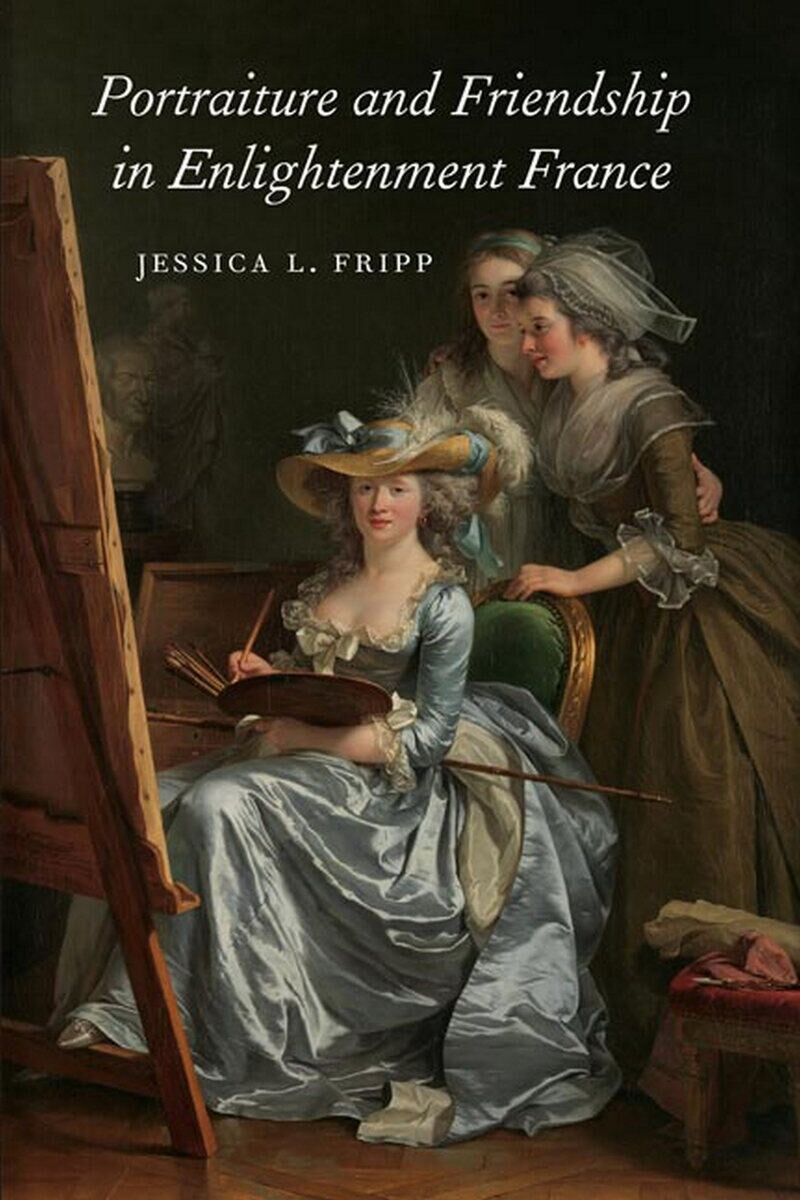
Portraiture and Friendship in Enlightenment France
Portraiture and Friendship in Enlightenment France examines how new and often contradictory ideas about friendship were enacted in the lives of artists in the eighteenth century. It demonstrates that portraits resulted from and generated new ideas about friendship by analyzing the creation, exchange, and display of portraits alongside discussions of friendship in philosophical and academic discourse, exhibition criticism, personal diaries, and correspondence. This study provides a deeper understanding of how artists took advantage of changing conceptions of social relationships and used portraiture to make visible new ideas about friendship that were driven by Enlightenment thought.
eBook

Amarna sunset : Nefertiti, Tutankhamun, Ay, Horemheb, and the Egyptian counter-reformation
\"This new study, drawing on the latest research, tells the story of the decline and fall of the pharaoh Akhenaten's religious revolution in the fourteenth century The book then outlines the events of the subsequent five decades that saw the extinction of the royal line, an attempt to place a foreigner on Egypt's throne, and the accession of three army officers in turn. Among its conclusions are that the mother of Tutankhamun was none other than Nefertiti, and that the queen was joint-pharaoh in turn with both her husband Akhenaten and her son. As such, she was herself instrumental in beginning the return to orthodoxy, undoing her erstwhile husband's life-work before her own mysterious disappearance.\" --Amazon.
Book

Thomas Holcroft’s Revolutionary Drama
A key figure in British literary circles following the French Revolution, novelist and playwright Thomas Holcroft promoted ideas of reform and equality informed by the philosophy of his close friend William Godwin. Arrested for treason in 1794 and released without trial, Holcroft was notorious in his own time, but today appears mainly as a supporting character in studies of 1790s literary activism. Thomas Holcroft’s Revolutionary Drama authoritatively reintroduces and reestablishes this central figure of the revolutionary decade by examining his life, plays, memoirs, and personal correspondence. In engaging with theatrical censorship, apostacy, and the response of audiences and critics to radical drama, this thoughtful study also demonstrates how theater functions in times of political repression. Despite his struggles, Holcroft also had major successes: this book examines his surprisingly robust afterlife, as his plays, especially The Road to Ruin , were repeatedly revived worldwide in the nineteenth century.
eBook

Egypt's golden couple : when Akhenaten and Nefertiti were Gods on Earth
\"Two celebrated Egyptologists bring to vivid life the intriguing and controversial reign of King Tut's parents Akhenaten has been the subject of radically different, even contradictory, biographies. The king has achieved fame as the world's first individual and the first monotheist, but others have seen him as an incestuous tyrant who nearly ruined the kingdom he ruled. The gold funerary mask of his son Tutankhamun and the painted bust of his wife Nefertiti are the most recognizable artifacts from all of ancient Egypt. But who are Akhenaten and Nefertiti? And what can we actually say about rulers who lived more than three thousand years ago? November 2022 marks the centennial of the discovery of the tomb of Tutankhamun and although \"King Tut\" is a household name, his nine-year rule pales in comparison to the revolutionary reign of his parents. Akhenaten and Nefertiti became gods on earth by transforming Egyptian solar worship, innovating in art and urban design, and merging religion and politics in ways never attempted before. Combining fascinating scholarship, detective suspense, and adventurous thrills, Egypt's Golden Couple is a journey through excavations, museums, hieroglyphic texts, and stunning artifacts. From clue to clue, renowned Egyptologists, John and Colleen Darnell, reconstruct an otherwise untold story of the magnificent reign of Akhenaten and Nefertiti\"-- Provided by publisher.
Book

Foul Bodies
A nation's standards of private cleanliness reveal much about its ideals of civilization, fears of disease, and expectations for public life, says Kathleen Brown in this unusual cultural history. Starting with the shake-up of European practices that coincided with Atlantic expansion, she traces attitudes toward \"dirt\" through the mid-nineteenth century, demonstrating that cleanliness-and the lack of it-had moral, religious, and often sexual implications. Brown contends that care of the body is not simply a private matter but an expression of cultural ideals that reflect the fundamental values of a society.
The book explores early America's evolving perceptions of cleanliness, along the way analyzing the connections between changing public expectations for appearance and manners, and the backstage work of grooming, laundering, and housecleaning performed by women. Brown provides an intimate view of cleanliness practices and how such forces as urbanization, immigration, market conditions, and concerns about social mobility influenced them. Broad in historical scope and imaginative in its insights, this book expands the topic of cleanliness to encompass much larger issues, including religion, health, gender, class, and race relations.
eBook