
Catalogue Search | MBRL


Are you sure you want to remove the book from the shelf?

{{itemTitle}}
2,612
result(s) for
"Elam"
Sort by:


Elam and Persia
The late 7th and 6th centuries B.C. were a period of tremendous upheaval and change in ancient western Asia, marked by the destruction of the Assyrian Empire, the rise and collapse of the Neo-Babylonian state, and the stunning ascent of what was to become the Achaemenid Persian Empire, the largest polity the world had yet seen. Of the major cultural entities involved in these far-reaching events, Elam has long remained the least understood. The essays contained in this book are part of a continuing reassessment of the nature and significance of Elam in the early 1st millennium B.C., with a focus on the relationship between \"Elamite\" culture of the Neo-Elamite period and the emerging \"Persian\" culture in southwestern Iran in the 7th and 6th centuries B.C.
The conception of this volume goes back to the 2003 meeting of the American Schools of Oriental Research that took place in Philadelphia, Pennsylvania, where two sessions were dedicated to the rich cultural heritage of ancient Iran. It was also the first time that Iranian archaeology was represented at ASOR since the Iranian Revolution. This volume contains 14 contributions by leading scholars in the discipline, organized into 3 sections: archaeology, texts, and images (art history).
The volume is richly illustrated with more than 200 drawings and photographs.
eBook


Abram the One from Beyond-the-River, and King Chedorlaomer of Elam (Genesis 14): Persia and the Formation of Judaean Ethnic Identity in a Late Patriarchal Narrative
The perception of Persia in Judaean/Jewish texts from antiquity contributed to the construction of a Judaean/Jewish identity. Genesis 14 gives an example of this; in it, Abra(ha)m wages war with a coalition headed by King Chedorlaomer of Elam. The article argues that Genesis 14 is one of the latest additions to the patriarchal narratives (Genesis 12–36), composed in the Persian or early Hellenistic period. It was conceived and used as an ethnic identity-forming story. The characters in the narrative represented groups and nations in the neighbourhood of the province of Judah. Abra(ha)m was perceived as the ancestor of the Judaeans and the inhabitants of the province Beyond-the-River. The King of Elam represented the Persian Empire. The article uses redaction criticism to argue that Genesis 14 is among the latest additions to the patriarchal narrative in the late Persian or Hellenistic period. Moreover, it uses a combination of philological and historical methods to argue that the description of Abra(ha)m as hāʿibrî (traditionally translated “the Hebrew,” Gen 14: 13) characterises him as a person from the region Eber-nāri (Beyond-the-River). The article uses similar methods to argue that the names of people and places in Genesis 14 referred to political entities in and around Judah. Eventually, the article uses Anthony D. Smith’s theory of ethnic community and elements from postcolonial theory as “reading lenses” and a framework for analysing Genesis 14. Reading this way underscores that Genesis 14 originated and worked as an ethnic identity-forming story.
Journal Article

Susa and Elam. Archaeological, Philological, Historical and Geographical Perspectives
Through archaeological, philological, historical and geographical contributions, this volume offers an overview of the present research in the socio-economic, historical and political developments of the Suso-Elamite region from prehistoric times until the great Persian Empire.
eBook

Tammarītu, “king of Ḫidalu,” Tammarītu, “king of Elam”
The reign of Tammarītu is one of the most enigmatic parts of Neo-Elamite history because documents have attested that two individuals with that name but two different titles, “king of Ḫidalu” and “king of Elam,” played significant roles in the historical events. The lack of dates in many documents complicates establishing a secure chronology and attributing events to Tammarītu, king of Ḫidalu, or Tammarītu II/Tammarītu, king of Elam. Scholars generally agree that the documents in which Tammarītu is called “king of Elam” cannot be attributed to Tammarītu, king of Ḫidalu. However, a comparison of Ashurbanipal's annals with other available documents does not support this viewpoint.
Journal Article
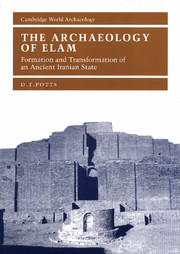
The Archaeology of Elam
From the middle of the 3rd millennium BC until the coming of Cyrus the Great, southwestern Iran was referred to in Mesopotamian sources as the land of Elam. A heterogeneous collection of regions, Elam was home to a variety of groups, alternately the object of Mesopotamian aggression, and aggressors themselves; an ethnic group seemingly swallowed up by the vast Achaemenid Persian empire, yet a force strong enough to attack Babylonia in the last centuries BC. The Elamite language is attested as late as the Medieval era, and the name Elam as late as 1300 in the records of the Nestorian church. This book examines the formation and transformation of Elam's many identities through both archaeological and written evidence, and brings to life one of the most important regions of Western Asia, re-evaluates its significance, and places it in the context of the most recent archaeological and historical scholarship.
eBook

The Early Iron Age collective tomb LCG-1 at Dibbā al-Bayah, Oman: long-distance exchange and cross-cultural interaction
The Iron Age (c. 1300–600 BC) of South-eastern Arabia is characterised by rapid expansion of settlement. Social structures formed over the previous millennia, however, persisted and were reinforced through the development of collective funerary monuments. A recently discovered tomb of Late Bronze to Early Iron Age date at Dibbā al-Bayah in the Sultanate of Oman has yielded a range of artefacts that illuminate the nature and extent of the long-distance contacts of the local community. Seemingly selected not only for their exotic appeal, but also for their apotropaic function, these objects testify to a deep cross-cultural knowledge extending across the wider region during this crucial period in Arabian prehistory.
Journal Article

Behavioral responses of fish to a current-based hydrokinetic turbine under mutliple operational conditions
There is significant international interest in developing current-based marine and hydrokinetic (MHK) technologies to capture the power of tidal energy. However, concerns have been raised regarding the ecological effects of these projects on fish, including the risk of blade collision and behavioral impacts such as the disruption of migratory behavior and food acquisition and displacement from preferred habitats. We conducted mobile hydroacoustic surveys to track fish as they approached a tidal turbine deployed in Cobscook Bay, Maine. There was a significant decline in fish numbers with decreasing distance to the turbine, beginning approximately 140 m from the turbine. Similar declines were not observed at control transects or when the turbine was not spinning. The decline in fish numbers appeared to be the result of horizontal displacement, not vertical, movements to avoid the turbine. Noise rather than visual cues or flow field disturbance seemed to be a likely explanation for the reduced number of fish near the turbine. This finding, combined with near-field blade collision studies indicating a low probability of encounter, suggests that a single turbine poses a low collision risk to pelagic fish and that a single turbine is likely to result in minimal behavioral responses by fish. However, the risk may be different with additional devices, which will become more relevant as commercial-scale MHK arrays come under consideration. Therefore, the risks associated with commercial-scale operations will ultimately have to be evaluated to fully understand the ecological impacts of MHK devices.
Journal Article
“Don't Let the Boats Pass!” Neo-Elamite Grain Procurement in Times of Famine and Drought
This article is concerned with interregional trade dynamics between Elam and Mesopotamia in the early to mid-first millennium BC. During the seventh century BC, two great famines in the Neo-Elamite kingdom, of which climatological changes were a major cause, were documented in the textual records. An era of megadrought made grain procurement from the neighboring regions essential to feed the Neo-Elamite lowland population. This article further explores the impact of the two Neo-Elamite famines and “drought of the century” on the commercial and political mechanisms in the Upper Persian Gulf region.
Journal Article