
Catalogue Search | MBRL


Are you sure you want to remove the book from the shelf?

{{itemTitle}}
3
result(s) for
"Electoral coalitions -- Africa, Sub-Saharan"
Sort by:


Multiethnic coalitions in Africa : business financing of opposition election campaigns
Why are politicians able to form electoral coalitions that bridge ethnic divisions in some countries and not others? This book answers this question by presenting a theory of pecuniary coalition building in multi-ethnic countries governed through patronage. Focusing on sub-Saharan Africa, the book explains how the relative autonomy of business from state-controlled capital affects political bargaining among opposition politicians in particular. While incumbents form coalitions by using state resources to secure cross-ethnic endorsements, opposition politicians must rely on the private resources of business to do the same. This book combines cross-national analyses of African countries with in-depth case studies of Cameroon and Kenya to show that incumbents actively manipulate financial controls to prevent business from supporting their opposition. It demonstrates that opposition politicians are more likely to coalesce across ethnic cleavages once incumbents have lost their ability to blackmail the business sector through financial reprisals. Summary reprinted by permission of Cambridge University Press
eBook
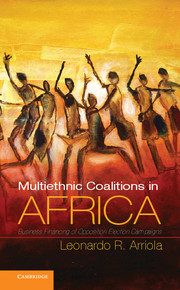
Multi-Ethnic Coalitions in Africa
Why are politicians able to form electoral coalitions that bridge ethnic divisions in some countries and not others? This book answers this question by presenting a theory of pecuniary coalition building in multi-ethnic countries governed through patronage. Focusing on sub-Saharan Africa, the book explains how the relative autonomy of business from state-controlled capital affects political bargaining among opposition politicians in particular. While incumbents form coalitions by using state resources to secure cross-ethnic endorsements, opposition politicians must rely on the private resources of business to do the same. This book combines cross-national analyses of African countries with in-depth case studies of Cameroon and Kenya to show that incumbents actively manipulate financial controls to prevent business from supporting their opposition. It demonstrates that opposition politicians are more likely to coalesce across ethnic cleavages once incumbents have lost their ability to blackmail the business sector through financial reprisals.
eBook