
Catalogue Search | MBRL


Are you sure you want to remove the book from the shelf?

{{itemTitle}}
9
result(s) for
"Electra (Greek mythological figure)"
Sort by:
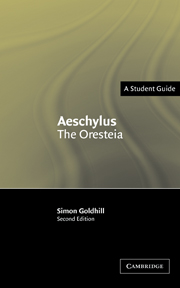
Aeschylus: The Oresteia
This is the only general introduction in English to Aeschylus' Oresteia, one of the most important and most influential of all Greek dramas. It discusses the Greek drama festival and the social and political background of Greek tragedy, and offers a reading of this central trilogy. Simon Goldhill focuses on the play's themes of justice, sexual politics, violence, and the position of man within culture, and explores how Aeschylus constructs a myth for the city in which he lived. A final chapter considers the influence of the Oresteia on later theatre. Its clear structure and guide to further reading will make this an invaluable guide for students and teachers alike.
eBook


Electra
Based on the conviction that only translators who write poetry themselves can properly recreate the celebrated and timeless tragedies of Aeschylus, Sophocles, and Euripides, the Greek Tragedy in New Translations series offers new translations that go beyond the literal meaning of the Greek in order to evoke the poetry of the originals.
eBook

Electra : a gender sensitive study of the plays based on the myth
\"Shakespeare's Hamlet follows a narrative pattern similar to that of the Greek Electra myth. We see signs of Electra's influence again in 20th-century works. This revised edition looks at the influence of Electra on popular culture throughout history and the questions it poses regarding oppositions such as logic versus instinct, night versus day and repression versus freedom\"--Provided by publisher.
BOOK
The Libation Bearers
Director James Thomas, brings together a talented young cast and Peter Arnott's faithful translation, to unleash the gruesome raw power of the Oresteia. This beautifully-spoken original staging makes vivid the poetry and wisdom - and the themes of terror, revenge, and justice - that are Aeschylus' eternal trilogy. Libation Bearers is part two of the Oresteia trilogy.
Streaming Video

Elektra
This Vienna State Opera production of Strauss’s opera of revenge, torment, violence and horror is directed by Harry Kupfer as a tale of tyranny and bloodshed. His bold and terrifying concept is reiterated in Hans Schavernoch’s cavernous decor. He opens with an abattoir, the five maids piling dripping chunks of carcasses into borrows, and closes with a more human slaughterhouse as Orestes raises his bloody hands to heaven. Conducting his first Strauss opera, Claudio Abbado wrings a harrowing performance from the peerless Vienna Philharmonic Orchestra. The music is infused with an eeriness and neurosis that heightens the emotions on stage. In the title role, Eva Marton gives an uninhibited and exultant performance, matched by that of Brigitte Fassbaender as her mother, Klytemnestra, murderer and widow of Agamemnon. Bejewelled from head to foot and consumed by the flames of guilt-ridden insanity, Fassbaender sings as if truly possessed. The more lyrical role of Chrysothemis is sung by Cheryl Studer, with a ragged and single-minded Orestes played by Franz Grundheber.
Streaming Video

Dolos and Dike in Sophokles' Elektra
This volume examines the ethical issues of Sophokles' Elektra through a close analysis of the language and argumentation which the various characters use to explain and justify their actions and behaviour.
eBook