
Catalogue Search | MBRL


Are you sure you want to remove the book from the shelf?

{{itemTitle}}
20,066
result(s) for
"Electric controllers"
Sort by:

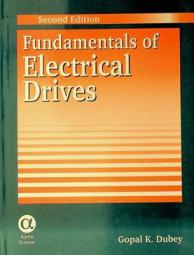
Fundamentals of electrical drives
This work covers topics such as dynamics and control of electrical drives, selection of motor power rating, stepper motor and switched reluctance motor drives, permanent magnet ac and brushless dc motor drives, and traction drives.
Book

A Novel Hybrid Sine Cosine Algorithm and Pattern Search for Optimal Coordination of Power System Damping Controllers
This paper presents an effective hybrid optimization technique based on a chaotic sine cosine algorithm (CSCA) and pattern search (PS) for the coordinated design of power system stabilizers (PSSs) and static VAR compensator (SVC)-based controllers. For this purpose, the design problem is considered as an optimization problem whose decision variables are the controllers’ parameters. Due to the nonlinearities of large, interconnected power systems, methods capable of handling any nonlinearity of power networks are preferable. In this regard, a nonlinear time domain-based objective function was used. Then, the proposed hybrid chaotic sine cosine pattern search (hCSC-PS) algorithm was employed for solving this optimization problem. The proposed method employed the global search ability of SCA and the local search ability of PS. The performance of the new hCSC-PS was investigated using a set of benchmark functions, and then the results were compared with those of the standard SCA and some other methods from the literature. In addition, a case study from the literature is considered to evaluate the efficiency of the proposed hCSC-PS for the coordinated design of controllers in the power system. PSSs and additional SVC controllers are being considered to demonstrate the feasibility of the new technique. In order to ensure the robustness and performance of the proposed controller, the objective function is evaluated for various extreme loading conditions and system configurations. The numerical investigations show that the new approach may provide better optimal damping and outperforms previous methods. Nonlinear time-domain simulation shows the superiority of the proposed controller and its ability in providing efficient damping of electromechanical oscillations.
Journal Article

Analysis of modified plug-in electric vehicle charger controller with grid support functionalities
Power quality issues, which are mainly due to power electronic devices that are invariably used not only in domestic sector but also industries, still persist despite various mitigation strategies. The slow but steady invasion of Electric vehicles or Plug-in Electric Vehicles (PEVs) in recent years, in the automobile sector, adds woes to the power quality issues further. Majority of the charging systems presently available for charging PEVs are unidirectional and so supports Grid to Vehicle (G2V) mode only as the bidirectional integration of those vehicles into the grid is still a big challenge. However, Vehicle to Grid (V2G) support mode also deserves an equal importance as the PEV charger with V2G mode of operation is capable of supporting grid functionalities also, on need basis, which largely depends on the power circuit topology and controller topology it uses. Hence, in this work an improved controller topology has been designed and developed to alleviate the burdens on the grid. Support for active power demand, voltage swell and sag mitigation, in addition to catering its prime objective of charging the batteries are focused. A Second Order Generalized Integrator Phase Locked Loop (SOGI-PLL) based controller has been developed and implemented in the proposed work to improve the transient response, apart from controlling the steady-state oscillations of the grid to which it is connected to. A single phase non-isolated bidirectional PEV charger with proposed control topology has been simulated in MATLAB-Simulink for vehicle support and grid support mode of operations. The simulation proves the satisfactory operation of the proposed charger in the four quarters of active power and reactive power (PQ) plane, thus complies the design objectives of bidirectional power flow. The results obtained from the simulation show improved performance in terms of DC link voltage overshoot, steady-state oscillations, overall efficiency, voltage and current Total Harmonic Distortions (THD)
Journal Article

Load Frequency Control Assessment of a PSO-PID Controller for a Standalone Multi-Source Power System
The performance of load frequency control (LFC) for isolated multiple sources of electric power-generating units with a proportional integral derivative (PID) controller is presented. A thermal, hydro, and gas power-generating unit are integrated into the studied system. The PID controller is proposed as a subordinate controller to stabilize system performance when there is a sudden demand on the power system. The particle swarm optimization (PSO) algorithm is used to obtain optimal gain values of the proposed PID controller. Various cost functions, mainly integral time absolute error (ITAE), integral absolute error (IAE), integral squared error (ISE), and integral time squared error (ITSE) were used to optimize controller gain parameters. Furthermore, the enhancement of the PSO technique is proven by the performance comparison of conventional, differential evolution (DE) algorithm- and genetic algorithm (GA)-based PID controllers for the same system. The results show the PSO-PID controller delivers a faster settled response and the percentage improvement of the proposed technique over the conventional method is 79%, over GA is 55%, and over DE is 24% in an emergency in a power system.
Journal Article
Nonlinear control of two-stage single-phase standalone photovoltaic system
This paper presents a single-phase Photovoltaic (PV) inverter with its superior and robust control in a standalone mode. Initially, modeling and layout of the Buck-Boost DC-DC converter by adopting a non-linear Robust Integral Back-stepping controller (RIBSC) is provided. The controller makes use of a reference voltage generated through the regression plane so that the operating point corresponding to the maximum power point (MPP) could be achieved through the converter under changing climatic conditions. The other main purpose of the Buck-Boost converter is to act like a transformer and produce an increased voltage at the inverter input whenever desired. By not using a transformer makes the circuit size more compact and cost-effective. The proposed RIBSC is applied to an H-bridge inverter with an LC filter to produce the sinusoidal wave in the presence of variations in the output to minimize the difference between the output voltage and the reference voltage. Lyapunov stability criterion has been used to verify the stability and finite-time convergence of the overall system. The overall system is simulated in MATLAB/Simulink to test the system performance with different loads, varying climatic conditions and inverter reference voltages. The proposed methodology is compared with a back-stepping controller and Proportional Integral Derivative (PID) controller under rapidly varying climatic conditions. Results demonstrated that the proposed technique yielded a tracking time of 0.01s, a total harmonic distortion of 9.71% and a root means square error of 0.3998 in the case of resistive load thus showing superior control performance compared to the state-of-the-art control techniques.
Journal Article
A generic method for PLC control system design based on Digital Twin
This study explores a design method for electrical control systems based on the Digital Twin (DT) from the perspective of control engineers. The proposed method enables engineers to systematically develop and validate such systems, thereby enhancing the quality and efficacy of industrial digitalization. By identifying critical challenges in DT-based control system design, we proposed a maturity evaluation framework to ensure that the DT’s fidelity aligns with the requirements of control system design application scenarios. Subsequently, a comparative analysis of virtual and physical commissioning was conducted, leading to the formulation of a structured implementation framework for DT-based control system design. A six-floor elevator DT was employed as the controlled object to demonstrate the proposed method. A virtual commissioning platform was constructed to validate the feasibility and reliability of the control system. This approach provides actionable insights for the corresponding physical entity to optimize construction schemes, commissioning workflows, and operation adjustments. The practical results demonstrate that the proposed DT-based design method of the electrical control system enables high-fidelity validation of production line design, reduces resource consumption during physical equipment commissioning, and significantly enhances development efficiency and quality while shortening construction and commissioning timelines.
Journal Article
Active disturbance rejection control based on soft computing techniques for electric power steering to improve system performance
Electric Power Steering (EPS) systems enhance driving comfort and safety. However, their performance often degrades under varying operating conditions due to external disturbances and modeling uncertainties. Traditional control methods, which typically rely on fixed parameters or neglect disturbance dynamics, struggle to maintain robustness and adaptability across diverse scenarios. This article presents an improved control strategy integrating Active Disturbance Rejection Control (ADRC) with advanced soft computing techniques to address these challenges. The proposed method introduces two key innovations: optimizing the tracking differentiator’s speed factor using a genetic algorithm and dynamically tuning state feedback control parameters through a fuzzy inference system. This hybrid approach enhances the disturbance rejection capability of ADRC and significantly improves system adaptability and tracking accuracy. Simulation results validate the effectiveness of the proposed controller, demonstrating low tracking errors (1.875% at low speed and 1.373% at high speed) and disturbance estimation accuracy exceeding 90%. Compared to conventional controllers, the proposed method exhibits superior robustness, reduced steady-state error, and improved performance across a wide range of operating conditions. These results confirm the potential of integrating ADRC with intelligent optimization techniques for advanced control in automotive mechatronic systems.
Journal Article