
Catalogue Search | MBRL


Are you sure you want to remove the book from the shelf?

{{itemTitle}}
82,411
result(s) for
"Electric power supplies"
Sort by:


Power Outages and Community Health: a Narrative Review
Purpose of Review
Power outages, a common and underappreciated consequence of natural disasters, are increasing in number and severity due to climate change and aging electricity grids. This narrative review synthesizes the literature on power outages and health in communities.
Recent Findings
We searched Google Scholar and PubMed for English language studies with titles or abstracts containing “power outage” or “blackout.” We limited papers to those that explicitly mentioned power outages or blackouts as the exposure of interest for health outcomes among individuals living in the community. We also used the reference list of these studies to identify additional studies. The final sample included 50 articles published between 2004 and 2020, with 17 (34%) appearing between 2016 and 2020. Exposure assessment remains basic and inconsistent, with 43 (86%) of studies evaluating single, large-scale power outages. Few studies used spatial and temporal control groups to assess changes in health outcomes attributable to power outages. Recent research linked data from electricity providers on power outages in space and time and included factors such as number of customers affected and duration to estimate exposure.
Summary
The existing literature suggests that power outages have important health consequences ranging from carbon monoxide poisoning, temperature-related illness, gastrointestinal illness, and mortality to all-cause, cardiovascular, respiratory, and renal disease hospitalizations, especially for individuals relying on electricity-dependent medical equipment. Nonetheless the studies are limited, and more work is needed to better define and capture the relevant exposures and outcomes. Studies should consider modifying factors such as socioeconomic and other vulnerabilities as well as how community resiliency can minimize the adverse impacts of widespread major power outages.
Journal Article

Voltage-Sourced Converters in Power Systems
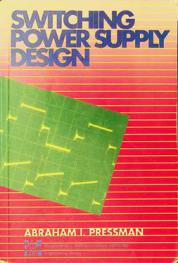
Presents Fundamentals of Modeling, Analysis, and Control of Electric Power Converters for Power System ApplicationsElectronic (static) power conversion has gained widespread acceptance in power systems applications; electronic power converters are increasingly employed for power conversion and conditioning, compensation, and active filtering. This book presents the fundamentals for analysis and control of a specific class of high-power electronic converters—the three-phase voltage-sourced converter (VSC). Voltage-Sourced Converters in Power Systems provides a necessary and unprecedented link between the principles of operation and the applications of voltage-sourced converters. The book: Describes various functions that the VSC can perform in electric power systems Covers a wide range of applications of the VSC in electric power systems—including wind power conversion systems Adopts a systematic approach to the modeling and control design problems Illustrates the control design procedures and expected performance based on a comprehensive set of examples and digital computer time-domain simulation studiesThis comprehensive text presents effective techniques for mathematical modeling and control design, and helps readers understand the procedures and analysis steps. Detailed simulation case studies are included to highlight the salient points and verify the designs. Voltage-Sourced Converters in Power Systems is an ideal reference for senior undergraduate and graduate students in power engineering programs, practicing engineers who deal with grid integration and operation of distributed energy resource units, design engineers, and researchers in the area of electric power generation, transmission, distribution, and utilization.
eBook


Design, Control, and Application of Modular Multilevel Converters for HVDC Transmission Systems
<p><i>Design, Control and Application of Modular Multilevel Converters for HVDC Transmission Systems </i>is a comprehensive guide to semiconductor technologies applicable for MMC design, component sizing control, modulation, and application of the MMC technology for HVDC transmission.</p> <p>Separated into three distinct parts, the first offers an overview of MMC technology, including information on converter component sizing, Control and Communication, Protection and Fault Management, and Generic Modelling and Simulation. The second covers the applications of MMC in offshore WPP, including planning, technical and economic requirements and optimization options, fault management, dynamic and transient stability. Finally, the third chapter explores the applications of MMC in HVDC transmission and Multi Terminal configurations, including Supergrids.</p> <p>Key features:</p> <ul> <li>Unique coverage of the offshore application and optimization of MMC-HVDC schemes for the export of offshore wind energy to the mainland.</li> <li>Comprehensive explanation of MMC application in HVDC and MTDC transmission technology.</li> <li>Detailed description of MMC components, control and modulation, different modeling approaches, converter dynamics under steady-state and fault contingencies including application and housing of MMC in HVDC schemes for onshore and offshore.</li> <li>Analysis of DC fault detection and protection technologies, system studies required for the integration of HVDC terminals to offshore wind power plants, and commissioning procedures for onshore and offshore HVDC terminals.</li> <li>A set of self-explanatory simulation models for HVDC test cases is available to download from the companion website.</li> </ul> <p>This book provides essential reading for graduate students and researchers, as well as field engineers and professionals who require an in-depth understanding of MMC technology.</p> <div> </div>
eBook
Systems, automation & control
\"The book elaborates selected, extended and peer reviewed papers from the International Conference on Power Electrical Systems held in Mahdia, Tunisia in 2015. Main Topics are: multivariable -, nonlinear-, stochastic-, and robust control, robotics and mechatronics, synthesis of automation systems.\"-- Provided by Publisher.
Book

Electric powertrain
The why, what and how of the electric vehicle powertrain Empowers engineering professionals and students with the knowledge and skills required to engineer electric vehicle powertrain architectures, energy storage systems, power electronics converters and electric drives.The modern electric powertrain is relatively new for the automotive industry, and engineers are challenged with designing affordable, efficient and high-performance electric powertrains as the industry undergoes a technological evolution. Co-authored by two electric vehicle (EV) engineers with decades of experience designing and putting into production all of the powertrain technologies presented, this book provides readers with the hands-on knowledge, skills and expertise they need to rise to that challenge. This four-part practical guide provides a comprehensive review of battery, hybrid and fuel cell EV systems and the associated energy sources, power electronics, machines, and drives. The first part of the book begins with a historical overview of electromobility and the related environmental impacts motivating the development of the electric powertrain. Vehicular requirements for electromechanical propulsion are then presented. Battery electric vehicles (BEV), fuel cell electric vehicles (FCEV), and conventional and hybrid electric vehicles (HEV) are then described, contrasted and compared for vehicle propulsion. The second part of the book features in-depth analysis of the electric powertrain traction machines, with a particular focus on the induction machine and the surface- and interior-permanent magnet ac machines. The brushed dc machine is also considered due to its ease of operation and understanding, and its historical place, especially as the traction machine on NASA's Mars rovers. The third part of the book features the theory and applications for the propulsion, charging, accessory, and auxiliary power electronics converters. Chapters are presented on isolated and non-isolated dc-dc converters, traction inverters, and battery charging. The fourth part presents the introductory and applied electromagnetism required as a foundation throughout the book. - Introduces and holistically integrates the key EV powertrain technologies. - Provides a comprehensive overview of existing and emerging automotive solutions. - Provides experience-based expertise for vehicular and powertrain system and sub-system level study, design, and optimization. - Presents many examples of powertrain technologies from leading manufacturers. - Discusses the dc traction machines of the Mars rovers, the ultimate EVs from NASA. - Investigates the environmental motivating factors and impacts of electromobility. - Presents a structured university teaching stream from introductory undergraduate to postgraduate. - Includes real-world problems and assignments of use to design engineers, researchers, and students alike. - Features a companion website with numerous references, problems, solutions, and practical assignments. - Includes introductory material throughout the book for the general scientific reader. - Contains essential reading for government regulators and policy makers. Electric Powertrain: Energy Systems, Power Electronics and Drives for Hybrid, Electric and Fuel Cell Vehicles is an important professional resource for practitioners and researchers in the battery, hybrid, and fuel cell EV transportation industry. The book is a structured holistic textbook for the teaching of the fundamental theories and applications of energy sources, power electronics, and electric machines and drives to engineering undergraduate and postgraduate students. Textbook Structure and Suggested Teaching Curriculum This is primarily an engineering textbook covering the automotive powertrain, energy storage and energy conversion, power electronics, and electrical machines. A significant additional focus is placed on the engineering design, the energy for transportation, and the related environmental impacts. This textbook is an educational tool for practicing engineers and others, such as transportation policy planners and regulators. The modern automobile is used as the vehicle upon which to base the theory and applications, which makes the book a useful educational reference for our industry colleagues, from chemists to engineers. This material is also written to be of interest to the general reader, who may have little or no interest in the power electronics and machines. Introductory science, mathematics, and an inquiring mind suffice for some chapters. The general reader can read the introduction to each of the chapters and move to the next as soon as the material gets too advanced for him or her. Part I Vehicles and Energy Sources Chapter 1 Electromobility and the Environment Chapter 2 Vehicle Dynamics Chapter 3 Batteries Chapter 4 Fuel Cells Chapter 5 Conventional and Hybrid Powertrains Part II Electrical Machines Chapter 6 Introduction to Traction Machines Chapter 7 The Brushed DC Machine Chapter 8 Induction Machines Chapter 9 Surface-permanent-magnet AC Machines Chapter 10: Interior-permanent-magnet AC Machines Part III Power Electronics Chapter 11 DC-DC Converters Chapter 12 Isolated DC-DC Converters Chapter 13 Traction Drives and Three-phase InvertersChapter 14 Battery Charging Chapter 15 Control of the Electric Drive Part IV Basics Chapter 16 Introduction to Electromagnetism, Ferromagnetism, and Electromechanical Energy Conversion The first third of the book (Chapters 1 to 6), plus parts of Chapters 14 and 16, can be taught to the general science or engineering student in the second or third year. It covers the introductory automotive material using basic concepts from mechanical, electrical, environmental, and electrochemical engineering. Chapter 14 on electrical charging and Chapter 16 on electromagnetism can also be used as a general introduction to electrical engineering. The basics of electromagnetism, ferromagnetism and electromechanical energy conversion (Chapter 16) and dc machines (Chapter 7) can be taught to second year (sophomore) engineering students who have completed introductory electrical circuits and physics. The third year (junior) students typically have covered ac circuit analysis, and so they can cover ac machines, such as the induction machine (Chapter 8) and the surface permanent-magnet ac machine (Chapter 9). As the students typically have studied control theory, they can investigate the control of the speed and torque loops of the motor drive (Chapter 15). Power electronics, featuring non-isolated buck and boost converters (Chapter 11), can also be introduced in the third year. The final-year (senior) students can then go on to cover the more advanced technologies of the interior-permanent-magnet ac machine (Chapter 10). Isolated power converters (Chapter 12), such as the full-bridge and resonant converters, inverters (Chapter 13), and power-factor-corrected battery chargers (Chapter 14), are covered in the power electronics section. This material can also be covered at the introductory postgraduate level. Various homework, simulation, and research exercises are presented throughout the textbook. The reader is encouraged to attempt these exercises as part of the learning experience. Instructors are encouraged to contact the author, John Hayes , direct to discuss course content or structure.
eBook

Climate Impacts on Extreme Energy Consumption of Different Types of Buildings
Exploring changes of building energy consumption and its relationships with climate can provide basis for energy-saving and carbon emission reduction. Heating and cooling energy consumption of different types of buildings during 1981-2010 in Tianjin city, was simulated by using TRNSYS software. Daily or hourly extreme energy consumption was determined by percentile methods, and the climate impact on extreme energy consumption was analyzed. The results showed that days of extreme heating consumption showed apparent decrease during the recent 30 years for residential and large venue buildings, whereas days of extreme cooling consumption increased in large venue building. No significant variations were found for the days of extreme energy consumption for commercial building, although a decreasing trend in extreme heating energy consumption. Daily extreme energy consumption for large venue building had no relationship with climate parameters, whereas extreme energy consumption for commercial and residential buildings was related to various climate parameters. Further multiple regression analysis suggested heating energy consumption for commercial building was affected by maximum temperature, dry bulb temperature, solar radiation and minimum temperature, which together can explain 71.5 % of the variation of the daily extreme heating energy consumption. The daily extreme cooling energy consumption for commercial building was only related to the wet bulb temperature (R2= 0.382). The daily extreme heating energy consumption for residential building was affected by 4 climate parameters, but the dry bulb temperature had the main impact. The impacts of climate on hourly extreme heating energy consumption has a 1-3 hour delay in all three types of buildings, but no delay was found in the impacts of climate on hourly extreme cooling energy consumption for the selected buildings.
Journal Article