
Catalogue Search | MBRL


Are you sure you want to remove the book from the shelf?

{{itemTitle}}
944,178
result(s) for
"Electric vehicle"
Sort by:


Review of Electric Vehicle Charger Cybersecurity Vulnerabilities, Potential Impacts, and Defenses
Worldwide growth in electric vehicle use is prompting new installations of private and public electric vehicle supply equipment (EVSE). EVSE devices support the electrification of the transportation industry but also represent a linchpin for power systems and transportation infrastructures. Cybersecurity researchers have recently identified several vulnerabilities that exist in EVSE devices, communications to electric vehicles (EVs), and upstream services, such as EVSE vendor cloud services, third party systems, and grid operators. The potential impact of attacks on these systems stretches from localized, relatively minor effects to long-term national disruptions. Fortunately, there is a strong and expanding collection of information technology (IT) and operational technology (OT) cybersecurity best practices that may be applied to the EVSE environment to secure this equipment. In this paper, we survey publicly disclosed EVSE vulnerabilities, the impact of EV charger cyberattacks, and proposed security protections for EV charging technologies.
Journal Article

The Tesla files : a whistleblower, a leak, a fight for truth : inside Musk's empire of deception
A whistleblower. A 100BG-leak of confidential internal documents. This is the story of the fight to expose the truth of Tesla. Elon Musk is one of the wealthiest people in the world. Tesla made him a 300-times billionaire. Starlink turned him into a force in global conflicts. X became his personal megaphone, stoking political turmoil at the touch of a button. With SpaceX, he aims to conquer the stars. But a whistleblower, a 100GB-leak of confidential Tesla documents and two investigative journalists reveal the frightening truth behind the faade: an unusually high number of workplace accidents in Musk's factories, dangerous errors in Tesla's autopilot software, a culture of fear and deception, and countless broken promises.
BOOK

Review of Electric Vehicle Technologies, Charging Methods, Standards and Optimization Techniques
This paper presents a state-of-the-art review of electric vehicle technology, charging methods, standards, and optimization techniques. The essential characteristics of Hybrid Electric Vehicle (HEV) and Electric Vehicle (EV) are first discussed. Recent research on EV charging methods such as Battery Swap Station (BSS), Wireless Power Transfer (WPT), and Conductive Charging (CC) are then presented. This is followed by a discussion of EV standards such as charging levels and their configurations. Next, some of the most used optimization techniques for the sizing and placement of EV charging stations are analyzed. Finally, based on the insights gained, several recommendations are put forward for future research.
Journal Article

Electric Vehicles Charging Technology Review and Optimal Size Estimation
Many different types of electric vehicle (EV) charging technologies are described in literature and implemented in practical applications. This paper presents an overview of the existing and proposed EV charging technologies in terms of converter topologies, power levels, power flow directions and charging control strategies. An overview of the main charging methods is presented as well, particularly the goal is to highlight an effective and fast charging technique for lithium ions batteries concerning prolonging cell cycle life and retaining high charging efficiency. Once presented the main important aspects of charging technologies and strategies, in the last part of this paper, through the use of genetic algorithm, the optimal size of the charging systems is estimated and, on the base of a sensitive analysis, the possible future trends in this field are finally valued.
Journal Article

Electric powertrain
The why, what and how of the electric vehicle powertrain Empowers engineering professionals and students with the knowledge and skills required to engineer electric vehicle powertrain architectures, energy storage systems, power electronics converters and electric drives.
eBook
Electric Vehicles: V2G for Rapid, Safe, and Green EV Penetration
Low carbon and renewable energy sources (RESs) are fast becoming a key sustainable instrument in meeting the global growth of electricity demand while curbing carbon emissions. For example, the gradual displacement of fossil-fuelled vehicles with electrically driven counterparts will inevitably increase both the power grid baseload and peak demand. In many developed countries, the electrification process of the transport sector has already started in tandem with the installation of multi-GW renewable energy capacity, particularly wind and solar, huge investment in power storage technology, and end-user energy demand management. The expansion of the Electric Vehicle (EV) market presents a new opportunity to create a cleaner and transformative new energy carrier. For instance, a managed EV battery charging and discharging profile in conjunction with the national grid, known as the Vehicle-to-Grid system (V2G), is projected to be an important mechanism in reducing the impact of renewable energy intermittency. This paper presents an extensive literature review of the current status of EVs and allied interface technology with the power grid. The main findings and statistical details are drawn from up-to-date publications highlighting the latest technological advancements, limitations, and potential future market development. The authors believe that electric vehicle technology will bring huge technological innovation to the energy market where the vehicle will serve both as a means of transport and a dynamic energy vector interfacing with the grid (V2G), buildings (V2B), and others (V2X).
Journal Article

An assessment of electric vehicles: technology, infrastructure requirements, greenhouse-gas emissions, petroleum use, material use, lifetime cost, consumer acceptance and policy initiatives
Concerns about climate change, urban air pollution and dependence on unstable and expensive supplies of foreign oil have led policy-makers and researchers to investigate alternatives to conventional petroleum-fuelled internal-combustion-engine vehicles in transportation. Because vehicles that get some or all of their power from an electric drivetrain can have low or even zero emissions of greenhouse gases (GHGs) and urban air pollutants, and can consume little or no petroleum, there is considerable interest in developing and evaluating advanced electric vehicles (EVs), including pure battery-electric vehicles, plug-in hybrid electric vehicles and hydrogen fuel-cell electric vehicles. To help researchers and policy-makers assess the potential of EVs to mitigate climate change and reduce petroleum use, this paper discusses the technology of EVs, the infrastructure needed for their development, impacts on emissions of GHGs, petroleum use, materials use, lifetime costs, consumer acceptance and policy considerations.
Journal Article
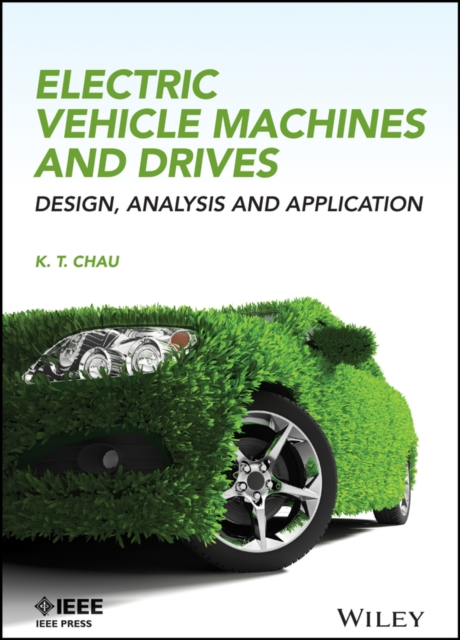
Electric Vehicle Machines and Drives
<p>This timely and comprehensive reference consolidates the research and development of electric vehicle machines and drives for electric and hybrid propulsions. It covers an extensive range of drives and machine systems that being with existing typologies before progressing to more advanced versions. To aid students and engineers, emphasis is given to design criteria, performance analyses, and application examples or potentials so as to highlight the practical aspects of machine design.</p> <p>• Covers the major technologies in the area as well as fundamental concepts and applications</p> <p>• Range of motor drives for electric propulsion includes DC, induction, permanent magnet brushless and switched reluctance, as well as stator-permanent magnet, magnetic-geared, vernier-permanent magnet, and advanced magnetless motor drives</p> <p>• Extensive discussion of machine systems for hybrid propulsion like the integrated-starter-generator and planetary-geared electric variable transmission systems, as well as the double-rotor electric variable transmission systems and magnetic-geared electric variable transmission systems</p> <p>• Accompanying website features presentation or lecture slides to enhance teaching and learning</p> <p><i>Electric Vehicle Machines and Drives: Design, Analysis, and Application</i> is a handy and comprehensive text for graduate students of electrical engineering, as well as researchers and engineers working on electric vehicles.</p>
eBook
Towards a Smarter Battery Management System for Electric Vehicle Applications: A Critical Review of Lithium-Ion Battery State of Charge Estimation
Energy storage system (ESS) technology is still the logjam for the electric vehicle (EV) industry. Lithium-ion (Li-ion) batteries have attracted considerable attention in the EV industry owing to their high energy density, lifespan, nominal voltage, power density, and cost. In EVs, a smart battery management system (BMS) is one of the essential components; it not only measures the states of battery accurately, but also ensures safe operation and prolongs the battery life. The accurate estimation of the state of charge (SOC) of a Li-ion battery is a very challenging task because the Li-ion battery is a highly time variant, non-linear, and complex electrochemical system. This paper explains the workings of a Li-ion battery, provides the main features of a smart BMS, and comprehensively reviews its SOC estimation methods. These SOC estimation methods have been classified into four main categories depending on their nature. A critical explanation, including their merits, limitations, and their estimation errors from other studies, is provided. Some recommendations depending on the development of technology are suggested to improve the online estimation.
Journal Article