
Catalogue Search | MBRL


Are you sure you want to remove the book from the shelf?

{{itemTitle}}
2,198
result(s) for
"Electrical engineering History."
Sort by:

Simply electrifying : the technology that transformed the world, from Benjamin Franklin to Elon Musk
Examines \"the 250-year history of electricity through the stories of the men and women who used it to transform our world: Benjamin Franklin, James Watt, Michael Faraday, Samuel F.B. Morse, Thomas Edison, Samuel Insull, Albert Einstein, Rachel Carson, Elon Musk, and more. In the process, it reveals for the first time the ... often-dangerous story of electricity's historic discovery, development, and worldwide application\"--Amazon.com.
Book

When old technologies were new : thinking about electric communication in the late nineteenth century
This informative and innovative account of the early years of the electronic media assesses how the telephone and the electric light were publicly envisioned at the end of the 19th century.
eBook

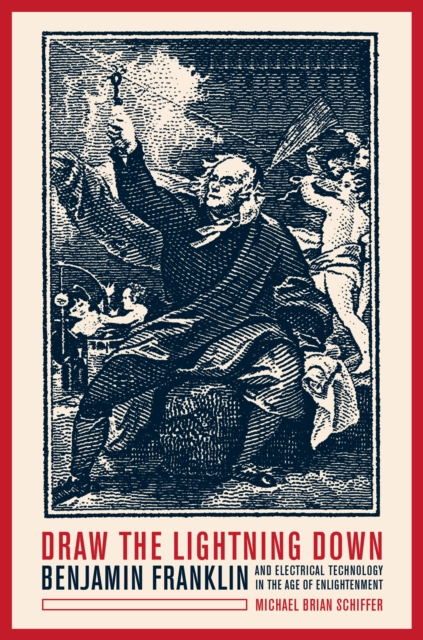
Draw the lightning down : Benjamin Franklin and electrical technology in the age of Enlightenment
Most of us know--at least we've heard--that Benjamin Franklin conducted some kind of electrical experiment with a kite. What few of us realize--and what this book makes powerfully clear--is that Franklin played a major role in laying the foundations of modern electrical science and technology. This fast-paced book, rich with historical details and anecdotes, brings to life Franklin, the large international network of scientists and inventors in which he played a key role, and their amazing inventions. We learn what these early electrical devices--from lights and motors to musical and medical instruments--looked like, how they worked, and what their utilitarian and symbolic meanings were for those who invented and used them. Against the fascinating panorama of life in the eighteenth century, Michael Brian Schiffer tells the story of the very beginnings of our modern electrical world. The earliest electrical technologies were conceived in the laboratory apparatus of physicists; because of their surprising and diverse effects, however, these technologies rapidly made their way into many other communities and activities. Schiffer conducts us from community to community, showing how these technologies worked as they were put to use in public lectures, revolutionary experiments in chemistry and biology, and medical therapy. This story brings to light the arcane and long-forgotten inventions that made way for many modern technologies--including lightning rods (Franklin's invention), cardiac stimulation, xerography, and the internal combustion engine--and richly conveys the complex relationships among science, technology, and culture.
eBook

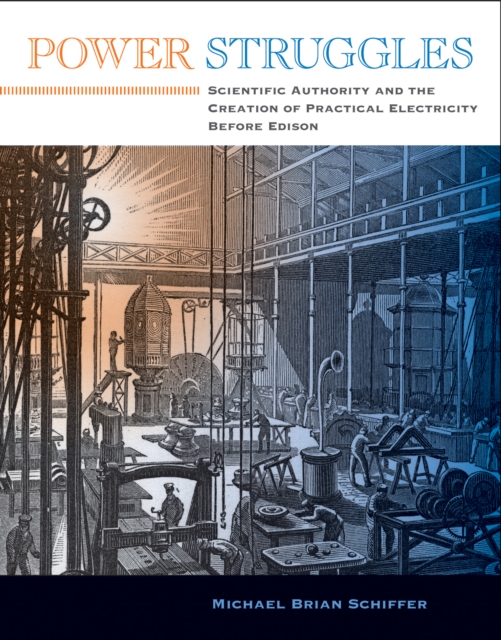
Power Struggles
In 1882, Thomas Edison and his Edison Electric Light Company unveiled the first large-scale electrical system in the world to light a stretch of offices in a city. This was a monumental achievement, but it was not the beginning of the electrical age. The first electric generators were built in the 1830s, the earliest commercial lighting systems before 1860, and the first commercial application of generator-powered lights (in lighthouses) in the early 1860s. In Power Struggles, Michael Brian Schiffer examines some of these earlier efforts, both successful and unsuccessful, that paved the way for Edison. After laying out a unified theoretical framework for understanding technological change, Schiffer presents a series of fascinating case studies of pre-Edison electrical technologies, including Volta's electrochemical battery, the blacksmith's electric motor, the first mechanical generators, Morse's telegraph, the Atlantic cable, and the lighting of the Capitol dome. Schiffer discusses claims of \"practicality\" and \"impracticality\" (sometimes hotly contested) made for these technologies, and examines the central role of the scientific authority--in particular, the activities of Joseph Henry, mid-nineteenth-century America's foremost scientist--in determining the fate of particular technologies. These emerging electrical technologies formed the foundation of the modern industrial world. Schiffer shows how and why they became commercial products in the context of an evolving corporate capitalism in which conflicting judgments of practicality sometimes turned into power struggles.
eBook

Who was Nikola Tesla?
Introduces readers to Nikola Tesla, one of the most influential scientists of all time.
Book

Ferranti. A history
The case-study outlines the inherent dangers in international mergers, as well as explaining the acute problems associated with City practices that avoided issues that would bring down Ferranti in spectacular fashion.
eBook

The electric war : Edison, Tesla, Westinghouse, and the race to light the world
\"The riveting nonfiction account of the scientific competition to light the world with electricity.\"-- Provided by publisher.
BOOK

Ferranti.: a history (Management, mergers and fraud 1987-1993)
This study of Ferranti in its last six years of a long history provides a detailed exposition of the British and American businessmen who combined to terminate one of the UK's leading defence electronics firms. Involving action in the Middle East, South Africa and Pakistan, as well as the UK and USA, this highlights the precarious nature of international arms trading.
eBook