
Catalogue Search | MBRL


Are you sure you want to remove the book from the shelf?

{{itemTitle}}
193
result(s) for
"Electromagnetic waves -- Scattering -- Mathematical models"
Sort by:

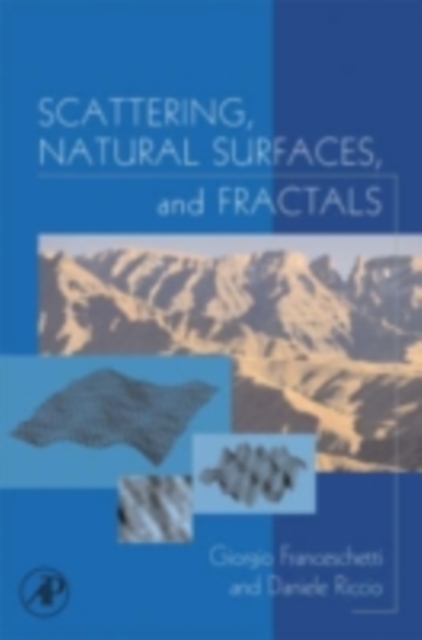
Scattering, natural surfaces and fractals
This book provides a comprehensive overview of electromagnetic scattering from natural surfaces, ranging from the classical to the more recent (fractal) approach. As remote sensing applications become increasingly important, this text provides readers with a solid background in interpretation, classification and thematization of microwave images. The \"scattering problem\" is discussed in detail with emphasis on its application to electromagnetic wave propagation, remote sensing, radar detection, and electromagnetic diagnostics. Natural surface and fractals complete this treatise focusing on how the fractal model represents our natural environment and other planets in our solar system, most recently as used to research the planet Venus and Titan, one of the moons of Saturn. An example of how scattering, fractals, and natural surfaces are of great importance is the following: Natural oil slicks in the ocean have been found to be fractal while man-made ones (generated by illegal washing of oil carrying ships) are not. Processing of an ocean image from space may detect the latter by means of a fractal analysis. *An elegant and clear treatment of a rigorous topic with informative prose and realistic illustrations of scattering*Provides readers with a solid background in interpretation, classification, and thematization of microwave images*The only book available on fractal models and their application to scattering
eBook
Method of moments for 2D scattering problems : basic concepts and applications
Electromagnetic wave scattering from randomly rough surfaces in the presence of scatterers is an active, interdisciplinary area of research with myriad practical applications in fields such as optics, acoustics, geoscience and remote sensing.
eBook
Electromagnetic Wave Scattering from Random Rough Surfaces
Electromagnetic wave scattering from random rough surfaces is an active, interdisciplinary area of research with myriad practical applications in fields such as optics, acoustics, geoscience and remote sensing.
Focusing on the case of random rough surfaces, this book presents classical asymptotic models used to describe electromagnetic wave scattering. The authors begin by outlining the basic concepts relevant to the topic before moving on to look at the derivation of the scattered field under asymptotic models, based on the Kirchhoff-tangent plane, in order to calculate both the scattered field and the statistical average intensity.
More elaborated asymptotic models are also described for dealing with specific cases, and numerical results are presented to illustrate these models. Comparisons with a reference numerical method are made to confirm and refine the theoretical validity domains.
The final chapter derives the expressions of the scattering intensities of random rough surfaces under the asymptotic models. Its expressions are given for their incoherent contributions, from statistical calculations. These results are then compared with numerical computations using a Monte-Carlo process, as well as with experimental models, for sea surface backscattering.
Contents
1. Electromagnetic Wave Scattering from Random Rough Surfaces: Basics.
2. Derivation of the Scattered Field under Asymptotic Models.
3. Derivation of the Normalized Radar Cross-Section under Asymptotic Models.
APPENDIX 1. Far-Field Scattered Fields under the Method of Stationary Phase.
APPENDIX 2. Calculation of the Scattering Coefficients under the GO for 3D Problems.
About the Authors
Nicolas Pinel worked as a Research Engineer at the IETR (Institut d'Electronique et de Télécommunications de Rennes) laboratory at Polytech Nantes (University of Nantes, France) before joining Alyotech Technologies in Rennes, France, in July 2013. His research interests are in the areas of radar and optical remote sensing, scattering and propagation. In particular, he works on asymptotic methods of electromagnetic wave scattering from random rough surfaces and layers.
Christophe Bourlier works at the IETR (Institut d'Electronique et de Télécommunications de Rennes) laboratory at Polytech Nantes (University of Nantes, France) and is also a Researcher at the French National Center for Scientific Research (CNRS) on electromagnetic wave scattering from rough surfaces and objects for remote sensing applications and radar signatures. He is the author of more than 160 journal articles and conference papers.
eBook
Integral equations and iteration methods in electromagnetic scattering
The analysis of scattering of electromagnetic waves in inhomogeneous three-dimensional bounded media is extremely important from both theoretical and practical viewpoints, and constitutes the core family of problems in electromagnetics.;In this monograph the following fundamental topics relating to these problems are considered: mathematical problems and methods related to the scattering of electromagnetic waves by inhomogeneous three-dimensional anisotropic bodies and their reduction to volume singular integral equations; iteration techniques for solving linear operator equations; and efficient methods for solving volume integral equations that employ iteration procedures. Nowadays, volume singular integral equations are widely used as an efficient tool of numerical solution to the problems of complicated three-dimensional structures.;Analysis of integral equations and corresponding scattering problems, including nonclassical ones, is performed in the general formulation. The necessary and sufficient conditions that provide fulfilment of the Noether property of operators and sufficient conditions for the Fredholm property are obtained. Existence and uniqueness theorems for scattering problems considered in both classical and nonclassical settings are proved. Much attention is given to iteration techniques and development of corresponding computational algorithms.;This monograph will be of interest to researchers in electromagnetics, integral equations, iteration methods and numerical analysis both in academia and industry.
eBook
Electromagnetic Scattering from Random Media
The book develops the dynamical theory of scattering from random media from first principles. Its key findings are to characterize the time evolution of the scattered field in terms of stochastic differential equations, and to illustrate this framework in simulation and experimental data analysis. The physical models contain all correlation information and higher order statistics, which enables radar and laser scattering experiments to be interpreted. An emphasis is placed on the statistical character of the instantaneous fluctuations, as opposed to ensemble average properties. This leads to various means for detection, which have important consequences in radar signal processing and statistical optics. The book is also significant also because it illustrates how ideas in mathematical finance can be applied to physics problems in which non-Gaussian noise processes play an essential role. This pioneering book represents a significant advance in this field, and should prove valuable to leading edge researchers and practitioners at the postgraduate level and above.
eBook

Mathematical Analysis of Deterministic and Stochastic Problems in Complex Media Electromagnetics
Electromagnetic complex media are artificial materials that affect the propagation of electromagnetic waves in surprising ways not usually seen in nature. Because of their wide range of important applications, these materials have been intensely studied over the past twenty-five years, mainly from the perspectives of physics and engineering. But a body of rigorous mathematical theory has also gradually developed, and this is the first book to present that theory.
Designed for researchers and advanced graduate students in applied mathematics, electrical engineering, and physics, this book introduces the electromagnetics of complex media through a systematic, state-of-the-art account of their mathematical theory. The book combines the study of well posedness, homogenization, and controllability of Maxwell equations complemented with constitutive relations describing complex media. The book treats deterministic and stochastic problems both in the frequency and time domains. It also covers computational aspects and scattering problems, among other important topics. Detailed appendices make the book self-contained in terms of mathematical prerequisites, and accessible to engineers and physicists as well as mathematicians.
eBook

Optimizing electromagnetic wave propagation in cylindrical structures with beam-plasma interactions: A mode-matching approach
This study introduces a method for analyzing the propagation of electromagnetic waves in cylindrical structures with central chambers facilitating beam-plasma interactions, particularly relevant for slow-wave structures in backward wave oscillators. The boundary value problem, governed by the Helmholtz equation, is resolved using the mode-matching technique, yielding an exact solution. The analysis elucidates key phenomena, including reflection, transmission, orthogonality relations, and power flux variations with frequency and material properties. By examining the effects of plasma frequency and beam radius on phase velocity, group velocity, and interaction efficiency, the study provides insights into optimizing wave propagation and energy transfer. The results demonstrate that higher plasma frequencies and reduced beam radii enhance scattering characteristics, offering practical guidance for designing efficient electromagnetic devices.
Journal Article

Resonant Scattering of Radiation Belt Electrons at Saturn by Ion Cyclotron Waves
By constructing an empirical model of the spectral and latitudinal distribution of ion cyclotron waves on the basis of Cassini datasets, we investigate the resonant interactions between ion cyclotron waves and radiation belt electrons at Saturn. Calculations based on quasi‐linear bounce‐averaged diffusion coefficients show that at Saturn ion cyclotron waves can efficiently pitch angle scatter >∼1 MeV to tens of MeV electrons into the loss cone thereby inducing precipitation loss, while the mixed and momentum scattering effects are typically negligible. The resultant electron loss timescales range from a few to tens of minutes, which in fact decrease significantly with increasing L‐shell at L = 4–6. We also find that the kinetic effects introduced by pick‐up ring particles cause distinct changes in pitch angle scattering efficiency for lower energy electrons (<3 MeV at L = 5). Our results demonstrate that ion cyclotron waves play a significant role in the dynamics of Saturn's radiation belt electrons. Plain Language Summary Ion cyclotron waves are a common electromagnetic wave mode in the planetary magnetospheres. At Saturn, ion cyclotron waves are usually observed with wave frequencies near the gyro‐frequency of water‐group ions (e.g., O+, OH+, and H2O+). They are known to be excited by a ring distribution of the pick‐up water‐group ions which are extracted from the extended neutral clouds. In this paper, we investigate the resonant interactions between ion cyclotron waves and radiation belt electrons at Saturn. By constructing an empirical model of the spectral and latitudinal distribution of ion cyclotron waves based on Cassini observations, we calculate the bounce‐averaged electron diffusion coefficients and resultant electron loss timescales. Our results suggest that Saturn's ion cyclotron waves can cause efficient precipitation loss of radiation belt electrons by scattering them into the loss cone. The corresponding loss timescales range from a few to tens of minutes, decreasing with increasing radial distance from Saturn. Our results confirm the important role of ion cyclotron waves in the dynamics of Saturnian radiation belt electrons. Key Points The resonant interactions between ion cyclotron waves and radiation belt electrons at Saturn are investigated Ion cyclotron waves can efficiently pitch angle scatter >∼1 MeV to tens of MeV electrons into the loss cone for precipitation loss The resultant electron loss timescales range from a few to tens of minutes, which decrease significantly with increasing L‐shell over L = 4–6
Journal Article