
Catalogue Search | MBRL


Are you sure you want to remove the book from the shelf?

{{itemTitle}}
320,958
result(s) for
"Electronic Mail"
Sort by:

Unsubscribe : how to kill email anxiety, avoid distractions, and get real work done
\"A modern, no-nonsense guide to getting rid of email anxiety, reclaiming your productivity, and spending more time on the work that matters\"--Amazon.com.
Book
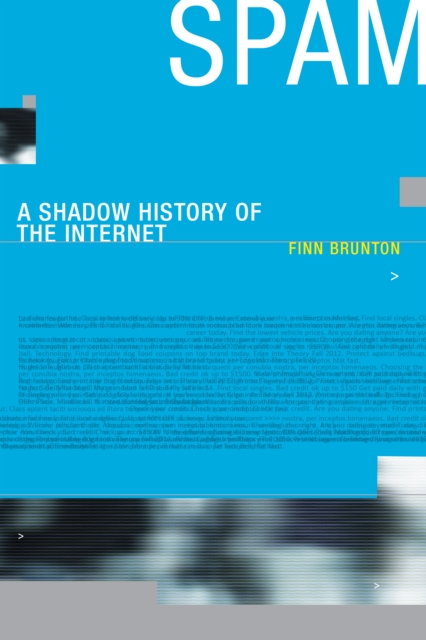
Spam
The vast majority of all email sent every day is spam, a variety of idiosyncratically spelled requests to provide account information, invitations to spend money on dubious products, and pleas to send cash overseas. Most of it is caught by filters before ever reaching an in-box. Where does it come from? As Finn Brunton explains in Spam, it is produced and shaped by many different populations around the world: programmers, con artists, bots and their botmasters, pharmaceutical merchants, marketers, identity thieves, crooked bankers and their victims, cops, lawyers, network security professionals, vigilantes, and hackers. Every time we go online, we participate in the system of spam, with choices, refusals, and purchases the consequences of which we may not understand. This is a book about what spam is, how it works, and what it means. Brunton provides a cultural history that stretches from pranks on early computer networks to the construction of a global criminal infrastructure. The history of spam, Brunton shows us, is a shadow history of the Internet itself, with spam emerging as the mirror image of the online communities it targets. Brunton traces spam through three epochs: the 1970s to 1995, and the early, noncommercial computer networks that became the Internet; 1995 to 2003, with the dot-com boom, the rise of spam's entrepreneurs, and the first efforts at regulating spam; and 2003 to the present, with the war of algorithms -- spam versus anti-spam. Spam shows us how technologies, from email to search engines, are transformed by unintended consequences and adaptations, and how online communities develop and invent governance for themselves.
eBook
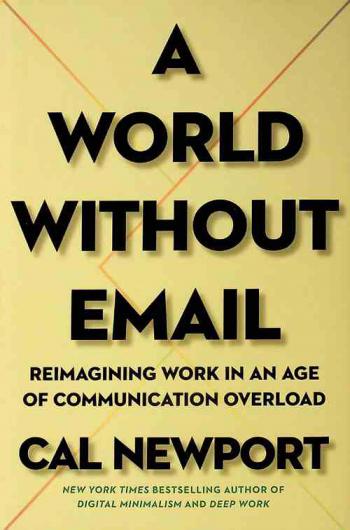
A world without email : reimagining work in an age of communication overload
Outlines recommendations for business leaders on how to maximize a working team's professional productivity by improving administrative support and streamlining digital traffic.

Email fraud: The search for psychological predictors of susceptibility
Decisions that we make about email legitimacy can result in a pernicious threat to security of both individuals and organisations. Yet user response to phishing emails is far from uniform; some respond while others do not. What is the source of this diversity in decision-making? From a psychological perspective, we consider cognitive and situational influences that might explain why certain users are more susceptible than others. Alongside an email judgment task employed as a proxy for fraud susceptibility, 224 participants completed a range of cognitive tasks. In addition, we manipulated time pressure for email legitimacy judgments. We identify cognitive reflection and sensation seeking as significant, albeit modest, predictors of susceptibility. Further to this, participants asked to make quicker responses made more judgment errors. We conclude there are cognitive signatures that partially contribute to email fraud susceptibility, with implications for efforts to limit online security breaches and train secure behaviors.
Journal Article


Structural diversity in social contagion
The concept of contagion has steadily expanded from its original grounding in epidemic disease to describe a vast array of processes that spread across networks, notably social phenomena such as fads, political opinions, the adoption of new technologies, and financial decisions. Traditional models of social contagion have been based on physical analogies with biological contagion, in which the probability that an individual is affected by the contagion grows monotonically with the size of his or her \"contact neighborhood\"—the number of affected individuals with whom he or she is in contact. Whereas this contact neighborhood hypothesis has formed the underpinning of essentially all current models, it has been challenging to evaluate it due to the difficulty in obtaining detailed data on individual network neighborhoods during the course of a large-scale contagion process. Here we study this question by analyzing the growth of Facebook, a rare example of a social process with genuinely global adoption. We find that the probability of contagion is tightly controlled by the number of connected components in an individual's contact neighborhood, rather than by the actual size of the neighborhood. Surprisingly, once this \"structural diversity\" is controlled for, the size of the contact neighborhood is in fact generally a negative predictor of contagion. More broadly, our analysis shows how data at the size and resolution of the Facebook network make possible the identification of subtle structural signals that go undetected at smaller scales yet hold pivotal predictive roles for the outcomes of social processes.
Journal Article


Diabetes Prevention and Weight Loss with a Fully Automated Behavioral Intervention by Email, Web, and Mobile Phone: A Randomized Controlled Trial Among Persons with Prediabetes
One-third of US adults, 86 million people, have prediabetes. Two-thirds of adults are overweight or obese and at risk for diabetes. Effective and affordable interventions are needed that can reach these 86 million, and others at high risk, to reduce their progression to diagnosed diabetes.
The aim was to evaluate the effectiveness of a fully automated algorithm-driven behavioral intervention for diabetes prevention, Alive-PD, delivered via the Web, Internet, mobile phone, and automated phone calls.
Alive-PD provided tailored behavioral support for improvements in physical activity, eating habits, and factors such as weight loss, stress, and sleep. Weekly emails suggested small-step goals and linked to an individual Web page with tools for tracking, coaching, social support through virtual teams, competition, and health information. A mobile phone app and automated phone calls provided further support. The trial randomly assigned 339 persons to the Alive-PD intervention (n=163) or a 6-month wait-list usual-care control group (n=176). Participants were eligible if either fasting glucose or glycated hemoglobin A1c (HbA1c) was in the prediabetic range. Primary outcome measures were changes in fasting glucose and HbA1c at 6 months. Secondary outcome measures included clinic-measured changes in body weight, body mass index (BMI), waist circumference, triglyceride/high-density lipoprotein cholesterol (TG/HDL) ratio, and Framingham diabetes risk score. Analysis was by intention-to-treat.
Participants' mean age was 55 (SD 8.9) years, mean BMI was 31.2 (SD 4.4) kg/m(2), and 68.7% (233/339) were male. Mean fasting glucose was in the prediabetic range (mean 109.9, SD 8.4 mg/dL), whereas the mean HbA1c was 5.6% (SD 0.3), in the normal range. In intention-to-treat analyses, Alive-PD participants achieved significantly greater reductions than controls in fasting glucose (mean -7.36 mg/dL, 95% CI -7.85 to -6.87 vs mean -2.19, 95% CI -2.64 to -1.73, P<.001), HbA1c (mean -0.26%, 95% CI -0.27 to -0.24 vs mean -0.18%, 95% CI -0.19 to -0.16, P<.001), and body weight (mean -3.26 kg, 95% CI -3.26 to -3.25 vs mean -1.26 kg, 95% CI -1.27 to -1.26, P<.001). Reductions in BMI, waist circumference, and TG/HDL were also significantly greater in Alive-PD participants than in the control group. At 6 months, the Alive-PD group reduced their Framingham 8-year diabetes risk from 16% to 11%, significantly more than the control group (P<.001). Participation and retention was good; intervention participants interacted with the program a median of 17 (IQR 14) of 24 weeks and 71.1% (116/163) were still interacting with the program in month 6.
Alive-PD improved glycemic control, body weight, BMI, waist circumference, TG/HDL ratio, and diabetes risk. As a fully automated system, the program has high potential for scalability and could potentially reach many of the 86 million US adults who have prediabetes as well as other at-risk groups.
Clinicaltrials.gov NCT01479062; https://clinicaltrials.gov/ct2/show/NCT01479062 (Archived by WebCite at http://www.webcitation.org/6bt4V20NR).
Journal Article

Ping : the secrets of successful virtual communication
Many of us give far too little thought to our virtual communication, and end up feeling isolated, overlooked and burnt out. 'Ping' distils Andrew Brodsky's cutting-edge social science research on remote communication tools.
BOOK

The impact of survey mode on the response rate in a survey of the factors that influence Minnesota physicians’ disclosure practices
Background
There is evidence that the physician response rate is declining. In response to this, methods for increasing the physician response rate are currently being explored. This paper examines the response rate and extent of non-response bias in a mixed-mode study of Minnesota physicians.
Methods
This mode experiment was embedded in a survey study on the factors that influence physicians’ willingness to disclose medical errors and adverse events to patients and their families. Physicians were randomly selected from a list of licensed physicians obtained from the Minnesota Board of Medical Practice. Afterwards, they were randomly assigned to either a single-mode (mail-only or web-only) or mixed-mode (web-mail or mail-web) design. Differences in response rate and nonresponse bias were assessed using Fischer’s Exact Test.
Results
The overall response rate was 18.60%. There were no statistically significant differences in the response rate across modes (p – value = 0.410). The non-response analysis indicates that responders and non-responders did not differ with respect to speciality or practice location.
Conclusions
The mode of administration did not affect the physician response rate.
Journal Article