
Catalogue Search | MBRL


Are you sure you want to remove the book from the shelf?

{{itemTitle}}
660
result(s) for
"Electronic data processing History."
Sort by:


Writing history in the digital age
\"Writing History in the Digital Age began as a one-month experiment in October 2010, featuring chapter-length essays by a wide array of scholars with the goal of rethinking traditional practices of researching, writing, and publishing, and the broader implications of digital technology for the historical profession. The essays and discussion topics were posted on a WordPress platform with a special plug-in that allowed readers to add paragraph-level comments in the margins, transforming the work into socially networked texts. This first installment drew an enthusiastic audience, over 50 comments on the texts, and over 1,000 unique visitors to the site from across the globe, with many who stayed on the site for a significant period of time to read the work. To facilitate this new volume, Jack Dougherty and Kristen Nawrotzki designed a born-digital, open-access platform to capture reader comments on drafts and shape the book as it developed. Following a period of open peer review and discussion, the finished product now presents 20 essays from a wide array of notable scholars, each examining (and then breaking apart and reexamining) how digital and emergent technologies have changed the ways that historians think, teach, author, and publish\"-- Provided by publisher.
Book
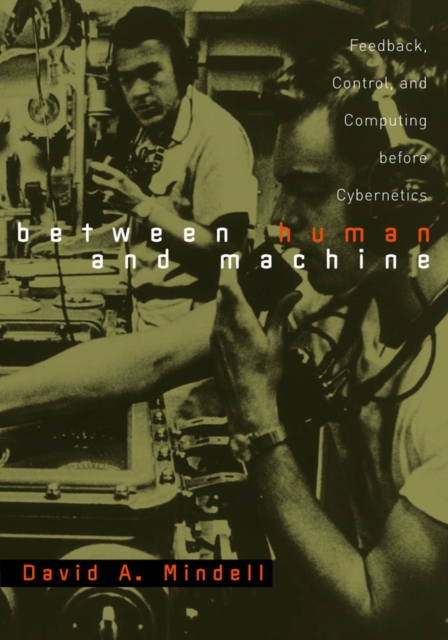
Between Human and Machine
As a new way to conceptualize the history of computing, this book will be of great interest to historians of science, technology, and culture, as well as computer scientists and theorists. Between Human and Machine: Feedback, Control, and Computing before Cybernetics.
eBook

Virtual Victorians : networks, connections, technologies
\"Virtual Victorians offers new ways of thinking about issues of representation, technology, and media change in nineteenth-century literary culture, with specific deference to the emerging field of the digital humanities. The opening section, 'Navigating Networks,' deals with digital resources and asks how they are shaping the field of Victorian studies; the second, 'Virtual Imaginings,' considers Victorian technologies of virtual experience. As a whole, this volume demonstrates that understanding the aspirations and anxieties that attended Victorian virtuality will illuminate contemporary scholarly practice--and vice versa\"--Provided by publisher.
Book


From science to computational sciences : studies in the history of computing and its influence on today's sciences
In 1946 John von Neumann stated that science is stagnant along the entire front of complex problems, proposing the use of largescale computing machines to overcome this stagnation.In other words, Neumann advocated replacing analytical methods with numerical ones.
eBook


Viruses and the development of quantitative biological electron microscopy
The electron microscope has become an important tool for determining the structure of biological materials of all kinds. Many technical advances in specimen preparation and in sophisticated methods of image analysis, initially based on optical systems but latterly on computer processing, have contributed to the development of the subject. Viruses of various kinds have often provided a convenient and appropriate test specimen. This paper describes the major technical advances and shows how viruses have had an important role in most of the developments.
Journal Article