
Catalogue Search | MBRL


Are you sure you want to remove the book from the shelf?

{{itemTitle}}
6
result(s) for
"Electronic data processing Keyboarding Research."
Sort by:
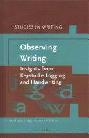
Observing writing : insights from keystroke logging and handwriting
\"Observing Writing: Insights from Keystroke Logging and Handwriting is a timely volume appearing twelve years after the Studies in Writing volume Computer Keystroke Logging and Writing (Sullivan & Lindgren, 2006). The 2006 volume provided the reader with a fundamental account of keystroke logging, a methodology in which a piece of software records every keystroke, cursor and mouse movement a writer undertakes during a writing session. This new volume highlights current theoretical and applied research questions in keystroke logging and handwriting research that observes writing. In this volume, contributors from a range of disciplines, including linguistics, psychology, neuroscience, modern languages, and education, present their research that considers the cognitive and socio-cultural complexities of writing texts in academic and professional settings\"-- Provided by publisher.
Book

Observing Writing
Observing Writing shows how keystroke logging and handwriting logging provide windows onto the complex world of text production. This book contributes to the development of research questions, technical innovation, and user applications for writing observation tools.
eBook

Educational Games and Virtual Reality as Disruptive Technologies
New technologies often have the potential for disrupting existing established practices, but nowhere is this so pertinent as in education and training today. And yet, education has been glacially slow to adopt these changes in a large scale way, and innovations seem to be imposed mainly by students' and their changing social lifestyles than by policy. Will this change? Leadership is sorely needed. Education needs to become more modular and move out of the classroom into informal settings, homes, and especially the internet. Nationwide certifications based on these modules would permit technology to enter education more rapidly. Smaller nations may be more flexible in making these very disruptive changes.
Journal Article

Computer keystroke logging and writing: methods and applications
Computer keystroke logging is an exciting development in writing research methodology that allows a document's evolution to be logged and then replayed as if the document were being written for the first time. Computer keystroke logged data allows analysis of the revisions and pauses made by authors during the writing of texts. Computer Keystroke Logging and Writing: Methods and Applications is the first book to successfully collect a group of leading computer keystroke logging researchers into a single volume and provide an invaluable introduction and overview of this dynamic area of research.This volume provides the reader unfamiliar with writing research an introduction to the field and it provides the reader unfamiliar with the technique a sound background in keystroke logging technology and an understanding of its potential in writing research. In the core of the methods section, leading researchers demonstrate how keystroke logging can be used to analyze the writing process phenomena of the pause, the writing unit and the revision unit. These phenomena are illustrated with data from current keystroke logging research projects. The final section of the book explores a range of application possibilities for computer keystroke logging. These include how keystroke logging can be used to study how translators approach their work, how keystroke logging, alone or coupled with other techniques, can be used to examine theoretical proposals and models, and how keystroke logging can be used in pedagogical settings.
eBook

Computer Competencies in a BSN Program
ABSTRACT Beginning nurses need informatics skills to work efficiently in an environment that increasingly relies on information technology to promote patient safety. In addition, a federal order mandates that all Americans have an electronic medical record by 2014. Nursing programs must integrate informatics content into their curricula to prepare nurses to use information technology. This article describes a baccalaureate (BSN) curriculum evaluation of nursing informatics content. Results can inform faculty about strategies that can strengthen informatics competencies. A research-based tool, based on the informatics competence work of Staggers, Gassert, and Curran, was developed to evaluate course syllabi. Although evidence of learning experiences related to computer skills was present, students were not routinely exposed to computerized systems. No syllabi included evidence that addressed informatics knowledge competencies. We conclude that students received limited informatics exposure and may not be adequately prepared to use information technology. Recommendations for increasing nursing informatics experiences within a BSN curriculum are offered. AUTHORS Received: December 29, 2004 Accepted: April 4, 2005 Dr. Ornes is Assistant Professor, Southern Utah University, Department of Nursing, Cedar City, and Dr. Gassert is Associate Professor and Associate Dean, Information and Technology, University of Utah, College of Nursing, Salt Lake City, Utah. Address correspondence to Lynne L. Ornes, PhD, RN, Assistant Professor, Southern Utah University, Department of Nursing, 351 West University Boulevard, GC005, Cedar City, UT, 84720; e-mail: ornesl@suu.edu .
Journal Article

We've been NIMDAed!
NIMDA, the fast-spreading worm that affected primarily PCs and ISS servers, arrived at Anderson's school Sep 19 last year. Fortunately, their network specialist acted fast and \"pulled the plug\" on their servers. Three months later, however, the school is still coping with the consequences.
Trade Publication Article