
Catalogue Search | MBRL


Are you sure you want to remove the book from the shelf?

{{itemTitle}}
24
result(s) for
"Elite (Social sciences) -- New York (State) -- New York"
Sort by:


Bloomberg's New York
New York mayor Michael Bloomberg claims to run the city like a business. InBloomberg's New York, Julian Brash applies methods from anthropology, geography, and other social science disciplines to examine what that means. He describes the mayor's attitude toward governance as the Bloomberg Way-a philosophy that holds up the mayor as CEO, government as a private corporation, desirable residents and businesses as customers and clients, and the city itself as a product to be branded and marketed as a luxury good.
Commonly represented as pragmatic and nonideological, the Bloomberg Way, Brash argues, is in fact an ambitious reformulation of neoliberal governance that advances specific class interests. He considers the implications of this in a blow-by-blow account of the debate over the Hudson Yards plan, which aimed to transform Manhattan's far west side into the city's next great high-end district. Bringing this plan to fruition proved surprisingly difficult as activists and entrenched interests pushed back against the Bloomberg administration, suggesting that despite Bloomberg's success in redrawing the rules of urban governance, older political arrangements-and opportunities for social justice-remain.
eBook

In pursuit of privilege : a history of New York City's upper class & the making of a Metropolis
\"Clifton Hood traces the history of the elite class of New York City and the institutions they created in their relentless pursuit of privilege. While they were responsible for the creation of intuitions such as Columbia University, the New York Public Library system, and the Metropolitan Museum of Art, and provided skilled leadership in eras of immense turmoil, the idea of a privileged class clashes with the American democratic ideal. And, in fact, this upper class clashed with the rising professional class of bankers, lawyers, and other executives who increasingly rose in prestige and power as time rolled on. In Pursuit of Privilege traces the history of this elite class over two centuries, focusing on decades of upheaval and great change (such as the wars of the 1780s, 1860s, 1940s and the urban upheaval in the 1820s and 1970s), and argues the upper class was not born in the Gilded Age, but that the late nineteenth century was one of many periods where the elites wielded great power and influence and profoundly shaped, for better and for worse, the history of New York and America.\"--Provided by publisher.
Book

Weaponizing Juries in a Democracy
An enduring theory of the jury is that the institution is a tool the people can use against elites. The jury can be a sword, to give elites their just desserts. Or it can be a shield, to protect defendants against elite judges and prosecutors. Another possibility is that elites can use the jury to attack each other. As certain trials in ancient Athens and the trial of Donald Trump suggest, the jury can be weaponized in inter-elite warfare. Juries are especially useful in such battles, as they can help to cloak the power of judges, prosecutors, and other elites in instigating and driving the case. Montesquieu pointed to the ability of juries to cloak the power of elite judges, although he hoped judges would use their power to promote liberty. The legal system in the United States is particularly suited for the weaponization of juries; that of England and Wales, less so. An even better system may be the mixed panel of professional judges and lay jurors sitting together, in effect a microcosm of the Aristotelian mixed regime.
Journal Article


How Austerity Politics Led to Tuition Charges at the University of California and City University of New York
The size and cost of US public higher education, funded largely by government, grew continuously for nearly twenty-five years after World War II. In the late 1960s, as the nation's economic growth slowed, the question of who should pay for higher education came under fresh political scrutiny. Decades-old no-tuition policies at the University of California and The City University of New York (CUNY) became targets of neoconservative critiques of the proper role of government support for public services. In California, this was done as Governor Ronald Reagan promoted a partisan austerity to win favor with business and other conservative elites. He justified cuts to higher education financing as a rebuke of protesting students and inept administrators and, later, as financially necessary given voters’ reluctance to pay more taxes. In contrast, federal and New York State politicians forced austerity on city leaders to satisfy bond holders during New York City's severe fiscal crisis. Reformers argued that CUNY's no-tuition policy was emblematic of the city's overindulgence of its residents. No-tuition policies became impossible to defend in the context of the stalled economy and growing conservative movement, whose members embraced government austerity.
Journal Article

The Failure of Private Regulation: Elite Control and Market Crises in the Manhattan Banking Industry
In this paper, we develop an account of the failure of private marketgovernance institutions to maintain market order by highlighting how control of their distributional function by powerful elites limits their regulatory capacity. We examine the New York Clearing House Association (NYCHA), a private market-governance institution among commercial banks in Manhattan that operated from 1853 to 1913. We find that the NYCHA, founded to achieve coordinating benefits among banks and to limit the effect of financial panics, evolved at the turn of the twentieth century into a device for large, elite market players to promote their own interests to the disadvantage of rival groups that were not members. Elites prevented the rest of the market from having equal opportunities to participate in emergency loan programs during bank panics. The elites' control not only worsened the condition of the rest of the market by allowing non-member banks to fail; it also diminished the influence of the NYCHA and escalated market crises as bank failures spread to member banks. As a result, crises developed to an extent that exceeded the control of the NYCHA and ended up hurting even elites' own interests. This paper suggests that institutional stability rests on a deliberate balance of interests between different market sectors and that, without such a balance, the distributional function of market-governance institutions plants the seeds of institutional destruction.
Journal Article
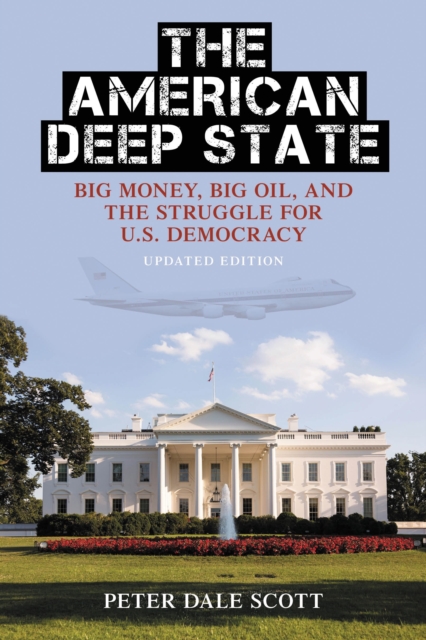
The American deep state: big money, big oil, and the struggle for U.S. democracy
Now in a new edition updated through the unprecedented 2016 election, this timely book makes a compelling case for a hidden deep state of intelligence agencies, private companies, and billionaires that influence and often oppose U.S. policies.
eBook

CIRCULATION OF THE ELITE IN THE CHINESE COMMUNIST PARTY
The history of leadership change in the Chinese Communist Party (CCP) exemplifies Pareto's notion of circulation of the elite. To analyze it we have compiled a partially ranked dataset of members and alternates of the Politburo Standing Committee, Politburo, and Central Committee for the 1st through 18th National Party Congresses. Quantitative studies of leadership change in the CCP have typically focused on the fraction of new members in each political body from one Party Congress to the next, but the existence of partially ranked data calls for a more subtle quantification of leadership change. Thus, we define a new family of metrics which consider change within each political body, the magnitude of such change, and the importance of each change to CCP structure and policy. We use two of these metrics to compute the distances between each pair of successive, partially-ranked leadership lists in our dataset. Our results capture important political developments from the irregular leadership change of the early years to the subsequent transformation of the CCP into a more institutionalized polity. This metric-based analysis also supplements our understanding of anomalous leadership transitions, intra-Party dynamics, and systemic change in the CCP.
Journal Article
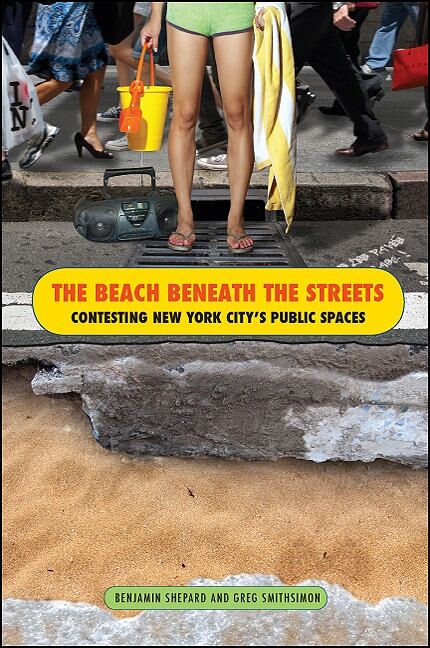
The Beach Beneath the Streets
Focusing on the liberating promise of public space, The Beach
Beneath the Streets examines the activist struggles of
communities in New York City-queer youth of color, gardeners,
cyclists, and anti-gentrification activists-as they transform
streets, piers, and vacant lots into everyday sites for autonomy,
imagination, identity formation, creativity, problem solving, and
even democratic renewal. Through ethnographic accounts of contests
over New York City's public spaces that highlight the tension
between resistance and repression, Shepard and Smithsimon identify
how changes in the control of public spaces-parks, street corners,
and plazas-have reliably foreshadowed elites' shifting designs on
the city at large. With an innovative taxonomy of public space, the
authors frame the ways spaces as diverse as gated enclaves, luxury
shopping malls, collapsing piers and street protests can be
understood in relation to one another. Synthesizing the fifty-year
history of New York's neoliberal transformation and the social
movements which have opposed the process, The Beach Beneath the
Streets captures the dynamics at work in the ongoing shaping
of urban spaces into places of repression, expression, control, and
creativity.
eBook