
Catalogue Search | MBRL


Are you sure you want to remove the book from the shelf?

{{itemTitle}}
17
result(s) for
"Elite (Social sciences) United States History 18th century."
Sort by:


Culture and Liberty in the Age of the American Revolution
In his new book, Michal Jan Rozbicki undertakes to bridge the gap between the political and the cultural histories of the American Revolution. Through a careful examination of liberty as both the ideological axis and the central metaphor of the age, he is able to offer a fresh model for interpreting the Revolution. By establishing systemic linkages between the histories of the free and the unfree, and between the factual and the symbolic, this framework points to a fundamental reassessment of the ways we think about the American Founding.
Rozbicki moves beyond the two dominant interpretations of Revolutionary liberty-one assuming the Founders invested it with a modern meaning that has in essence continued to the present day, the other highlighting its apparent betrayal by their commitment to inequality. Through a consistent focus on the interplay between culture and power, Rozbicki demonstrates that liberty existed as an intricate fusion of political practices and symbolic forms. His deeply historicized reconstruction of its contemporary meanings makes it clear that liberty was still understood as a set of privileges distributed according to social rank rather than a universal right. In fact, it was because the Founders considered this assumption self-evident that they felt confident in publicizing a highly liberal, symbolic narrative of equal liberty to represent the Revolutionary endeavor. The uncontainable success of this narrative went far beyond the circumstances that gave birth to it because it put new cultural capital-a conceptual arsenal of rights and freedoms-at the disposal of ordinary people as well as political factions competing for their support, providing priceless legitimacy to all those who would insist that its nominal inclusiveness include them in fact.
eBook

Harnessing Harmony
Following the creation of the United States, profound disagreements remained over how to secure the survival of the republic and unite its diverse population. In this pathbreaking account, Billy Coleman uses the history of American music to illuminate the relationship between elite power and the people from the early national period to the Civil War. Based on deep archival research in sources such as music periodicals, songbooks, and manuals for musical instruction, Coleman argues that a particular ideal of musical power provided conservative elites with an attractive road map for producing the harmonious union they desired. He reassesses the logic behind the decision to compose popular patriotic anthems like \"The Star-Spangled Banner,\" reconsiders the purpose of early American campaign songs, and brings to life a host of often forgotten but fascinating musical organizations and individuals. The result is not only a striking interpretation of music in American political life but also a fresh understanding of conflicts that continue to animate American democracy.
eBook

Surnames and Social Mobility in England, 1170–2012
Using educational status in England from 1170 to 2012, we show that the rate of social mobility in any society can be estimated from knowledge of just two facts: the distribution over time of surnames in the society and the distribution of surnames among an elite or underclass. Such surname measures reveal that the typical estimate of parent–child correlations in socioeconomic measures in the range of 0.2–0.6 are misleading about rates of overall social mobility. Measuring education status through Oxbridge attendance suggests a generalized intergenerational correlation in status in the range of 0.70–0.90. Social status is more strongly inherited even than height. This correlation is unchanged over centuries. Social mobility in England in 2012 was little greater than in preindustrial times. Thus there are indications of an underlying social physics surprisingly immune to government intervention.
Journal Article
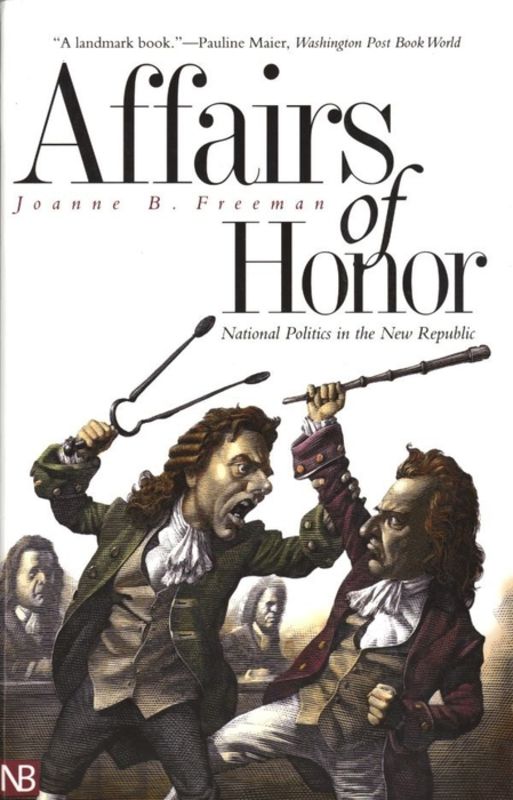
Affairs of Honor
In this extraordinary book, Joanne Freeman offers a major reassessment of political culture in the early years of the American republic. By exploring both the public actions and private papers of key figures such as Thomas Jefferson, Aaron Burr, and Alexander Hamilton, Freeman reveals an alien and profoundly unstable political world grounded on the code of honor. In the absence of a party system and with few examples to guide America's experiment in republican governance, the rituals and rhetoric of honor provided ground rules for political combat. Gossip, print warfare, and dueling were tools used to jostle for status and form alliances in an otherwise unstructured political realm. These political weapons were all deployed in the tumultuous presidential election of 1800-an event that nearly toppled the new republic.By illuminating this culture of honor, Freeman offers new understandings of some of the most perplexing events of early American history, including the notorious duel between Burr and Hamilton. A major reconsideration of early American politics,Affairs of Honoroffers a profoundly human look at the anxieties and political realities of leaders struggling to define themselves and their role in the new nation.
eBook
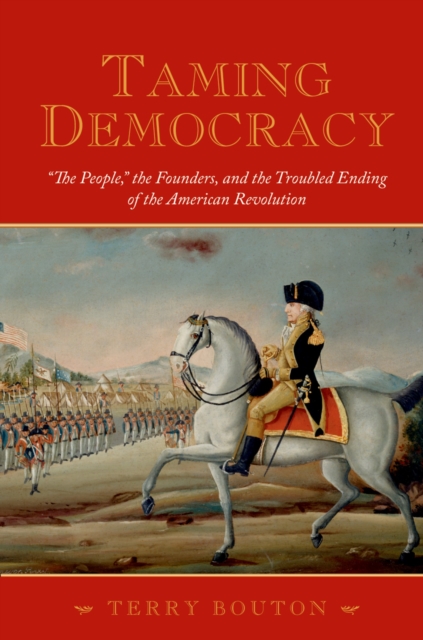
Taming Democracy
Americans are fond of reflecting upon the Founding Fathers, the noble group of men who came together to force out the tyranny of the British and bring democracy to the land. Unfortunately, as Terry Bouton shows in this highly provocative first book, the Revolutionary elite often seemed as determined to squash democracy after the war as they were to support it before. Centering on Pennsylvania, the symbolic and logistical center of the Revolution, Bouton shows how this radical shift in ideology spelled tragedy for hundreds of common people. Leading up to the Revolution, Pennsylvanians were united in their opinion that “the people” (i.e. white men) should be given access to the political system, and that some degree of wealth equality (i.e. among white men) was required to ensure that political freedom prevailed. As the war ended, Pennsylvania’s elites began brushing aside these ideas, using their political power to pass laws to enrich their own estates and hinder political organization by their opponents. By the 1780s, they had reenacted many of the same laws that they had gone to war to abolish, returning Pennsylvania to a state of economic depression and political hegemony. This unhappy situation led directly to the Whiskey and Fries rebellions, popular uprisings both put down by federal armies. Bouton’s work reveals a unique perspective, showing intimately how the war and the events that followed affected poor farmers and working people. Bouton introduces us to unsung heroes from this time--farmers, weavers, and tailors who put their lives on hold to fight to save democracy from the forces of “united avarice.” We also get a starkly new look at some familiar characters from the Revolution, including Benjamin Franklin, Alexander Hamilton, and George Washington, who Bouton strives to make readers see as real, flawed people, blinded by their own sense of entitlement. Taming Democracy represents a turning point in how we view the outcomes of the Revolutionary War and the motivations of the powerful men who led it. Its eye-opening revelations and insights make it an essential read for all readers with a passion for uncovering the true history of America.
eBook


\Negro Harry's School\
Eighteenth-century letters and poor relief case records reveal the remarkable story of Harry, the first African American teacher, and his school. Beginning in 1743 in Charles Town and persevering for over 30 years, Harry taught as many as 1,000 slaves to read. Despite laws prohibiting teaching slaves such as the Slave Act of 1740, opposition from Wealthy merchants and planters, enmity of poor whites, shifting and uncertain financial and political support, epidemics, natural disasters, assault, and his own confinement for madness, Harry continued to teach, gaining the support of wealthy elites and future founding fathers. Historical documents also detail how economic and social welfare policies elevated the interests of some slaves above those of poor whites and granted select city-dwelling slaves a measure of autonomy and even privilege.
Journal Article

Bureaucracy, “domesticated” elites, and the abolition of capital punishment. Processes of state-formation and the number of executions in England and Habsburg Austria between 1700 and 1914
The paper argues that the introduction of bureaucracy civilized death penalty and brutal punishment. The study bases on a quantitative analysis of the numbers of death sentences and executions in England and Habsburg Austria from 1700 to 1914 and on a qualitative analysis of historical literature about the death penalty in both countries. The paper shows that professional law enforcement specialists, bureaucrats, civil servants, and detached juridical stuff formed a new class of “domesticated middlemen elites”. In strong states, this new class becomes the dominating group. In weak states, however, old elites that combine economic and political power preserve their privileged positions. For them capital punishment is the most proper mean to deter criminals because old elites fear the alternative: the introduction of strong-state institutions. Beside obvious power struggles between central and local elites—which effects penal policy pro and con capital punishment—there is a civilizing process going beneath the surface of rationality and political interests. In strong states, the formation of a “habitus” averse to brutal punishment is initiated amongst “domesticated middlemen elites” who are acting in peaceful living- and working conditions.
Journal Article

Who Should Rule at Home?
InWho Should Rule at Home?Joyce D. Goodfriend argues that the high-ranking gentlemen who figure so prominently in most accounts of New York City's evolution from 1664, when the English captured the small Dutch outpost of New Amsterdam, to the eve of American independence in 1776 were far from invincible and that the degree of cultural power they held has been exaggerated. The urban elite experienced challenges to its cultural authority at different times, from different groups, and in a variety of settings.
Goodfriend illuminates the conflicts that pitted the privileged few against the socially anonymous many who mobilized their modest resources to creatively resist domination. Critics of orthodox religious practice took to heart the message of spiritual rebirth brought to New York City by the famed evangelist George Whitefield and were empowered to make independent religious choices. Wives deserted husbands and took charge of their own futures. Indentured servants complained or simply ran away. Enslaved women and men carved out spaces where they could control their own lives and salvage their dignity. Impoverished individuals, including prostitutes, chose not to bow to the dictates of the elite, even though it meant being cut off from the sources of charity. Among those who confronted the elite were descendants of the early Dutch settlers; by clinging to their native language and traditional faith they preserved a crucial sense of autonomy.
eBook