
Catalogue Search | MBRL


Are you sure you want to remove the book from the shelf?

{{itemTitle}}
130
result(s) for
"Elite Sport Development"
Sort by:

Protective factors of burnout among Norwegian sport coaches
The main purpose of the current study was to explore burnout and protective factors among elite sport coaches, more specifically how sex, perceived coach performance, grit, social competence and social resources was uniquely associated with coaches' work-related, athlete-related, and personal-related burnout among Norwegian coaches in a variety of sports. A sample of 69 coaches were recruited from a Norwegian education coach program arranged by the Norwegian Olympic sport center (NOSC), a national Norwegian organization that is part of Norwegian Olympic and Paralympic Committee and Confederation of Sports. Three regression analysis' revealed that burnout was predicted by grit and social resources. The models explained 46% (work-related burnout), 25% (athlete-related burnout), and 29% (personal-related burnout) of the variance. Neither sex, perceived coach performance nor social competence was statistically significant for any of the three models. The current study shows that both traits (grit) and states (social resources) have significant impact as protective factors towards burnout among sport coaches. These findings are expected and support previous research. The current results also show that the coaches' perception of their own efficacy in the form of performance level or social competence have importance. These findings contrast previous research and need further scrutiny.
Journal Article

Transparency and accountability in Brazilian National Sport Organisations
This study examines the prevalence of transparency and accountability in Brazilian National Sports Organizations. Transparency is an organization's ability to acquire and disseminate accurate and relevant information and knowledge. Accountability refers to an organization's duty or obligation to provide an account or explanation of their actions. Both transparency and accountability are associated with modernization and good governance. In this study, we collected annual indicators of transparency and accountability between 2015 and 2021 for 34 Brazilian National Sports Organizations. Data were analyzed using Generalized Estimating Equations (GEE). The three key findings of the research were as follows: (1) transparency and accountability increased over the years; (2) there was selective growth in transparency and accountability dimensions; and (3) there was stagnation for audit (AUD), an accountability indicator. These findings suggest that the modernization of Brazilian National Sports Organizations is underway, but there is still potential for improvement.
Journal Article

Sport Policy and Development
Who makes sport policy and why do we need it?
What is the purpose of sport development programmes?
Sport Policy and Development answers these questions and more by closely examining the complex relationships between modern sport, sport policy and development and other aspects of the wider society. These important issues are explored via detailed case studies of key aspects of sport policy and sport development activity, including:
school sport and physical education
social inclusion
health
elite sport
sporting mega-events.
Each case study demonstrates the ways in which the sport policy and development fields have changed, and are continually changing in response to the increasing political, social and cultural significance of sport. The book helps the reader to understand the complexities of the sport policy-making process, the increasing intervention of government in the sport policy and development fields, and how the short-term, ever-changing and frequently contradictory political priorities of government come to impact on the practice of sport policy and development.
Accessible and engaging, this textbook is an invaluable introduction to sport policy and sport development for students, practitioners and policy-makers alike.
Daniel Bloyce is Senior Lecturer in the Sociology of Sport and Exercise and Co-Director of the Chester Centre for Research into Sport and Society at the University of Chester, UK. He is a co-editor of the International Journal of Sport Policy .
Andy Smith is Senior Lecturer in the Sociology of Sport and Exercise at the University of Chester, UK. He is a co-editor of the International Journal of Sport Policy , and co-author of Disability, Sport and Society and An Introduction to Drugs in Sport. Both books are published by Routledge (2009).
List of Tables. Acknowledgements. List of Abbreviations. Introduction 1. The Sport Policy Process: a Sociological Perspective 2. The Emergence and Development of Sport Policy 3. Youth Sport Development: Physical Education, Schools Sport and Community Club Links 4. Community Sport Development: Promoting Social Inclusion 5. Community Sport Development: Promoting Health 6. Elite Sport Development: Promoting International Success 7. The Politics and Policy of Mega-Events: A Case Study of London 2012. References. Index.
\"In a context of ever-growing state involvement in sport, here is a much- needed, comprehensive review of all areas of sport policy, paying equal attention to policy development, implementation, and the outcomes which, as this book shows, are usually rather different to all the key actors' intentions \", Professor Ken Roberts, School of Sociology and Social Policy, University of Liverpool
\"An extremely useful teaching aid ... It makes a clear, concise and important contribution to the existing sport policy literature\", Peter Millward, Managing Leisure
\"Many books aspire to be both accessible to practitioners and academics but encounter problems truly speaking to the former. This book does so by using accessible language and adopting a strong narrative throughout each of the chapters making the reader keen to find out what happens next in the sports development policy story. It also manages to engage all aspects of the sports development spectrum from elite sport through to grass roots activity. For those specialising in either area, this book will provide valuable insights into the broader context for sport.\", Amy Shephard, Leisure Studies
eBook

The development of swimming in Brazil and its structural intervening factors (El desarrollo de la natación en Brasil y sus factores estructurales intervinientes)
This study aimed to identify how relationships are established in the development of swimming in a Brazilian sports entity, and hypothesized the existence of a structural dynamics sustained by hidden mechanisms of domination. The research consisted of a case study and the sample was a Brazilian sports entity in swimming, chosen from the analysis of the national classification in the period 2013-2018. Semi-structured interviews were conducted with two managers, two athletes and two coaches of the entity. The study had the following analytical categories: structured relationship between performance and participatory sports; coach influence on athlete development; financial support; sports facilities that provide good training conditions; club strategic planning; organization of a public policy framework for sport; political and sports structure; sports talent identification. After systematizing the data, these were analyzed together with Pierre Bourdieu's sociological theory. From the analyzed case, one can confirm the hypothesis that swimming has a relative social distinction in the Brazilian sports sphere, as links hidden mechanisms of domination in a structural way in its management, such as the different positions held in the specific subfield, the principle of capital differentiation, as well as the importance of raising public funds and the symbolic power of the entity.
Journal Article

Routledge Handbook of Sports Performance Analysis
Sport performance analysis techniques help coaches, athletes and sport scientists develop an objective understanding of actual sport performance, as opposed to self-report, fitness tests or laboratory based experiments. For example, contemporary performance analysis enables elite sports people and coaches to obtain live feedback of match statistics and video sequences using flexible internet systems, systems that have become an indispensible tool for all those involved in high performance sport. The Routledge Handbook of Sports Performance Analysis is the most comprehensive guide to this exciting and dynamic branch of sport science ever to be published.
The book explores performance analysis across the four main contexts in which it is commonly used: support for coaches and athletes; the media; judging sport contests, and academic research. It offers an up-to-date account of methodological advances in PA research, assesses the evidence underpinning contemporary theories of sport performance, and reviews developments in applied PA across a wide range of sports, from soccer to track and field athletics. Covering every important aspect of PA, including tactics, strategy, mechanical aspects of technique, physical aspects of performance such as work-rate, coach behaviour and referee behaviour, this is an essential reference for any serious student, researcher or practitioner working in sport performance analysis, sport coaching or high performance sport.
eBook

Physical profiling of international cricket players: an investigation between bowlers and batters
This study aimed to develop a physical profile of international cricketers, and investigate if positional differences exist between bowlers and batters. Nineteen, international male cricketers, eleven bowlers (age 24.1 ± 5.2 years; height 179.73 ± 5.27 cm; weight 73.64 ± 6.65 kg), and eight batters (age 22.9 ± 3.8 years; height 180.25 ± 5.57 cm; weight 77.01 ± 8.99 kg) participated in this study. The physical test battery included; power, speed, strength and aerobic fitness tests. Batters demonstrated significantly higher scores for the countermovement jump (p < 0.03; ES = -1.55) and squat jump (p < 0.03; ES = -0.98). Furthermore, batters showed non-significant but small ES for faster 0-5 m (ES = 0.40) and 0-10 m (ES = 0.35) sprint times, superior hand grip strength (ES = -0.20), and higher Yo-Yo intermittent recovery test scores (ES = -0.46). Bowlers showed non-significant but small ES for faster 5 km time trials (ES = -0.51), lower bodyweight (ES = -0.42) and lower body fat percentage (ES = -0.30). However, intra-positional (i.e., seam and spin bowlers) and individual differences amongst players were observed. The physical profiles presented in this study can be used by coaches responsible for the physical development of cricket players to compare their existing data with. Furthermore, it is recommended that practitioners account for individual physical fitness profiles in addition to team profiles, to effectively design and evaluate tailored programs, with the aim of improving both physical and cricket performance.
Journal Article
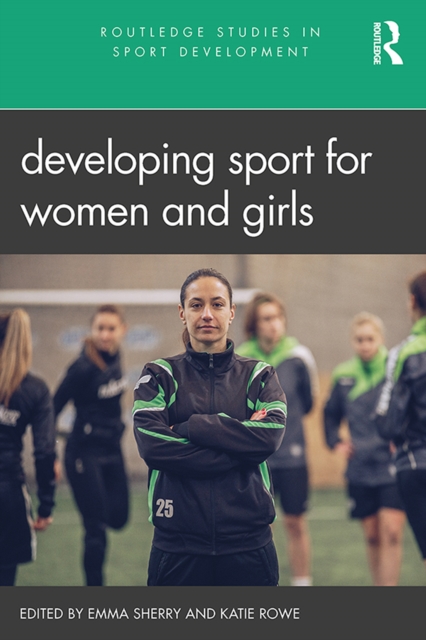
Developing Sport for Women and Girls
Women and girls are often excluded from organised sport or face challenges in accessing sport or developing within sport. This is the first book to focus on sport development for women and girls. It provides a theoretical and practical framework for readers in the emerging field of sport development.
Developing Sport for Women and Girls examines both the development of sport, and development through sport with expert contributions from Australasia, North America and Europe. It offers critical analysis of contemporary sport development, from high performance pathways to engaging diverse communities to the use of sport to empower women and girls. Each chapter explores various contexts of sport development and sport for development theory with a specific focus on women and girls. It covers key topics such as health, education, sexual orientation and participation across the lifecourse, and features international case studies in every chapter.
This is essential reading for students, academics, researchers and practitioners working in the area of sport development or sport management.
eBook
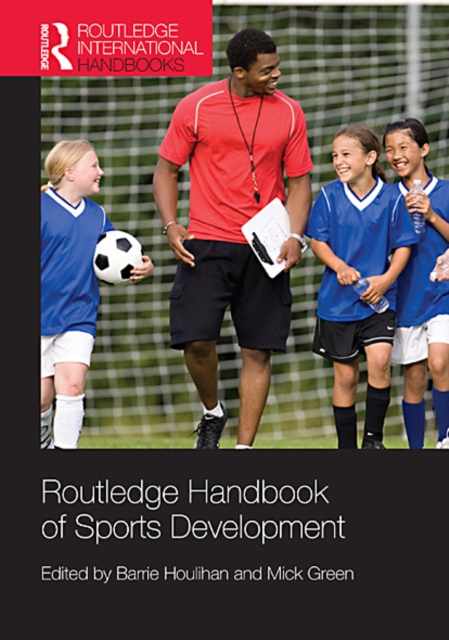
Routledge Handbook of Sports Development
Sports development has become a prominent concern within both the academic study of sport and within the organisation and administration of sport. Now available in paperback, the Routledge Handbook of Sports Development is the first book to comprehensively map the wide-ranging territory of sports development as an activity and as a policy field, and to offer a definitive survey of current academic knowledge and professional practice.
Spanning the whole spectrum of activity in sports development, from youth sport and mass participation to the development of elite athletes, the book identifies and defines the core functions of sports development, exploring the interface between sports development and cognate fields such as education, coaching, community welfare and policy. The book presents important new studies of sports development around the world, illustrating the breadth of practice within and between countries, and examines the most important issues facing practitioners within sports development today, from child protection to partnership working.
With unparalleled depth and breadth of coverage, the Routledge Handbook of Sports Development is the definitive guide to policy, practice and research in sports development. It is essential reading for all students, researchers and professionals with an interest in this important and rapidly evolving discipline.
eBook

Exploring elite athletes’ entrepreneurial intentions: unraveling the impact of high-level sports career in skills development
The sporting career of elite athletes is a limited, inevitably terminal and often short career, with an early retirement process, so elite athletes should consider having a second professional career. In this sense, entrepreneurship is a popular choice for professional athletes and, moreover, they are considered to be well equipped, in terms of personality and skills, for this entrepreneurial career. The aim of this study is to analyse the influence of different entrepreneurial skills on the Entrepreneurial Intentions of elite athletes, also taking into account other factors such as whether they follow a Dual Career. In this way, the aim is to show how the entrepreneurial skills acquired and developed through high-level sport (resilience, proactivity and creativity) can influence the Entrepreneurial Intentions of these athletes, and help them to succeed in their professional career after retirement. The sample was composed by 200 elite athletes from Spain. Results showed that these athletes perceived a high degree of development of the skills. Besides, three solutions were obtained for high levels of Entrepreneurial Intentions that explained the 38% of these cases. The combinations of high levels of resilience with high levels of creativity were presented in all the solutions in combination with other variables, and proactivity, in a lesser extent, in two solutions. Finally, some theoretical and practical implications are proposed in order both to improve the research on the topic and highlight the importance of educational training of elite athletes to increase their possibilities to success in their future entrepreneurial career.
Journal Article

Analysis of the Athletic Career and Retirement Depending on the Type of Sport: A Comparison between Individual and Team Sports
The type of sport practiced may shape the athletic career, considered as the period in which an athlete is dedicated to obtaining their maximum performance in one or more sports. The aim of this study was to compare athletic careers and retirement in individual and team sports. Four hundred and ten former elite athletes (38.5 ± 7.6 years) answered an ad hoc questionnaire; 61.5% were men and 38.5% women; 45.1% were from individual sports, while 54.9% were from team sports. It emerged that the age of maximum sports performance and the retirement age occurred significantly later in team sports than in individual sports (U = 15,042 and U = 12,624.5, respectively p < 0.001). Team sports athletes combined their athletic career with work to a greater extent than those from individual sports (χ2 (3, N = 408) = 14.2; p = 0.003; Cv = 0.187). Individual sports athletes trained more hours per week (30.0 ± 11.7 h) than those involved in team sports (19.2 ± 10.7 h; U = 9682; p < 0.001). These athletes (team sports) were in a better economic and working situation at retirement transition (χ2 (3, N = 406) = 23.9; p < 0.001; Cv = 0.242). Individual sports athletes perform physical activity more frequently than team sports athletes (U = 16,267.5; p = 0.045), while team sports athletes participate more actively in veteran competitions (χ2 (1, N = 390) = 3.9; p = 0.047; Cv = 0.104) and more frequently attend events as spectators (χ2 (1, N = 390) = 8.4; p = 0.004; Cv = 0.151). dual career support providers should be aware that team sports athletes enjoy a longer athletic career, and they are in a better position to face the retirement transition than individual sports athletes.
Journal Article