
Catalogue Search | MBRL


Are you sure you want to remove the book from the shelf?

{{itemTitle}}
20,619
result(s) for
"Elizabethans"
Sort by:

Speaking of the Moor
Selected byChoicemagazine as an Outstanding Academic Title \"Speak of me as I am,\" Othello, the Moor of Venice, bids in the play that bears his name. Yet many have found it impossible to speak of his ethnicity with any certainty. What did it mean to be a Moor in the early modern period? In the late sixteenth and early seventeenth centuries, when England was expanding its reach across the globe, the Moor became a central character on the English stage. InThe Battle of Alcazar,Titus Andronicus,Lust's Dominion, andOthello, the figure of the Moor took definition from multiple geographies, histories, religions, and skin colors. Rather than casting these variables as obstacles to our-and England's-understanding of the Moor's racial and cultural identity, Emily C. Bartels argues that they are what make the Moor so interesting and important in the face of growing globalization, both in the early modern period and in our own. InSpeaking of the Moor, Bartels sets the early modern Moor plays beside contemporaneous texts that embed Moorish figures within England's historical record-Richard Hakluyt'sPrincipal Navigations, Queen Elizabeth's letters proposing the deportation of England's \"blackamoors,\" and John Pory's translation ofThe History and Description of Africa. Her book uncovers the surprising complexity of England's negotiation and accommodation of difference at the end of the Elizabethan era.
eBook

The Tudor Play of Mind
Contrary to the widespread assumption that Elizabethan drama grows
out of an essentially homiletic tradition, The Tudor Play of
Mind proposes that many important plays-including such diverse
works as Gorboduc, Endimion, Tamburlaine, The Spanish Tragedy,
Every Man in His Humour, and Bussy D'Ambois -are
informed by the ancient rhetorical tradition of posing questions
and arguing them in utramque partem emphasized in humanist
education. This accounts for the complex and often ambivalent
responses they demand. In support of this thesis, Joel B. Altman
shows how abstract debate questions were developed into
increasingly subtle mimetic fictions in the sixteenth century. He
discusses the significance of this process for the drama through
detailed analyses of early debate plays, the Terentian commentaries
and English comedy, Lyly's court allegories, Senecan tragedy, and
the experimental plays of Marlowe. Altman's argument that Tudor
playwrights offered their audiences dramatized inquiries will
profoundly affect our interpretation of individual plays and our
assessment of the larger cultural function of drama in the period.
This title is part of UC Press's Voices Revived program, which
commemorates University of California Press's mission to seek out
and cultivate the brightest minds and give them voice, reach, and
impact. Drawing on a backlist dating to 1893, Voices Revived makes
high-quality, peer-reviewed scholarship accessible once again using
print-on-demand technology. This title was originally published in
1978.
eBook
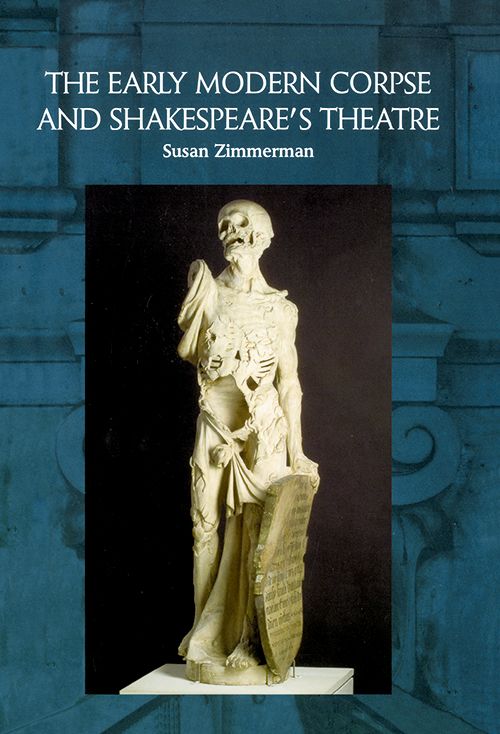
The Early Modern Corpse and Shakespeare's Theatre
Within a theoretical framework that makes use of history, psychoanalysis and anthropology, The Early Modern Corpse and Shakespeare's Theatre explores the relationship of the public theatre to the question of what constituted the 'dead' in early modern English culture.Susan Zimmerman argues that concepts of the corpse as a semi-animate, generative and indeterminate entity were deeply rooted in medieval religious culture. Such concepts ran counter to early modern discourses that sought to harden categorical distinctions between body/spirit, animate/inanimate - in particular, the attacks of Reformists on the materiality of 'dead' idols, and the rationale of the new anatomy for publicly dissecting 'dead' bodies. Zimmerman contends that within this context, theatrical representations of the corpse or corpse/revenant - as seen here in the tragedies of Shakespeare and his contemporaries - uniquely showcased the theatre's own ideological and performative agency. Features*Original in its conjunction of critical theory (Bataille, Kristeva, Lacan, Benjamin) with an historical account of the shifting status of the corpse in late medieval and early modern England.*The first study to demonstrate connections between the meanings attached to the material body in early modern Protestantism, the practice of anatomical dissection, and the English public theatre.*Strong market appeal to scholars and graduate students with interests in the theatre of Shakespeare and his contemporaries, early modern religion and science, and literary theory. *Relevant to advanced undergraduates taking widely taught courses in Shakespeare and in Renaissance drama.
eBook
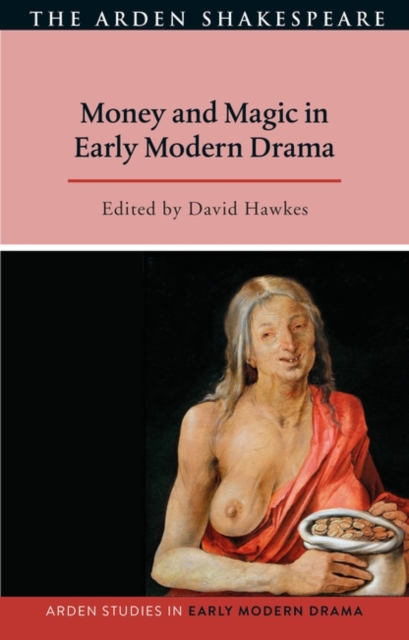
Money and magic in early modern drama
Money, magic and the theatre were powerful forces in early modern England.Money was acquiring an independent, efficacious agency, as the growth of usury allowed financial signs to reproduce without human intervention.
eBook

Sexual Types
Sexual types on the early modern stage are at once strange and familiar, associated with a range of \"unnatural\" or \"monstrous\" sexual and gender practices, yet familiar because readily identifiable as types: recognizable figures of literary imagination and social fantasy. From the many found in early modern culture, Mario DiGangi here focuses on six types that reveal in particularly compelling ways, both individually and collectively, how sexual transgressions were understood to intersect with social, gender, economic, and political transgressions.Building on feminist and queer scholarship, Sexual Types demonstrates how the sodomite, the tribade (a woman-loving woman), the narcissistic courtier, the citizen wife, the bawd, and the court favorite function as sites of ideological contradiction in dramatic texts. On the one hand, these sexual types are vilified and disciplined for violating social and sexual norms; on the other hand, they can take the form of dynamic, resourceful characters who expose the limitations of the categories that attempt to define and contain them. In bringing sexuality and character studies into conjunction with one another, Sexual Types provides illuminating new readings of familiar plays, such as Shakespeare's A Midsummer Night's Dream and The Winter's Tale, and of lesser-known plays by Fletcher, Middleton, and Shirley.
eBook

Water and Cognition in Early Modern English Literature
Water and cognition seem unrelated things, the one a physical environment and the other an intellectual process. The essays in this book show how bringing these two modes together revitalizes our understanding of both. Water and especially oceanic spaces have been central to recent trends in the environmental humanities and premodern ecocriticism. Cognition, including ideas about the “extended mind” and distributed cognition, has also been important in early modern literary and cultural studies over the past few decades. This book aims to think “water” and “cognition” as distinct critical modes and also to combine them in what we term “watery thinking.” Water and Cognition brings together cognitive science and ecocriticism to ask how the environment influences how humans think, and how they think about thinking. The collection explores how water — as element, as environment, and as part of our bodies — affects the way early modern and contemporary discourses understand cognition.
eBook

Labors Lost
Labors Lost offers a fascinating and wide-ranging account of working women's behind-the-scenes and hitherto unacknowledged contributions to theatrical production in Shakespeare's time. Natasha Korda reveals that the purportedly all-male professional stage relied on the labor, wares, ingenuity, and capital of women of all stripes, including ordinary crafts- and tradeswomen who supplied costumes, props, and comestibles; wealthy heiresses and widows who provided much-needed capital and credit; wives, daughters, and widows of theater people who worked actively alongside their male kin; and immigrant women who fueled the fashion-driven stage with a range of newfangled skills and commodities.Combining archival research on these and other women who worked in and around the playhouses with revisionist readings of canonical and lesser-known plays, Labors Lost retrieves this lost history by detailing the diverse ways women participated in the work of playing, and the ways male players and playwrights in turn helped to shape the cultural meanings of women's work. Far from a marginal phenomenon, the gendered division of theatrical labor was crucial to the rise of the commercial theaters in London and had an influence on the material culture of the stage and the dramatic works of Shakespeare and his contemporaries.
eBook

Islamic Conversion and Christian Resistance on the Early Modern Stage
This book explores the threat of Christian conversion to Islam in twelve early modern English plays. In works by Shakespeare, Marlowe, Massinger, and others, conversion from Christianity to Islam is represented as both tragic and erotic, as a fate worse than death and as a sexual seduction.
eBook

This England
This book is a response to a demand for a history which is no less social than political, investigating what it meant to be a citizen of England living through the 1570s and 1580s. It examines the growing conviction of ‘Englishness’ in the sixteenth century, through the rapidly developing English language; the reinforcement of cultural nationalism as a result of the Protestant Reformation; the national and international situation of England at a time of acute national catastrophe; and through Queen Elizabeth I, the last of her line, who remained unmarried throughout her reign, refusing to even discuss the succession to her throne. The book explores the conviction among leading Elizabethans that they were citizens and subjects, also responsible for the safety of their commonwealth. The tensions between this conviction, born from a childhood spent in the Renaissance classics and in the subjection to the Old Testament of the English Bible, and the dynastic claims of the Tudor monarchy, are all explored at length. Studies of a number of writers who fixed the image of sixteenth-century England for some time to come; Foxe, Camden and other pioneers of the discovery of England are also included.
eBook

Practicing the City: Early Modern London on Stage
In late-sixteenth-century London, the commercial theaters undertook a novel experiment, fueling a fashion for plays that trafficked in the contemporary urban scene. But beyond the stage's representing the everyday activities of the expanding metropolis, its unprecedented urban turn introduced a new dimension into theatrical experience, opening up a reflexive space within which an increasingly diverse population might begin to \"practice\" the city. In this, the London stage began to operate as a medium as well as a model for urban understanding. Practicing the City traces a range of local engagements, onstage and off, in which the city's population came to practice new forms of urban sociability and belonging. With this practice, Levine suggests, city residents became more self-conscious about their place within the expanding metropolis and, in the process, began to experiment in new forms of collective association. Reading an array of materials, from Shakespeare and Middleton to plague bills and French-language manuals, Levine explores urban practices that push against the exclusions of civic tradition and look instead to the more fluid relations playing out in the disruptive encounters of urban plurality.
eBook