
Catalogue Search | MBRL


Are you sure you want to remove the book from the shelf?

{{itemTitle}}
349
result(s) for
"Eloquence."
Sort by:

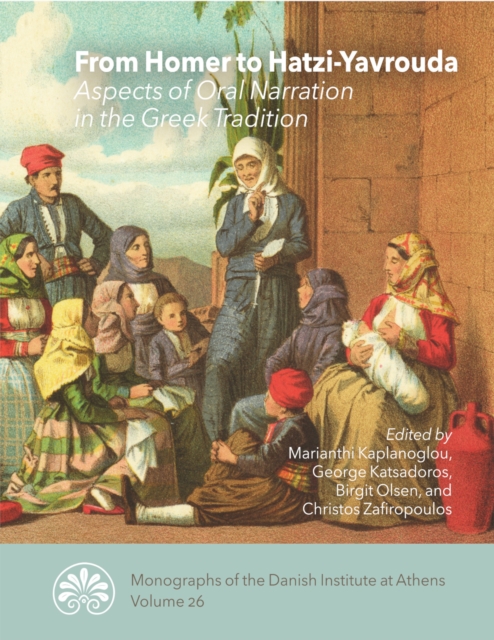
From Homer to Hatzi-Yavrouda
\"From Homer to Hatzi-Yavrouda - Aspects of Oral Narration in the Greek Tradition\" provides a multidisciplinary discussion of the concept of orality in the framework of Greek narrative tradition, from Antiquity to the 21st century.Orality is a prominent concept in contemporary folkloristics, philology, and other related fields and a basic concept.
eBook

The Call
This book is a unique examination of the phenomenon of the call. Characterizing the call as a rhetorical event, the book identifies how speakers can use eloquence in the service of truth. Authors Craig R. Smith and Michael J. Hyde offer the rare combination of a phenomenology of the call linked closely to eloquence and explore this linkage by examining the components of eloquence, including examples of its misuse by George W. Bush and Donald Trump. The bulk of the text examines case studies of eloquence in the service of truth including epideictic, forensic, and deliberative eloquence, with examples drawn from addresses by Barack Obama, Daniel Webster, Ronald Reagan, Margaret Chase Smith, Susan Collins, and Mitt Romney. The authors also examine the Epistles of St. Paul, the writings of St. Augustine, and the preaching of Jonathan Edwards. Finally, the book explores eloquence in filmic narratives and dialogic communication between artists and writers, concluding with a study of the sublime and how it is evoked with awe using the work of Annie Dillard.
eBook

Surgery of Insular Diffuse Gliomas—Part 2: Probabilistic Cortico-Subcortical Atlas of Critical Eloquent Brain Structures and Probabilistic Resection Map During Transcortical Awake Resection
Abstract
BACKGROUND
Insular diffuse glioma surgery is challenging, and tools to help surgical planning could improve the benefit-to-risk ratio.
OBJECTIVE
To provide a probabilistic resection map and frequency atlases of critical eloquent regions of insular diffuse gliomas based on our surgical experience.
METHODS
We computed cortico-subcortical “eloquent” anatomic sites identified intraoperatively by direct electrical stimulations during transcortical awake resection of insular diffuse gliomas in adults.
RESULTS
From 61 insular diffuse gliomas (39 left, 22 right; all left hemispheric dominance for language), we provided a frequency atlas of eloquence of the opercula (left/right; pars orbitalis: 0%/5.0%; pars triangularis: l5.6%/4.5%; pars opercularis: 37.8%/27.3%; precentral gyrus: 97.3%/95.4%; postcentral and supramarginal gyri: 75.0%/57.1%; temporal pole and superior temporal gyrus: 13.3%/0%), which tailored the transcortical approach (frontal operculum to reach the antero-superior insula, temporal operculum to reach the inferior insula, parietal operculum to reach the posterior insula). We provided a frequency atlas of eloquence identifying the subcortical functional boundaries (36.1% pyramidal pathways, 50.8% inferior fronto-occipital fasciculus, 13.1% arcuate and superior longitudinal fasciculi complex, 3.3% somatosensory pathways, 8.2% caudate and lentiform nuclei). Vascular boundaries and increasing errors during testing limited the resection in 8.2% and 11.5% of cases, respectively. We provided a probabilistic 3-dimensional atlas of resectability.
CONCLUSION
Functional mapping under awake conditions has to be performed intraoperatively in each patient to guide surgical approach and resection of insular diffuse gliomas in right and left hemispheres. Frequency atlases of opercula eloquence and of subcortical eloquent anatomic boundaries, and probabilistic 3-dimensional atlas of resectability could guide neurosurgeons.
Journal Article

Defending the Gate of Inimitability: Abū Rashīd al-Naysābūrī (d. After 415/1024) and the Freethinker Critiques
The intellectual legacy of the Baṣrān Muʿtazila has had a profound and lasting impact on the development of discussions on Qurʾānic inimitability. Numerous writings have been composed by Baṣrān Muʿtazila on the topic; among them is Iʿjāz al-Qurʾān by Abū Rashīd al-Naysābūrī, an unpublished manuscript preserved in the King Saud University Library under the number 7752. This paper focuses on the development of al-Naysābūrī’s understanding of Qurʾānic inimitability in the context of this manuscript, especially analysing his reception of early Muʿtazilī (specifically Bahshamī) thoughts on Qurʾānic inimitability. Moreover, it pays particular attention to al-Naysābūrī’s engagement with the critiques directed against the Bahshamī theory of Qurʾānic inimitability. This paper adopts a source-criticism approach to studying the manuscript and evaluating the historical development of its contents. It argues that the theoretical foundation underlying the theory of miraculous eloquence developed by ʿAbd al-Jabbār drew al-Naysābūrī’s attention towards a deep engagement with hypothetical dialogues inspired by the refutations of questions concerning Qurʾānic inimitability posed by the freethinkers’ movement. This engagement prompted al-Naysābūrī to adopt and assess numerous hypothetical frameworks and conditional views, including the ṣarfa theory, in his defence of Qurʾānic inimitability. This approach of addressing the freethinker critiques aligns greatly with the dynamic and responsive nature of Baṣrān Muʿtazila’s thoughts against freethinkers’ movement.
Journal Article

Preoperative assessment of eloquence in neurosurgery: a systematic review
Background and objectives
Tumor location and eloquence are two crucial preoperative factors when deciding on the optimal treatment choice in glioma management. Consensus is currently lacking regarding the preoperative assessment and definition of eloquent areas. This systematic review aims to evaluate the existing definitions and assessment methods of eloquent areas that are used in current clinical practice.
Methods
A computer-aided search of Embase, Medline (OvidSP), and Google Scholar was performed to identify relevant studies. This review includes articles describing preoperative definitions of eloquence in the study’s Methods section. These definitions were compared and categorized by anatomical structure. Additionally, various techniques to preoperatively assess tumor eloquence were extracted, along with their benefits, drawbacks and ease of use.
Results
This review covers 98 articles including 12,714 participants. Evaluation of these studies indicated considerable variability in defining eloquence. Categorization of these definitions yielded a list of 32 brain regions that were considered eloquent. The most commonly used methods to preoperatively determine tumor eloquence were anatomical classification systems and structural MRI, followed by DTI-FT, functional MRI and nTMS.
Conclusions
There were major differences in the definitions and assessment methods of eloquence, and none of them proved to be satisfactory to express eloquence as an objective, quantifiable, preoperative factor to use in glioma decision making. Therefore, we propose the development of a novel, objective, reliable, preoperative classification system to assess eloquence. This should in the future aid neurosurgeons in their preoperative decision making to facilitate personalized treatment paradigms and to improve surgical outcomes.
Journal Article


Toward a systematic grading for the selection of patients to undergo awake surgery: identifying suitable predictor variables
Awake craniotomy is the standard of care for treating language eloquent gliomas. However, depending on preoperative functionality, it is not feasible in each patient and selection criteria are highly heterogeneous. Thus, this study aimed to identify broadly applicable predictor variables allowing for a more systematic and objective patient selection.
We performed post-hoc analyses of preoperative language status, patient and tumor characteristics including language eloquence of 96 glioma patients treated in a single neurosurgical center between 05/2018 and 01/2021. Multinomial logistic regression and stepwise variable selection were applied to identify significant predictors of awake surgery feasibility.
Stepwise backward selection confirmed that a higher number of paraphasias, lower age, and high language eloquence level were suitable indicators for an awake surgery in our cohort. Subsequent descriptive and ROC-analyses indicated a cut-off at ≤54 years and a language eloquence level of at least 6 for awake surgeries, which require further validation. A high language eloquence, lower age, preexisting semantic and phonological aphasic symptoms have shown to be suitable predictors.
The combination of these factors may act as a basis for a systematic and standardized grading of patients' suitability for an awake craniotomy which is easily integrable into the preoperative workflow across neurosurgical centers.
Journal Article

« Percutere animum ». La percussion, un ressort némotechnique dans les rhétoriques grecque et latine
Notre article a pour objectif de réfléchir à la spécificité mnémotechnique du son percuté. À partir de l’étude de l’opérativité argumentative, rhétorique et cognitive du son percuté qui transparaît dans les écrits et les pratiques des rhétoriciens grecs et latins, il formule en effet l’hypothèse selon laquelle le produire répond aux recommandations de l’art de la mémoire. Pour étayer cette hypothèse, il expose en quoi les ressorts visuels et sonores de l’art de la mémoire ne constituent pas seulement des artefacts du langage et de l’imagination, mais sont aussi des phénomènes sociaux, qui produisent et exploitent l’instrumentalité éthique des images et des sons. This paper deals with the mnemotechnic specificity of the percussive sound. By focusing on the argumentative, rhetorical and cognitive operativity of the percussive sound that appears in the Greek and Latine rhetoricians’ writings and practices, it hypothesizes that making a percussive sound responds to the recommendations of the art of memory. To defend this hypothesis, it explains to what extent the visual and sound resorts of the art of memory are not only language’s and imagination’s artifacts, but also constitute social phenomena, which produce and exploit the ethical instrumentality of images and sounds.
Journal Article