
Catalogue Search | MBRL


Are you sure you want to remove the book from the shelf?

{{itemTitle}}
31
result(s) for
"Embalming Egypt History."
Sort by:

Mummy
Documents the history and significance of mummies, both natural and man-made, and describes the principles and ceremonies associated with them.
BOOK
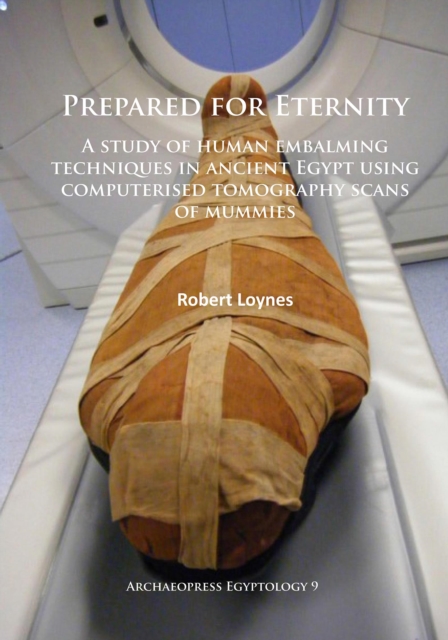
Prepared for Eternity
This publication brings together personal analyses of sixty CT scans of ancient Egyptian human mummies collected from many museums throughout the UK and continental Europe. The effect is that of performing 'virtual autopsies' ('virtopsies') allowing techniques of mummification to be examined.
eBook

Biomolecular analyses enable new insights into ancient Egyptian embalming
The ability of the ancient Egyptians to preserve the human body through embalming has not only fascinated people since antiquity, but also has always raised the question of how this outstanding chemical and ritual process was practically achieved. Here we integrate archaeological, philological and organic residue analyses, shedding new light on the practice and economy of embalming in ancient Egypt. We analysed the organic contents of 31 ceramic vessels recovered from a 26th Dynasty embalming workshop at Saqqara
1
,
2
. These vessels were labelled according to their content and/or use, enabling us to correlate organic substances with their Egyptian names and specific embalming practices. We identified specific mixtures of fragrant or antiseptic oils, tars and resins that were used to embalm the head and treat the wrappings using gas chromatography–mass spectrometry analyses. Our study of the Saqqara workshop extends interpretations from a micro-level analysis highlighting the socio-economic status of a tomb owner
3
–
7
to macro-level interpretations of the society. The identification of non-local organic substances enables the reconstruction of trade networks that provided ancient Egyptian embalmers with the substances required for mummification. This extensive demand for foreign products promoted trade both within the Mediterranean
8
–
10
(for example,
Pistacia
and conifer by-products) and with tropical forest regions (for example, dammar and elemi). Additionally, we show that at Saqqara,
antiu
and
sefet
—well known from ancient texts and usually translated as ‘myrrh’ or ‘incense’
11
–
13
and ‘a sacred oil’
13
,
14
—refer to a coniferous oils-or-tars-based mixture and an unguent with plant additives, respectively.
Philological analysis of labels and instructions, together with gas chromatography–mass spectrometry analysis of residues on vessels recovered from a 26th Dynasty embalming workshop at Saqqara, Egypt provide insights into ancient Egyptian embalming practices.
Journal Article

The multifaceted nature of Egyptian mummification: Paleoradiological insights into child mummies
In accordance with ancient Egyptian beliefs, the preservation of the body after death was an important prerequisite for the continued existence of the deceased in the afterlife. This involved application of various physical interventions and magical rituals to the corpse. Computed tomography (CT), as the gold-standard technology in the field of paleoradiology, enables deeper insights into details of artificial body preservation. Therefore, CT was applied to investigate age at death, sex, mummification techniques, and the state of soft tissue preservation in 21 child mummies. The specimens are housed in European museums and were found in various archaeological sites. This sample included 12 males, 7 females, and two specimens of unknown sex, all between the ages of one and 14 years. Time periods were determined by radiocarbon dating, and time-related indicators of funerary equipment and decoration. Most of the mummies date from the Late Period to the Roman Period (664 BC–395 AD). Differences were identified concerning techniques of wrapping and embalming and removal of brain and internal organs, depending on age at death, social status and the archaeological site of the individuals. The variety and multifaceted nature of mummification and soft tissue preservation was analyzed in an integrated approach including a large number of specimens. The study highlights the significance of subadult remains as valuable bioarcheological archives to investigate burial customs and religious concepts in past societies.
Journal Article
The surprising chemicals used to embalm Egyptian mummies
Resins used to prepare bodies for the afterlife are found in vessels in an ancient workshop.
Resins used to prepare bodies for the afterlife are found in vessels in an ancient workshop.
Journal Article

Molecular analysis of black coatings and anointing fluids from ancient Egyptian coffins, mummy cases, and funerary objects
Black organic coatings and ritual deposits on ancient Egyptian coffins and cartonnage cases are important and understudied sources of evidence about the rituals of funerary practice. Sometimes, the coatings were applied extensively over the surface of the coffin, resembling paint; in other cases, they were poured over the mummy case or wrapped body, presumably as part of a funerary ritual. For this study, multiple samples of black coatings and ritual liquids were taken from 20 Egyptian funerary items dating to a specific time period (c. 943 to 716 BC). Multiple sampling from each object enabled several comparisons to be made: the variability of the black coating within one application, the variability between two applications on one object, and the variability from object to object. All samples were analyzed for lipids using gas chromatography–mass spectrometry (GC-MS), and 51 samples from across the 20 items were further analyzed for the presence of bitumen using solid phase separation followed by selected ion monitoring GC-MS. The majority of the black substances were found to comprise a complex mixture of organic materials, including bitumen from the Dead Sea, conifer resin, and Pistacia resin, providing evidence for a continuation in international trade between Egypt and the eastern Mediterranean after the Late Bronze Age. Both the coating and the anointing liquid are very similar to mummification balms, pointing to parallels with Egyptian embalming rituals and raising questions about the practical aspects of Egyptian funerary practice.
Journal Article
Evidence for Prehistoric Origins of Egyptian Mummification in Late Neolithic Burials
Traditional theories on ancient Egyptian mummification postulate that in the prehistoric period (i.e. the Neolithic and Chalcolithic periods, 5th and 4th millennia B.C.) bodies were naturally desiccated through the action of the hot, dry desert sand. Although molding of the body with resin-impregnated linen is believed to be an early Pharaonic forerunner to more complex processes, scientific evidence for the early use of resins in artificial mummification has until now been limited to isolated occurrences during the late Old Kingdom (c. 2200 B.C.), their use becoming more apparent during the Middle Kingdom (c. 2000-1600 BC). We examined linen wrappings from bodies in securely provenanced tombs (pit graves) in the earliest recorded ancient Egyptian cemeteries at Mostagedda in the Badari region (Upper Egypt). Our investigations of these prehistoric funerary wrappings using a combination of gas chromatography-mass spectrometry (GC-MS) and thermal desorption/pyrolysis (TD/Py)-GC-MS have identified a pine resin, an aromatic plant extract, a plant gum/sugar, a natural petroleum source, and a plant oil/animal fat in directly AMS-dated funerary wrappings. Predating the earliest scientific evidence by more than a millennium, these embalming agents constitute complex, processed recipes of the same natural products, in similar proportions, as those utilized at the zenith of Pharaonic mummification some 3,000 years later. The antibacterial properties of some of these ingredients and the localized soft-tissue preservation that they would have afforded lead us to conclude that these represent the very beginnings of experimentation that would evolve into the famous mummification practice of the Pharaonic period.
Journal Article

First insights into the metagenome of Egyptian mummies using next-generation sequencing
We applied, for the first time, next-generation sequencing (NGS) technology on Egyptian mummies. Seven NGS datasets obtained from five randomly selected Third Intermediate to Graeco-Roman Egyptian mummies (806 BC–124AD) and two unearthed pre-contact Bolivian lowland skeletons were generated and characterised. The datasets were contrasted to three recently published NGS datasets obtained from cold-climate regions, i.e. the Saqqaq, the Denisova hominid and the Alpine Iceman. Analysis was done using one million reads of each newly generated or published dataset. Blastn and megablast results were analysed using MEGAN software. Distinct NGS results were replicated by specific and sensitive polymerase chain reaction (PCR) protocols in ancient DNA dedicated laboratories. Here, we provide unambiguous identification of authentic DNA in Egyptian mummies. The NGS datasets showed variable contents of endogenous DNA harboured in tissues. Three of five mummies displayed a human DNA proportion comparable to the human read count of the Saqqaq permafrost-preserved specimen. Furthermore, a metagenomic signature unique to mummies was displayed. By applying a “bacterial fingerprint”, discrimination among mummies and other remains from warm areas outside Egypt was possible. Due to the absence of an adequate environment monitoring, a bacterial bloom was identified when analysing different biopsies from the same mummies taken after a lapse of time of 1.5 years. Plant kingdom representation in all mummy datasets was unique and could be partially associated with their use in embalming materials. Finally, NGS data showed the presence of Plasmodium falciparum and Toxoplasma gondii DNA sequences, indicating malaria and toxoplasmosis in these mummies. We demonstrate that endogenous ancient DNA can be extracted from mummies and serve as a proper template for the NGS technique, thus, opening new pathways of investigation for future genome sequencing of ancient Egyptian individuals.
Journal Article
Decorated bodies for eternal life: A multidisciplinary study of late Roman Period stucco-shrouded portrait mummies from Saqqara (Egypt)
This study focuses on the multidisciplinary investigation of three stucco-shrouded mummies with mummy portrait from Egypt dating from the late 3rd to the middle of the 4th century AD, corresponding to the late Roman Period. These three mummies were excavated in the early 17th and late 19th centuries in the Saqqara necropolis near the ancient Egyptian capital of Memphis. Two of them experienced an interesting collection history, when they became part of the collection of the Elector of Saxony and King of Poland August II in Dresden, Germany, in 1728. The investigation includes information about the mummies' discovery, collection history and shroud decoration obtained through Egyptological expertise. In addition, information on the state of preservation, technique of artificial mummification, age at death, sex, body height and health of the deceased was achieved through computed tomography (CT) analysis. Research yielded an adult male, a middle-aged female and a young female. Due to the rather poorly preserved bodies of the male and middle-aged female, a specific technique of artificial mummification could not be ascertained. Brain and several internal organs of the well-preserved young female were identified. Wooden boards, beads of necklaces, a hairpin, and metal dense items, such as lead seals, nails and two coins or medallions were discovered. Paleopathological findings included carious lesions, Schmorl's nodes, evidence of arthritis and a vertebral hemangioma. The study revealed insights on the decoration and burial preparation of individuals of upper socioeconomic status living in the late Roman Period, as well as comprehensive bioanthropological information of the deceased.
Journal Article
A new addition to the embalmed fauna of ancient Egypt: Güldenstaedt’s White-toothed Shrew, Crocidura gueldenstaedtii (Pallas, 1811) (Mammalia: Eulipotyphla: Soricidae)
The Falcon Necropolis at Quesna in the Nile Delta of Egypt is considered to have been founded by the priest Djedhor, the Saviour, of Athribis (Tell Atrib in modern Benha) at the beginning of the Ptolemaic Period. Recent excavations here have revealed abundant avian remains from mummies dedicated to the ancient Egyptian god Horus Khenty-Khety. Among the few mammal remains from the site are five species of shrews (Eulipotyphla: Soricidae), including some that we identified as Güldenstaedt’s White-toothed Shrew, Crocidura gueldenstaedtii (Pallas, 1811). Discovery of this species at Quesna increases the number of shrews recovered from ancient Egyptian archaeological sites to eight species. Crocidura gueldenstaedtii no longer occurs in the Nile Delta, and its presence in a diverse shrew fauna at Quesna that includes one other extirpated species, Crocidura fulvastra (Sundevall, 1843), supports the hypothesis of a moister regional environment 2000–3000 years ago. Inadvertently preserved local faunas, such as that from Quesna, can provide valuable information about ancient environments and subsequent turnover in faunal communities.
Journal Article