
Catalogue Search | MBRL


Are you sure you want to remove the book from the shelf?

{{itemTitle}}
2,720
result(s) for
"Emeralds."
Sort by:


Colour of paradise : the emerald in the age of gunpowder empires
Tapping a wide range of sources, Kris Lane traces the complex web of global trading networks that funneled emeralds from backland South America to populous Asian capitals between the 16th and the 18th centuries.
eBook
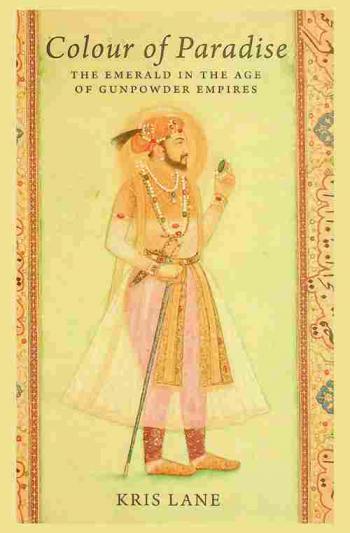
Colour of paradise : the emerald in the age of gunpowder empires
For the Mughals, Ottomans, and Safavids green was, as it remains for all Muslims, the color of Paradise, reserved for the Prophet Muhammad and his descendants. Tapping a wide range of sources, Kris Lane traces the complex web of global trading networks that funneled emeralds from backland South America to populous Asian capitals between the sixteenth and the eighteenth centuries. Lane reveals the bloody conquest wars and forced labor regimes that accompanied their production. It is a story of trade, but also of transformations, how members of profoundly different societies at opposite ends of the globe assigned value to a few thousand pounds of imperfectly shiny green rocks.
Book


The Jaguar's Jewel
Hundreds of trophies and souvenirs fill the rooms of the Batcave, each with a story, and one such tale is how Batman outsmarted Catwoman and her pet jaguar and prevented the theft of a valuable emerald.
Book

Detection of Emerald Ash Borer Crowns in the Southern United States: Comparing Panel Trap Color, Placement, and Lure
The emerald ash borer (EAB), Agrilus planipennis Fairmaire, is an invasive forest pest that is causing a rapid decline in ash (Fraxinus spp.). As EABs spread across North America to 35 U.S. states and 5 Canadian provinces, detection of the pest has proven difficult, especially at low population density sites. Panel traps have been commonly used in detection and monitoring of EAB populations. Over two sampling periods from 2016 through 2019, adult catches and detection rates were compared among four combinations of panel trap color, lure, and crown placement in southern Arkansas, northern Louisiana, and eastern Texas. The four combinations were as follows: (1) dark purple baited with (Z)-3-hexenol alone in the mid–upper crown; (2) light green with (Z)-3-hexenol plus (3Z)-lactone in the mid–upper crown; (3) dark purple with (Z)-3-hexenol in the lower crown; and (4) dark purple with (Z)-3-hexenol plus (3Z)-lactone in the lower crown. Mid–upper tree crown placement, ~13 m, of panel traps were more effective for EAB detection and adult capture, especially of males. The sex pheromone (3Z)-lactone deterred females but attracted males, while (Z)-3-hexenol attracted females. The green panel trap with both lures and mid–upper crown placement did not drastically increase male catches, contrary to previous studies at low EAB densities. The use of (3Z)-lactone on dark purple traps at low crown placements, such as those used in the National Survey Program, is not recommended for EAB detection due to its repellent effect on EAB females.
Journal Article