
Catalogue Search | MBRL


Are you sure you want to remove the book from the shelf?

{{itemTitle}}
641
result(s) for
"Emigration and immigration History 19th century."
Sort by:

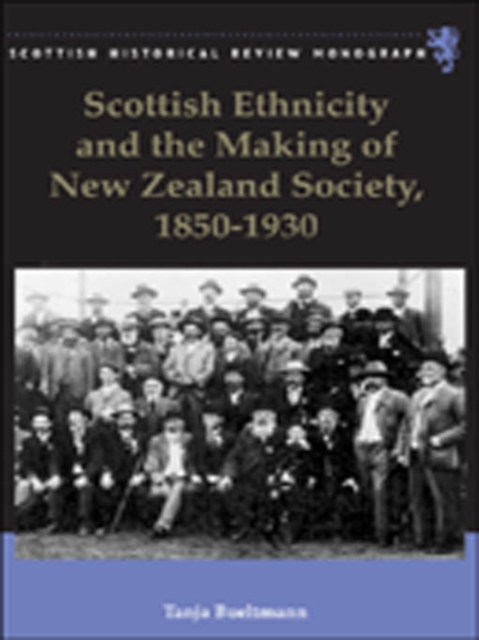
Scottish ethnicity and the making of New Zealand society, 1850-1930
The Scots accounted for around a quarter of all UK-born immigrants in New Zealand between 1861 and 1945, with businessmen, politicians, and social reformers of Scottish descent leaving a notable imprint on the country. Probing the powerful narratives of atomization and individualism that have been identified as key to understanding New Zealand's colonial period, this book contends that Scots, in fact, contributed disproportionately to the making of New Zealand society.
eBook


Authors of Their Lives
2008 United States Postal System's Rita Lloyd Moroney Award
In the era before airplanes and e-mail, how did immigrants keep in touch with loved ones in their homelands, as well as preserve links with pasts that were rooted in places from which they voluntarily left? Regardless of literacy level, they wrote letters, explains David A. Gerber in this path-breaking study of British immigrants to the U.S. and Canada who wrote and received letters during the nineteenth century.
Scholars have long used immigrant letters as a lens to examine the experiences of immigrant groups and the communities they build in their new homelands. Yet immigrants as individual letter writers have not received significant attention; rather, their letters are often used to add color to narratives informed by other types of sources.
Authors of Their Lives analyzes the cycle of correspondence between immigrants and their homelands, paying particular attention to the role played by letters in reformulating relationships made vulnerable by separation. Letters provided sources of continuity in lives disrupted by movement across vast spaces that disrupted personal identities, which depend on continuity between past and present. Gerber reveals how ordinary artisans, farmers, factory workers, and housewives engaged in correspondence that lasted for years and addressed subjects of the most profound emotional and practical significance.
eBook


Nassau Plantation
In the 1840s an organization of German noblemen, the Mainzner Adelsverein, attempted to settle thousands of German emigrants on the Texas frontier. Nassau Plantation, located near modern-day Round Top, Texas, in northern Fayette County, was a significant part of this story. James C. Kearney has studied a wealth of original source material (much of it in German) to illuminate the history of the plantation and the larger goals and motivation of the Adelsverein. This new study highlights the problematic relationship of German emigrants to slavery. Few today realize that the society’s original colonization plan included ownership and operation of slave plantations. Ironically, the German settlements the society later established became hotbeds of anti-slavery and anti-secessionist sentiment. Several notable personalities graced the plantation, including Carl Prince of Solms-Braunfels, Johann Otto Freiherr von Meusebach, botanist F. Lindheimer, and the renowned naturalist Dr. Ferdinand Roemer. Dramatic events also occurred at the plantation, including a deadly shootout, a successful escape by two slaves (documented in an unprecedented way), and litigation over ownership that wound its way to both the Texas Supreme Court and the U.S. Supreme Court.
eBook

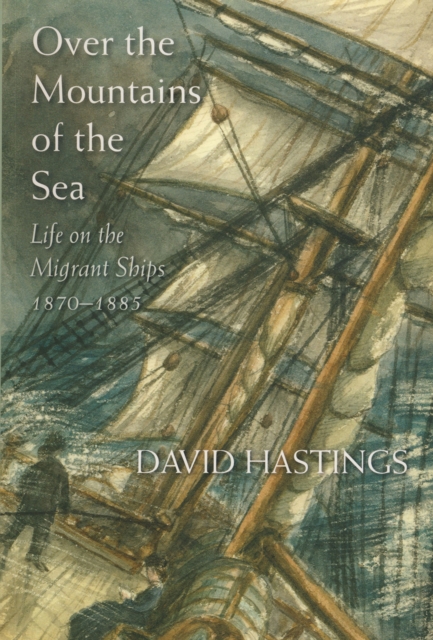
Over the mountains of the sea : life on the migrant ships, 1870-1885
Drawing upon more than 80 personal diaries and journals of those on board, this resource explores the rich experience and the trials and tribulations of hopeful Anglo-Celtic pilgrims headed to Australia and New Zealand aboard migrant ships in the late 19th century. From daily routines to matters of food, health, religion, crime, and mutiny, this history unearths the humor, scandal, and personal triumph that defined the nautical pilgrimage of hundreds.
eBook

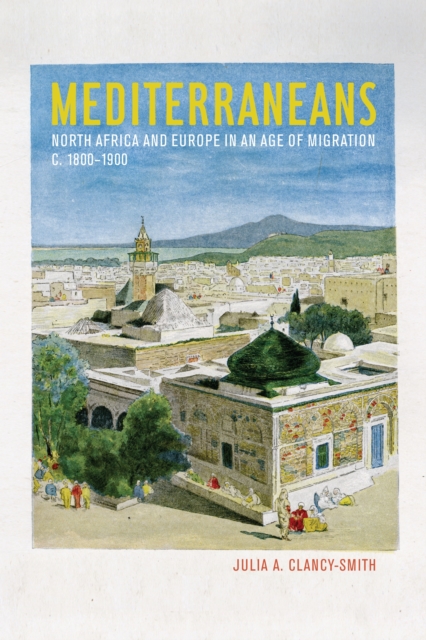
Mediterraneans
Today labor migrants mostly move south to north across the Mediterranean. Yet in the nineteenth century thousands of Europeans and others moved south to North Africa, Egypt, and the Levant. This study of a dynamic borderland, the Tunis region, offers the fullest picture to date of the Mediterranean before, and during, French colonialism. In a vibrant examination of people in motion, Julia A. Clancy-Smith tells the story of countless migrants, travelers, and adventurers who traversed the Mediterranean, changing it forever. Who were they? Why did they leave home? What awaited them in North Africa? And most importantly, how did an Arab-Muslim state and society make room for the newcomers? Combining fleeting facts, tales of success and failure, and vivid cameos, the book gives a groundbreaking view of one of the principal ways that the Mediterranean became modern.
eBook