
Catalogue Search | MBRL


Are you sure you want to remove the book from the shelf?

{{itemTitle}}
43,375
result(s) for
"Emperors"
Sort by:


Palastrevolution: Der Weg zum hauptstadtischen Kaisertum im Romischen Reich des vierten Jahrhunderts
Im 4. Jahrhundert n. Chr. etablierte Kaiser Theodosius das sogenannte Palastkaisertum und verbrachte einen groen Teil seiner Regierungszeit in Konstantinopel. Dieser wichtige Umbruch, der eine Tradition begrundete, die in Ostrom bis ins 6. Jahrhundert n. Chr. andauern sollte, ist insofern erklarungsbedurftig, als sich die romischen Kaiser ab dem 3. Jahrhundert n. Chr. vor allem durch ihre Rolle als Verteidiger des Reiches an der Front legitimierten. Die vorliegende Studie analysiert, wie schon seit der Mitte des 4. Jahrhunderts Vorganger von Theodosius eine Neudefinition des Kaisertums versuchten und auf welche Weise es erst Theodosius gelang, das Palastkaisertum als akzeptierte Form der Kaiserherrschaft zu etablieren.
eBook
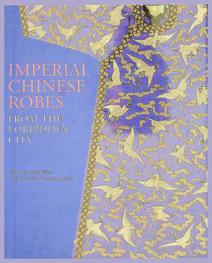
Imperial Chinese robes : from the forbidden city
Focusing on the dress and accessories of the Qing dynasty (1644-1911), this exquisite book captures the grandeur of the garments worn by emperors and empresses for defined formal engagements. In Qing dynasty China, there were clear rules on what to wear on different occasions. Official dress was worn when the emperor performed sacrifices at the 'Temple of Heaven' and at other important rituals. Auspicious dress was for New Year, birthdays and weddings. Military dress for troop inspection; travelling dress for hunting and royal visits to provinces, and ordinary dress for events of a non-celebrative nature, such as mourning. When not performing public duties, however, the imperial family could freely choose which garments to wear - and this book also illustrates these more casual clothes with colourful and stunning fashion dresses made for the court ladies.
Book
Constantine
Drawing on recent scholarly advances and new evidence, Timothy Barnes offers a fresh and exciting study of Constantine and his life.First study of Constantine to make use of Kevin Wilkinson's re-dating of the poet Palladas to the reign of Constantine, disproving the predominant scholarly belief that Constantine remained tolerant in matters of.
eBook

The greatest power
Long ago, a Chinese emperor challenges the children of his kingdom to show him the greatest power in the world, and all are surprised at what is discovered.
Book

Philological and Historical Commentary on Ammianus Marcellinus XXVII
Continuing the series of philological and historical commentaries on Ammianus' Res Gestae this volume deals with Book 27, in which the author deals with military operations and internal affairs. In the central part of the book the emperor Valentinian is portrayed.
eBook

Imagining the Roman emperor : perceptions of rulers in the high empire
How was the Roman emperor viewed by his subjects? How strongly did their perception of his role shape his behaviour? Adopting a fresh approach, Panayiotis Christoforou focuses on the emperor from the perspective of his subjects across the Roman Empire. Stress lies on the imagination: the emperor was who he seemed, or was imagined, to be. Through various vignettes employing a wide range of sources, he analyses the emperor through the concerns and expectations of his subjects, which range from intercessory justice to fears of the monstrosities associated with absolute power. The book posits that mythical and fictional stories about the Roman emperor form the substance of what people thought about him, which underlines their importance for the historical and political discourse that formed around him as a figure.
BOOK

Greece and the Augustan Cultural Revolution
This book examines the impact of the Roman cultural revolution under Augustus on the Roman province of Greece. It argues that the transformation of Roman Greece into a classicizing 'museum' was a specific response of the provincial Greek elites to the cultural politics of the Roman imperial monarchy. Against a background of Roman debates about Greek culture and Roman decadence, Augustus promoted the ideal of a Roman debt to a 'classical' Greece rooted in Europe and morally opposed to a stereotyped Asia. In Greece the regime signalled its admiration for Athens, Sparta, Olympia and Plataea as symbols of these past Greek glories. Cued by the Augustan monarchy, provincial Greek notables expressed their Roman orientation by competitive cultural work (revival of ritual; restoration of buildings) aimed at further emphasising Greece's 'classical' legacy. Reprised by Hadrian, the Augustan construction of 'classical' Greece helped to promote the archaism typifying Greek culture under the principate.
eBook


Augustus: image and reality
Throughout a long and spectacularly successful political life, the Emperor Augustus (63BC-AD14) was a master of spin. Barbara Levick exposes the techniques which he used to disguise the ruthlessness of his rise to power and to enhance his successes once power was achieved. There was, she argues, less difference than might appear between the ambitious youth who overthrew Anthony and Cleopatra and the admired Emperor of later years. However seemingly benevolent his autocracy and substantial his achievements, Augustus' overriding purpose was always to keep himself and his dynasty in power. Similar techniques were practised against surviving and fresh opponents, but with increasing skill and duplicity, and in the end the exhausted members of the political classes were content to accept their new ruler. This book charts the stages of Augustus' rise, the evolution of his power and his methods of sustaining it, and finally the ways in which he used artists and literary men to glorify his image for his own time and times to come. This fascinating story of the realities of power in ancient Rome has inescapable contemporary resonance and will appeal equally to students of the Ancient World and to the general reader.
eBook