
Catalogue Search | MBRL


Are you sure you want to remove the book from the shelf?

{{itemTitle}}
234
result(s) for
"Emperors Fiction"
Sort by:

The greatest power
Long ago, a Chinese emperor challenges the children of his kingdom to show him the greatest power in the world, and all are surprised at what is discovered.
Book

The Image of Peter the Great in Russian History and Thought
The image of Peter the Great casts a long shadow in modern Russian thought and culture. As important to modern Russia as the French Revolution is to France and the Reformation is to Germany, the image of this militaristic ruler, founder of St Petersburg, and czar of all Russia from 1689-1725 has been central to Russian history, literature, and art since the early 1700s.Riasanovsky, one of the foremost historians of Russia, traces the development of this image from 1700 to the present. Drawing examples from Russian historical accounts, literature, folklore, and the arts, he shows how the use of the image of Peter has reflected the changing cultural and political values of the Russian people.
eBook


The Image of Peter the Great in Russian History and Thought
In this scholarly study, the author examines the way in which Peter the Great has been perceived over the years by artists, writers, intellectuals, and other historians, and what his image has meant to Russian culture during various historical periods since Peter's death in 1725.
eBook
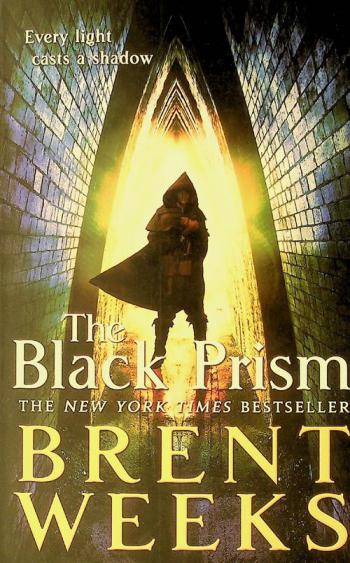
The black prism
Guile is the Prism, the most powerful man in the world. He is high priest and emperor, a man whose power, wit, and charm are all that preserves a tenuous peace. Yet Prisms never last, and Guile knows exactly how long he has left to live. When Guile discovers he has a son, born in a far kingdom after the war that put him in power, he must decide how much he's willing to pay to protect a secret that could tear his world apart.

“Soul-stealing Sand”: War and Time in Xin jiyuan The New Era
This article takes as its subject the late Qing science-fiction novel Xin jiyuan [The New Era, 1908] and, through close reading, investigates how the imagination of tomorrow's world was affected by racist discourse and how it unconsciously replicated the logic of colonialism. It reveals that although the Yellow Emperor (Huangdi) calendrical system advocated by the author is a replica of the Gregorian calendar, China's native time measurement still played a role in the novel. Along with the author's own perplexity, brought on by the apparent zero-sum contest between Chinese and western culture and epistemologies, the entanglement of different time systems also provided a starting point for the narration of the future. The result is that the “future of China” described in this fiction is little more than a description of the contemporary west. Magic weapons such as “soul-stealing sand” (zhuihun sha), which determine the outcome of the war in this story, have long been regarded by researchers as the remnants of Chinese novels about spirits and devils. By tracking relevant information about these magic weapons, however, this article demonstrates that the author borrowed these speculative and fantastic novelties from contemporary newspaper and magazine reports introducing the latest western inventions.
Journal Article

The burning white
\"In the stunning conclusion to the epic, New York Times bestselling Lightbringer series by Brent Weeks, kingdoms clash as Kip must finally escape his family's shadow in order to protect the land and people he loves. As the White King springs his great trap, and the Chromeria itself is threatened by treason and siege, Kip Guile and his companions will scramble to return for one impossible final stand. In the darkest hour, will the Lightbringer come?\"-- Provided by publisher.
Book

What Would Napoleon Do? Historical, Fictional, and Counterfactual Characters
The discrepancies among the signified ideas of Napoleon, far from calling the shared referent into question, are the very things that demonstrate its unity. Because we understand that the quotations share a referent, we can measure the distance between the significance of Napoleon in Hegel's letter and his significance in Tolstoy's novel.
Journal Article


Making Peace in an Age of War
This English-language translation of Mark Hengerer's Kaiser Ferdinand III: 1608–1657 Eine Biographie is based on an analysis of the weekly reports sent by the papal nuncio’s office to the Vatican. These reports give detailed information about the daily whereabouts of the dynasty, courtiers, and foreign visitors, and they contain the gossip of the court in addition to weekly analysis of some political problems. This material enabled the author to report on daily life of the dynasty and to analyze the circumstances under which policy was made, which has led to a balance between the personality of Ferdinand III and the problems with which he dealt. In this biography, Hengerer provides answers to the question: Why did it take the emperor more than ten years to end a devastating war, the traumatizing effects of which on central Europe lasted into the twentieth century, particularly since there was no hope of victory against his foreign adversaries from the very moment he came into power?
eBook