
Catalogue Search | MBRL


Are you sure you want to remove the book from the shelf?

{{itemTitle}}
86,741
result(s) for
"Employee rights"
Sort by:


Conflicting Commitments
InConflicting Commitments, Shannon Gleeson goes beyond the debate over federal immigration policy to examine the complicated terrain of immigrant worker rights. Federal law requires that basic labor standards apply to all workers, yet this principle clashes with increasingly restrictive immigration laws and creates a confusing bureaucratic terrain for local policymakers and labor advocates. Gleeson examines this issue in two of the largest immigrant gateways in the country: San Jose, California, and Houston, Texas.
Conflicting Commitmentsreveals two cities with very different approaches to addressing the exploitation of immigrant workers-both involving the strategic coordination of a range of bureaucratic brokers, but in strikingly different ways. Drawing on the real life accounts of ordinary workers, federal, state, and local government officials, community organizers, and consular staff, Gleeson argues that local political contexts matter for protecting undocumented workers in particular. Providing a rich description of the bureaucratic minefields of labor law, and the explosive politics of immigrant rights, Gleeson shows how the lessons learned from San Jose and Houston can inform models for upholding labor and human rights in the United States.
eBook


The Warehouse
‘Work hard, have fun, make history’ proclaims the slogan on the walls of Amazon’s warehouses. This cheerful message hides a reality of digital surveillance, aggressive anti-union tactics and disciplinary layoffs. Reminiscent of the tumult of early industrial capitalism, the hundreds of thousands of workers who help Amazon fulfil consumers’ desire are part of an experiment in changing the way we all work.
In this book, Alessandro Delfanti takes readers inside Amazon’s warehouses to show how technological advancements and managerial techniques subdue the workers rather than empower them, as seen in the sensors that track workers’ every movement around the floor and algorithmic systems that re-route orders to circumvent worker sabotage. He looks at new technologies including robotic arms trained by humans and augmented reality goggles, showing that their aim is to standardise, measure and discipline human work rather than replace it.
Despite its innovation, Amazon will always need living labour’s flexibility and low cost. And as the warehouse is increasingly automated, worker discontent increases. Striking under the banner ‘we are not robots’, employees have shown that they are acutely aware of such contradictions. The only question remains: how long will it be until Amazon’s empire collapses?
eBook

Just transitions : social justice in the shift towards a low-carbon world
In the field of 'climate change', no terrain goes uncontested. The terminological tug of war between activists and corporations, scientists and governments, has seen radical notions of 'sustainability' emptied of urgency and subordinated to the interests of capital. 'Just Transition' is the latest such battleground, and the conceptual keystone of the post-COP21 climate policy world. But what does it really mean?0'Just Transition' emerged as a framework developed within the trade union movement to encompass a range of social interventions needed to secure workers' and frontline communities' jobs and livelihoods as economies shift to sustainable production. 'Just Transitions' draws on a range of perspectives from the global North and South to interrogate the overlaps, synergies and tensions between various understandings of the Just Transition approach. As the concept is entering the mainstream, has it lost its radical edge, and if so, can it be recovered?0Written by academics and activists from around the globe, this unique edited collection is the first book entirely devoted to 'Just Transition'.
Book

Serving a Wired World
In the public imagination, Silicon Valley embodies the newest of
the new-the cutting edge, the forefront of our social networks and
our globally interconnected lives. But the pressures exerted on
many of today's communications tech workers mirror those of a much
earlier generation of laborers in a very different space: the
London workforce that helped launch and shape the massive
telecommunications systems operating at the turn of the twentieth
century. As the Victorian age ended, affluent Britons came to rely
on information exchanged along telegraph and telephone wires for
seamless communication: an efficient and impersonal mode of sharing
thoughts, demands, and desires. This embrace of seemingly
unmediated communication obscured the labor involved in the smooth
operation of the network, much as our reliance on social media and
app interfaces does today. Serving a Wired World is a
history of information service work embedded in the daily
maintenance of liberal Britain and the status quo in the early
years of the twentieth century. As Katie Hindmarch-Watson shows,
the administrators and engineers who crafted these
telecommunications systems created networks according to
conventional gender perceptions and social hierarchies, modeling
the operation of the networks on the dynamic between master and
servant. Despite attempts to render telegraphists and telephone
operators invisible, these workers were quite aware of their
crucial role in modern life, and they posed creative challenges to
their marginalized status-from organizing labor strikes to
participating in deviant sexual exchanges. In unexpected ways,
these workers turned a flatly neutral telecommunications network
into a revolutionary one, challenging the status quo in ways
familiar today.
eBook

Memphis, Martin, and the mountaintop : the sanitation strike of 1968
\"In February 1968, two African American sanitation workers were killed by unsafe equipment in Memphis, Tennessee. Outraged at the city's refusal to recognize a labor union that would fight for higher pay and safer working conditions, sanitation workers went on strike. The strike lasted two months, during which Dr. Martin Luther King Jr. was called to help with the protests ... He was assassinated in his Memphis hotel the day after delivering his 'I've Been to the Mountaintop' sermon in Mason Temple Church. Inspired by the memories of a teacher who participated in the strike as a child, author Alice Faye Duncan reveals the story of the Memphis sanitation strike from the perspective of a young girl with a ... combination of poetry and prose\"-- Provided by publisher.
CHILDBOOK
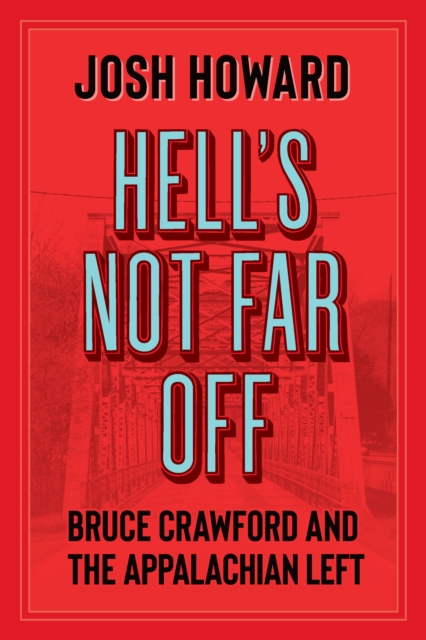
Hell's Not Far Off
A biography of Bruce Crawford, a southwest Virginia journalist-writer of the radical tradition and one of the first to interpret Appalachian labor history.Hell's Not Far Off is a grounded, politically engaged study of the Appalachian journalist and political critic Bruce Crawford, a scourge of coal and railway interests.
eBook


Refusal of work
Paid work is absolutely central to the culture and politics of capitalist societies, yet today's work centered world is becoming increasingly hostile to the human need for autonomy, spontaneity and community. The grim reality of a society in which some are overworked, whilst others are condemned to intermittent work and unemployment, is progressively more difficult to tolerate. In this thought provoking book, David Frayne questions the central place of work in mainstream political visions of the future, laying bare the ways in which economic demands colonise our lives and priorities. Drawing on his original research into the lives of people who are actively resisting nine-to-five employment, Frayne asks what motivates these people to disconnect from work, whether or not their resistance is futile, and whether they might have the capaciity to inspire an alternative form of development, based on a reduction and social redistribution of work. A crucial dissection of the work-centred nature of modern society and emerging resistance to it, 'The Refusal of Work' is a bold call for a more humane and sustainable vision of social progress. (Page four of cover)
eBook